
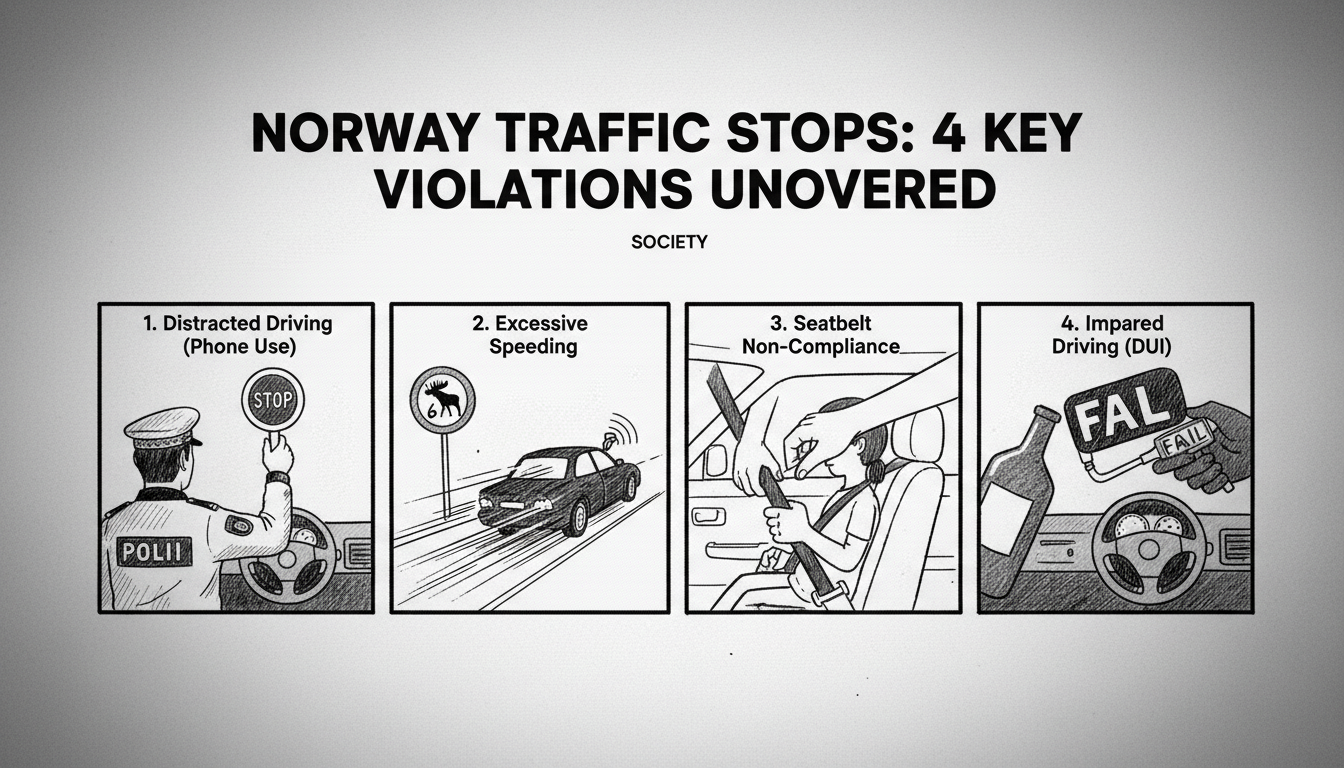
Norway traffic authorities conducted over 30,000 roadside inspections of heavy goods vehicles in 2023, but one recent stop involved an ironic twist: an all-terrain vehicle (ATV) using Christmas lights for visibility instead of required headlights. This incident, during a routine control at Kirkenes traffic station, underscores the broader enforcement efforts by Statens vegvesen, the Norwegian Public Roads Administration. While festive, the ATV's julelys failed to meet legal standards, leading to intervention and a reminder to reattach the lights to a Christmas tree. Such stops highlight the meticulous checks ensuring compliance with Norway's strict traffic laws, even in remote Arctic regions.
A Festive Failure on Norwegian Roads
The ATV was stopped during a traffic control in Kirkenes, near the Russian border in northern Norway. Drivers must use proper headlights for road safety, especially in dark winter months. Christmas lights do not provide adequate illumination or meet regulatory specifications for vehicle lighting. This violation, while seemingly minor, points to a lapse in basic roadworthiness. Statens vegvesen emphasized that the lights needed to be returned to holiday decor. The stop occurred as part of broader operations targeting commercial and private vehicles for documentation and safety checks.
Beyond the Lights: Permit and Tire Violations
Other violations emerged during the same control period. A truck towing a load lacked the necessary transport permit, resulting in a fine for the company. The driver was unable to proceed until the permit was presented at the control station. Separately, a bus carrying passengers did not have a leasing contract on hand. It was immobilized until the leasing arrangement could be documented. Earlier, at the Neiden toll station, a truck driver was fined for worn tires, and a bus was turned back due to the driver's failure to produce a valid license. These incidents reflect common compliance issues in Norwegian transport.
The Framework of Norwegian Traffic Enforcement
Statens vegvesen oversees Norway's extensive road network, including frequent controls at key points like border crossings and traffic stations. Regulations mandate specific lighting for ATVs, which are popular in rural and Arctic areas for recreation and work. For commercial vehicles, permits and contracts are essential to ensure legal operation and accountability. Tire condition is critically monitored, as worn tires on heavy vehicles pose significant safety risks, particularly on icy or mountainous roads. The administration's role is preventive, aiming to reduce accidents through proactive checks.
Expert Analysis: Why Strict Compliance Matters
Transportation safety experts stress that consistent enforcement is vital for road safety. "Regular inspections and adherence to regulations minimize accidents, especially in Norway's challenging driving conditions," says a Nordic transport safety analyst. The country's harsh climate, with long winters and variable terrain, demands high vehicle standards. Non-compliance, such as using decorative lights or driving with worn tires, can lead to catastrophic failures. Experts note that fines and immobilizations serve as deterrents, encouraging companies and drivers to maintain compliance. This approach has contributed to Norway's relatively low road fatality rates compared to global averages.
Statistical Insights and Penalties
In 2023, Statens vegvesen performed over 30,000 inspections of heavy goods vehicles alone. Fines for violations vary; for instance, driving with worn tires can incur penalties of several thousand Norwegian kroner, depending on severity. The table below summarizes key data from recent enforcement efforts:
| Violation Type | Typical Penalty | Enforcement Context |
|---|---|---|
| Worn Tires | Several thousand NOK | Common in heavy vehicle checks |
| Missing Permits | Fines for companies | Targeted at commercial transport |
| Inadequate Lighting | Warnings or fines | Includes private vehicles like ATVs |
| Documentation Lapses | Immobilization until resolved | Focus on buses and leased vehicles |
These statistics underscore the scale of enforcement. The Kirkenes and Neiden controls are microcosms of nationwide efforts, particularly in northern regions where logistics are complex due to Arctic conditions.
Implications for Road Safety and Policy
The incidents have broader implications for transport policy in Norway. Stricter enforcement aligns with national goals to reduce traffic accidents and environmental impacts from poorly maintained vehicles. For the energy and maritime sectors, which rely heavily on road transport for supplies in places like the oil fields of the North Sea or the fjords, compliance ensures efficiency and safety. The Storting, Norway's parliament, periodically reviews these regulations, with debates often focusing on balancing enforcement with operational flexibility for industries. Public awareness campaigns also play a role, educating drivers on requirements.
Conclusion: Vigilance on Nordic Roads
Norway's traffic controls, from Christmas-lit ATVs to permit-less trucks, reveal a commitment to road safety that extends beyond routine checks. As climate changes affect Arctic routes and transport volumes grow, such enforcement will remain crucial. For international observers, this system offers lessons in integrating regulation with practical oversight. Will increased automation in vehicle inspections enhance compliance? Only continued vigilance by authorities and cooperation from drivers can ensure that Norwegian roads stay among the world's safest, even when holiday spirit leads to unintended violations.