
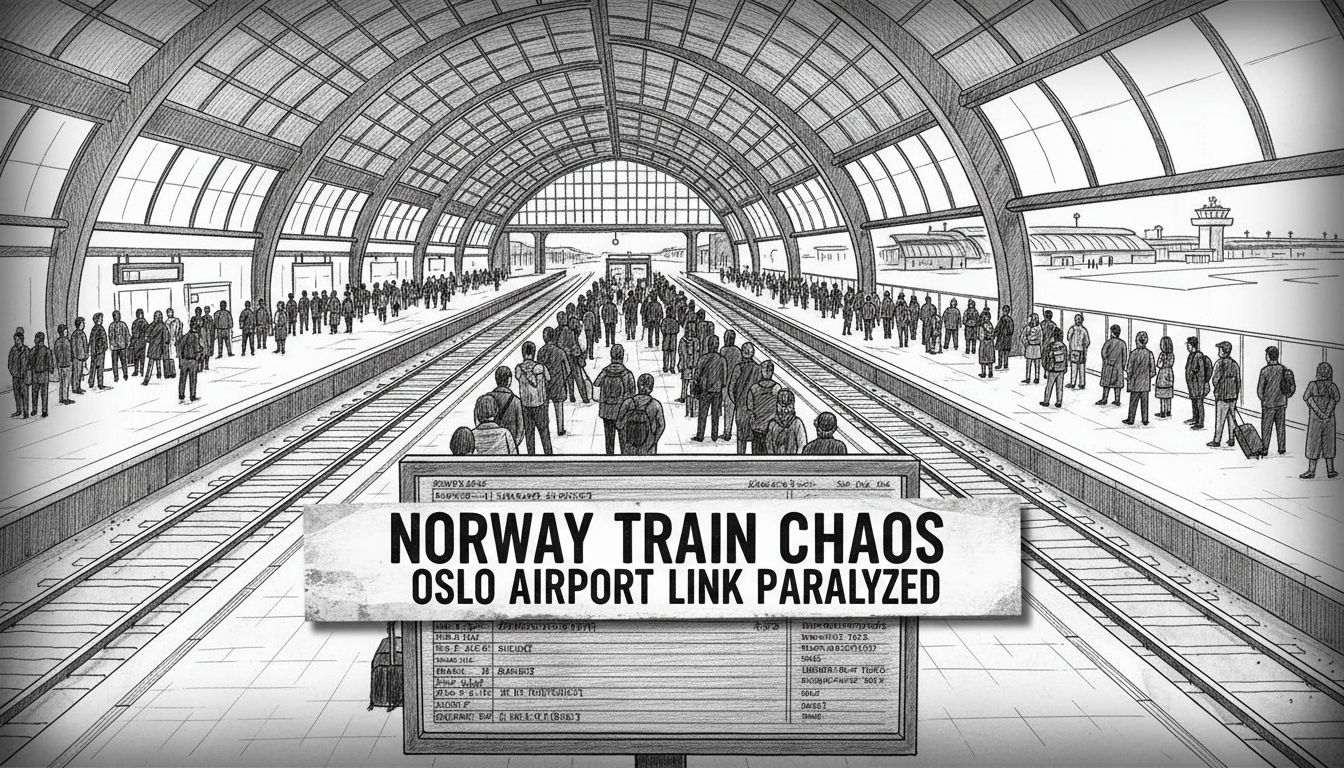
Norway's critical Gardermobanen rail line suffered a complete shutdown Tuesday morning, severing the vital link between Oslo and its international airport. A major signal failure reported at 9:11 AM brought all train traffic between Lillestrøm and Oslo to a standstill, creating immediate chaos for thousands of commuters and air travelers. Infrastructure manager Bane Nor confirmed the disruption in a brief statement, noting they were working to fix the error but could not estimate a resolution time. The paralysis on this high-speed artery underscores the fragility of Norway's transport network and its economic vulnerability to single points of failure.
A Nation Grinds to a Halt
The Gardermobanen is not just another railway. This 64-kilometer line is the dedicated spine for the Flytoget airport express service and a key route for regional trains. Its sudden failure created an instant backlog across eastern Norway's rail network. Lillestrøm station, a major hub where multiple lines converge, transformed into a scene of confusion as passengers bound for Oslo, the airport, and destinations north found themselves stranded. With no trains moving on the primary artery, alternative routes quickly became overwhelmed. The incident highlights a stark reality: Norway's celebrated public transport system remains acutely susceptible to technical faults, with signal errors being a persistently common culprit.
Bane Nor's communication followed a familiar pattern for regular rail users—an acknowledgment of a problem with minimal detail on cause or timeline. "We are working to correct the error. Currently, we do not know how long it will take," the state-owned company wrote. This lack of immediate, actionable information left passengers scrambling. Taxi ranks at affected stations saw queues form instantly, while ride-share app prices surged due to demand. For travelers with flights to catch, the stress was palpable, with many forced to abandon their rail tickets and seek far more expensive road alternatives to reach Oslo Airport Gardermoen.
The Economic and Social Ripple Effect
The financial impact of such a shutdown is immediate and multifaceted. Flytoget, which operates solely on this line, loses revenue for every minute its bright orange trains sit idle. Businesses relying on just-in-time logistics face delays. Most significantly, Norway's international reputation for efficiency takes a hit. The Gardermobanen is many visitors' first and last experience of Norwegian infrastructure. A seamless, 20-minute airport transfer is a point of national pride; its failure is a visible embarrassment. The disruption also places immense strain on connecting bus services and road traffic, pushing more vehicles onto the already congested E6 highway towards the airport.
Statistics from 2023 show Norwegian train punctuality at around 87%. While this figure may seem high, it means approximately 13% of all journeys face delays. Major incidents like today's total shutdown, however, are not captured by mere punctuality percentages. They represent systemic failures. Experts consistently point to aging signaling systems and the need for continuous, proactive investment in maintenance. "The Norwegian rail network is a patchwork of modern and legacy systems," explains a transport analyst who requested anonymity due to ongoing consultancy work with Bane Nor. "The Gardermobanen is a relatively modern line, but it interfaces with older network sections. A fault at a key junction like Lillestrøm can have a domino effect that is difficult to isolate and resolve quickly."
A Recurring Challenge for Bane Nor
This is not an isolated event for Bane Nor. The state-owned company, which manages the national rail infrastructure, has faced repeated criticism for delays and cost overruns on upgrade projects, as well as for operational reliability. Each major disruption renews debate about funding, management priorities, and the political oversight of Norway's railways. Parliament members from the Oslo region are often quick to demand answers after such incidents, given the direct impact on their constituents and the capital's economy. The Conservative Party's (Høyre) transport spokesperson, for instance, has previously called for "faster implementation of digital signaling systems to replace our vulnerable analog technology."
Investment in the European Rail Traffic Management System (ERTMS) is seen as the long-term solution. This modern, digital system would increase capacity and reliability but requires billions of kroner and years of phased implementation. In the interim, Norway's transport system relies on technology that can be knocked out by a single point of failure. The human cost is significant: missed flights, delayed medical appointments, lost work hours, and general frustration that erodes public trust in rail as a reliable alternative to private cars.
Looking Beyond the Immediate Fix
As engineers worked to restore service, the broader questions lingered. Does Norway invest enough in the resilience of its critical infrastructure? Are contingency plans—such as ready-to-deploy bus bridges or improved real-time passenger information—robust enough? Today's event was a stark reminder that in an interconnected system, a fault on a single line can paralyze a region. For a country that positions itself as a leader in green transportation, convincing citizens to choose trains over cars requires demonstrating unwavering reliability.
The shutdown between Lillestrøm and Oslo is more than a Tuesday morning inconvenience. It is a stress test for the system. The speed and transparency of Bane Nor's response, the effectiveness of alternative transport arrangements, and the duration of the disruption will all be closely scrutinized. Each hour the line remains closed amplifies the economic damage and deepens the political fallout. For now, thousands of Norwegians are left waiting, a powerful testament to the fact that even in one of the world's most advanced nations, progress can still be stopped by a faulty signal.
Ultimately, the incident serves as a pressing reminder that Norway's future mobility depends on modernizing the hidden, unglamorous parts of its infrastructure—the cables, relays, and software that guide its trains. Until that modernization is complete, the specter of a full standstill will continue to loom over the morning commute.