
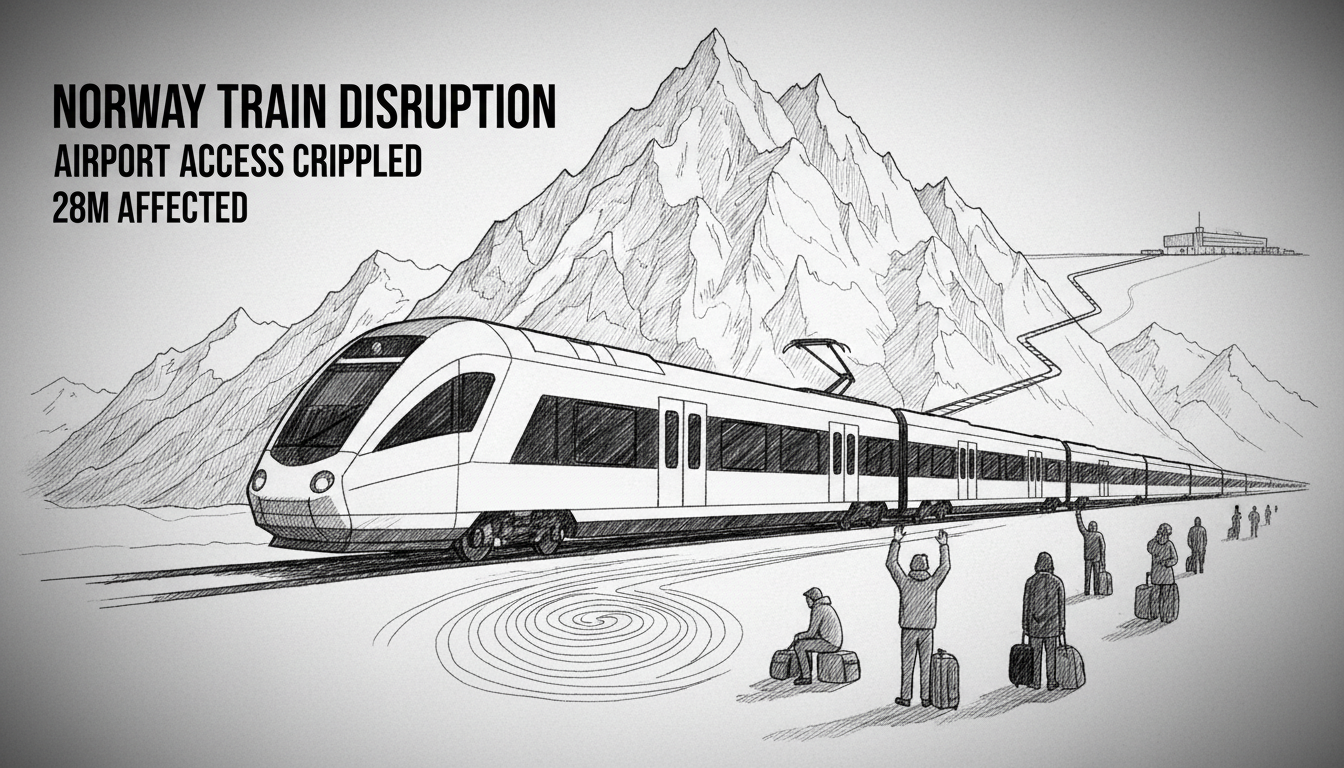
Norway's main airport ground connection collapsed for several hours on Tuesday after a signaling fault halted all train traffic between the Lillestrøm hub and Oslo Airport Gardermoen. The complete standstill disrupted travel for thousands and exposed the fragility of a critical national infrastructure link.
Passengers reported scenes of confusion at Oslo Central Station and Gardermoen as departure boards displayed cancellations. Many faced costly last-minute taxi rides or lengthy bus transfers to catch flights. "My train simply stopped, and there was no clear information for almost an hour," said one stranded international traveler, echoing a common complaint about communication during the crisis. The disruption rippled across the wider network, causing knock-on delays for regional services dependent on the Lillestrøm junction.
A Critical Artery Severed
The Lillestrøm-Gardermoen line is not merely a local track. It functions as the primary rail artery feeding Scandinavia's second-busiest airport. Over 28 million passengers annually pass through Oslo Airport Gardermoen (OSL), with a significant portion relying on rail. The Airport Express Train (Flytoget) and Vy's regular services typically offer a seamless 20-30 minute connection from Oslo's city centre. Their simultaneous failure creates an immediate and severe transportation bottleneck.
Bane Nor, the state-owned railway infrastructure manager, confirmed the cause as a signaling fault. These systems are the nervous system of modern railways, controlling train movements and preventing collisions. When they fail, safety protocols demand a full stop. "Our technicians were on site quickly to diagnose and repair the fault," a Bane Nor spokesperson said in a statement. While service resumed in the afternoon, the company warned of residual delays and cancellations throughout the day.
Systemic Vulnerabilities and Economic Cost
This incident is not an isolated one. Norwegian rail has faced criticism for reliability, particularly on key routes. Each major disruption triggers a debate about investment, maintenance cycles, and system redundancy. Transport economists estimate the cost of such failures runs into millions of kroner per hour. The calculation includes lost productivity for stranded business travellers, tourism impacts, and the logistical chaos for freight services that also use the line.
"A signal fault might sound technical, but its impact is profoundly economic and social," noted a railway analyst who wished to remain anonymous due to ongoing work with transport authorities. "For a country that prides itself on efficient public transport, these events damage international reputation and passenger trust. The focus is often on new projects, but resilience in existing core infrastructure is just as critical."
The Backup Plan Problem
The immediate alternative to the train is the road. The E6 motorway and RV174 road connect Oslo to the airport, but they are often congested. During the rail stoppage, taxi companies reported surge demand, while airport bus services became overcrowded. This shift highlights a lack of robust, high-capacity contingency transport plans. The incident raises questions about whether the Avinor airport authority and transport agencies have sufficient coordinated protocols for major rail failures.
Inside the Storting, opposition politicians are likely to seize on the event. They often question whether Bane Nor has sufficient funding for preventative maintenance of aging systems. The government, meanwhile, points to large-scale investment programs like the forthcoming Follo Line project, which aims to increase capacity and reliability on routes south of Oslo. Yet for passengers on Tuesday, future projects offered little consolation.
Passenger Trust on the Line
Recurring disruptions risk eroding public confidence in rail as the preferred airport transfer method. The Airport Express Train markets itself on reliability and speed. When that promise breaks, passengers may opt for private cars, increasing road traffic and undermining environmental goals. Social media fills with frustration during these events, as real-time information often lags behind reality. Both Vy and Flytoget were forced to issue travel waivers and apologies, standard yet costly procedures after major service failures.
Bane Nor operates in a challenging environment. Norway's terrain and climate place extreme demands on infrastructure. However, the public and political expectation is that the most vital links, like the one to the national gateway airport, should have the highest protection against failure. This includes redundant signaling systems and faster recovery protocols. Investigations into the root cause of Tuesday's fault will likely examine equipment age, recent maintenance records, and system design.
Looking Beyond the Technical Fix
Fixing the signal is the immediate task, but the broader challenge is systemic. This disruption serves as a stark reminder of the interconnected nature of modern mobility. A single point of failure in Lillestrøm can disrupt national and international travel plans for tens of thousands. It stresses the importance of viewing the airport rail link as critical national infrastructure, akin to power grids or digital networks.
Will this event accelerate investments in infrastructure hardening, or will it be another brief news item forgotten until the next failure? For Norway, whose economy and international connectivity depend heavily on efficient transport, that is the multi-billion krone question left on the tracks. The true test is not just repairing a fault, but building a system where such faults do not lead to total paralysis.