
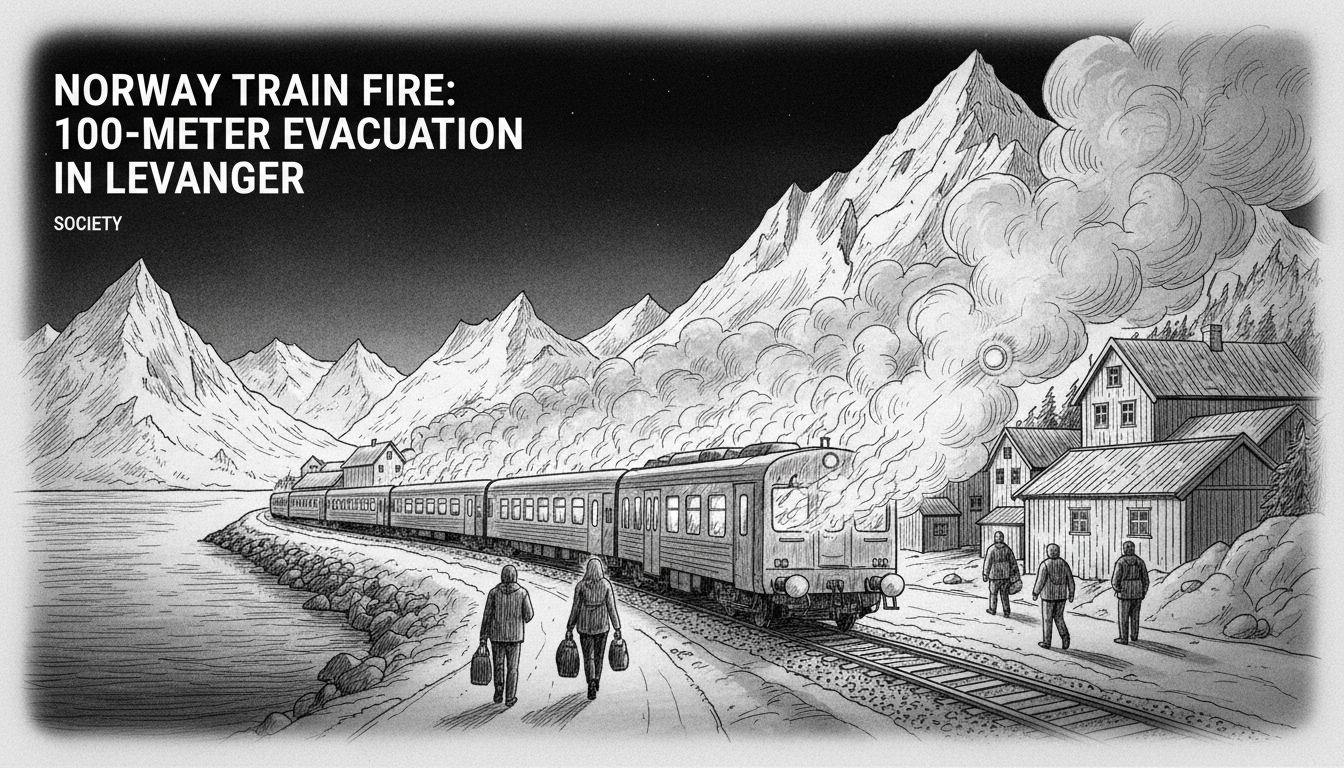
Norway train fire in Levanger triggered a major emergency response late Wednesday night, with passengers evacuated from a 100-meter-long train. Police reported no injuries after the blaze broke out mid-carriage. The incident occurred at 22:40 local time, casting an urgent spotlight on rail safety in the Trøndelag region.
Operational commander Trond Volden confirmed the evacuation was underway. Emergency services rushed to the scene along the Trondheimsfjord. The cause of the fire remains unknown, launching an immediate investigation by national authorities.
Emergency Response on the Trondheim Line
First responders from the Trøndelag Police District and local fire brigades converged on the scene. The train, a vital link in the regional network, was stopped near Levanger station. This municipality serves as a key transport and commerce hub for the area. Evacuating a train of that size presents significant logistical challenges, especially at night.
"The emergency services are on their way to the site," Volden said in a statement. "We do not know how many passengers were on the train, but they have begun to evacuate." The successful evacuation without injury points to effective crew training and passenger compliance. Cold nighttime temperatures in central Norway added another layer of difficulty for those outside the train.
The Investigation Begins
Norway's independent Safety Investigation Authority, Statens havarikommisjon, will lead the probe. Their mandate is to determine the cause and recommend safety improvements, not to assign blame. Investigators will examine the train's mechanical systems, electrical components, and any onboard materials. The fire's origin in the middle of the train set rules out some immediate causes, like an engine compartment fire at either end.
Rail experts note that modern Norwegian passenger trains have strict fire safety standards. These include flame-retardant materials, smoke detectors, and clear evacuation procedures. A fire severe enough to require a full evacuation suggests a significant fault or unforeseen event. The investigation will scrutinize maintenance records and the specific model of train involved.
Norway's Rail Safety Record in Focus
This incident interrupts Norway's strong rail safety record. The country's infrastructure, operated by Bane NOR, is generally considered world-class. Serious fires on passenger trains are rare events. The last comparable incident involved a freight train fire in the Arctic region several years ago. This event will trigger reviews of inspection protocols across the national fleet.
Passenger confidence is crucial for Norway's climate goals, which rely on shifting travel from road and air to rail. Any perception of increased risk could impact public trust. The government has invested heavily in new rail lines and rolling stock, including the recent introduction of modern Stadler FLIRT trains on many regional routes. Safety is the non-negotiable foundation of that expansion.
The Human Element: Evacuation and Aftercare
While no physical injuries were reported, the psychological impact on passengers and crew can be substantial. Being evacuated from a burning train at night is a traumatic event. Railway company Vy, the primary passenger operator in the region, will likely offer crisis support to those involved. The crew's actions during the emergency will be a key part of the internal review.
The efficiency of the evacuation also depends on passenger behavior. Norwegian rail safety briefings, often delivered via onboard screens, instruct passengers on how to exit trains during emergencies. The effectiveness of these communications in a real, high-stress scenario will be evaluated. The response of local emergency services, who practiced for such scenarios, appears to have been swift and coordinated.
Infrastructure and Economic Ripple Effects
The fire caused immediate disruption to the Trøndheim–Bodø line, a critical north-south artery. Replacement bus services were activated, but they lengthen travel times significantly. For a region where train travel is essential for commuters and commerce, even a one-day disruption has economic costs. Freight on the line was also halted, affecting supply chains.
Levanger's position as a regional center means many passengers were likely residents returning home. The municipality of over 20,000 people relies on this connectivity. Prolonged disruption would strain local businesses and commuters. Bane NOR's engineers will need to inspect the tracks for any damage from heat or emergency equipment before full service can resume.
Looking Ahead: Policy and Prevention
This fire will resonate in the corridors of the Norwegian Parliament, the Storting. The Standing Committee on Transport and Communications will demand answers. While Norway's transport safety culture is robust, complacency is the enemy. Expect hearings where the Minister of Transport and investigators are questioned on systemic risks.
The incident may accelerate existing plans to retrofit older train carriages with enhanced fire suppression systems. It will also influence the specifications for future train procurement. Safety investments are often driven by such events, even when the outcome, as in this case, thankfully involves no loss of life. The priority now is a transparent investigation and clear communication with the public.
Norway's train fire in Levanger ended as a close call, a testament to effective emergency protocols. Yet it serves as a stark reminder that safety requires constant vigilance. The coming investigation will dissect every detail, from a possible electrical short to the response time of the first firefighter on the scene. For now, the community is relieved, but the work to ensure it never happens again has already begun.