
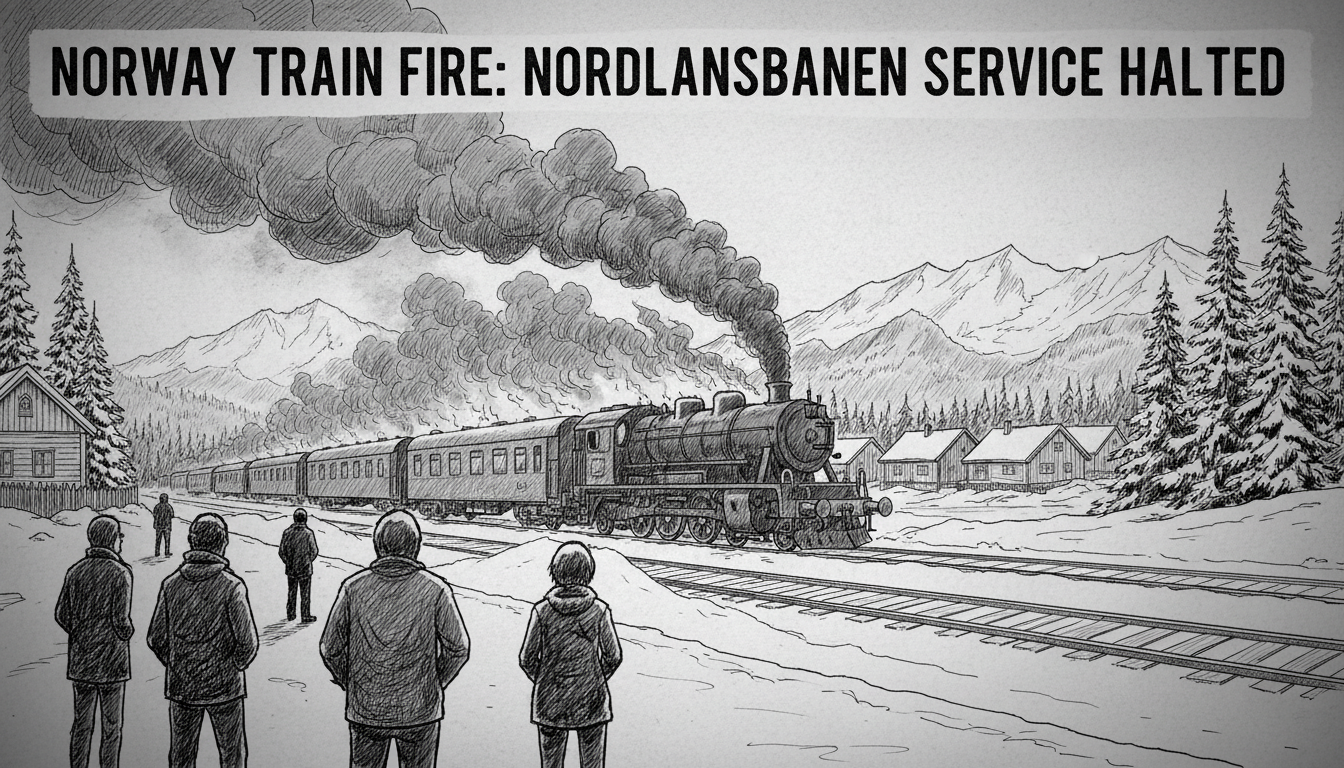
Norway's Nordlandsbanen railway line faced disruption after a fire broke out on a passenger train at Åsen station in Levanger. Operator SJ Nord confirmed the incident, stating the fire was quickly extinguished and posed no danger to passengers or health. Emergency services were notified and responded to the scene, with replacement bus services arranged for affected travelers.
This incident, though minor, highlights the vulnerability of critical transport infrastructure in Norway's vast northern regions. The Nordlandsbanen is the country's longest railway, a vital artery connecting Trondheim to Bodø across 729 kilometers of challenging terrain. Any interruption on this non-electrified, diesel-dependent line causes immediate logistical complications for passengers and freight.
Immediate Response and Passenger Safety
Communications director Randi Næss from SJ Nord provided swift reassurance. "It was already extinguished, and there is no danger to people or health," Næss said. The operator's immediate priority was securing passenger safety and organizing alternative transport. Setting up "buss for tog" (bus for train) services is a standard protocol, but its execution in rural Trøndelag county presents specific challenges.
Passengers were transferred to road transport to continue their journeys. The efficiency of this response is crucial, as stations like Åsen serve communities with fewer alternative travel options. The fire's cause remains unknown, pending investigation by rail authorities and possibly the Norwegian Safety Investigation Authority.
The Strategic Importance of Nordlandsbanen
The Nordlandsbanen is more than a passenger route; it is a strategic national asset. Completed in 1962, it represents a monumental engineering achievement, traversing mountains, fjords, and remote valleys. For towns and villages along its path, it is a lifeline for commuting, tourism, and goods transport. The line supports regional economies and connects northern Norway to the south.
Its non-electrified status is a key factor in its operational profile. Trains primarily use diesel locomotives, which carry fuel and present different risk profiles compared to electric trains. While statistically safe, any fire incident triggers a rigorous safety review process. The line's geography also complicates emergency response, with some sections far from major fire stations.
Analyzing Railway Safety Protocols
Railway safety experts emphasize that modern trains are equipped with multiple fire suppression and detection systems. "The immediate containment reported suggests onboard systems or crew intervention worked as intended," said Lars Holmen, a former rail safety inspector with Bane NOR. "The protocol is clear: evacuate if necessary, contain the fire, and isolate the problem. The priority is always passenger safety over asset preservation."
Holmen noted that even small fires, termed "branntilløp" or fire starts, are treated with maximum seriousness. Each event requires a detailed technical investigation to identify whether it was an isolated mechanical failure, an electrical fault, or a maintenance issue. Findings are shared across the industry to prevent recurrence. Norway's railway safety record is strong, but maintaining it requires constant vigilance, especially on older lines.
The Ripple Effect of Regional Disruptions
A halted train on the Nordlandsbanen creates a cascade of logistical issues. Freight schedules are disrupted, potentially affecting deliveries to communities reliant on rail-transported goods. Passenger delays can mean missed connections, including to flights from Bodø or Trondheim. For tourists, especially those with itineraries for the iconic Arctic Circle train experience, such disruptions can significantly impact travel plans.
The alternative bus service, while a necessary solution, cannot match the capacity, comfort, or speed of the train, particularly over long distances. This incident serves as a reminder of the thin margin for error in operating essential services in low-population-density areas. Infrastructure resilience is a constant topic in Norwegian politics, balancing investment costs with the needs of rural communities.
Infrastructure Challenges and Political Context
This minor fire occurs against a backdrop of ongoing debate about Norway's transport infrastructure. The Nordlandsbanen's future, including potential electrification, is a perennial political issue. Proponents argue electrification would reduce carbon emissions, lower operating costs, and improve reliability. Opponents cite the enormous capital expenditure required for a line with relatively low traffic density.
The government and Bane NOR, the state-owned railway infrastructure manager, have a long-term plan for gradual upgrades. However, each incident adds urgency to calls for accelerated investment. The line is crucial for the government's regional development goals, aiming to ensure equitable living conditions across the country. Reliability of north-south connections is a cornerstone of this policy.
Looking Ahead: Investigation and Accountability
The next steps will be technical and administrative. SJ Nord and Bane NOR will conduct an internal investigation. Depending on the findings, the Norwegian Safety Investigation Authority may launch its own independent inquiry to determine the root cause and issue safety recommendations. Their reports are publicly available and often lead to industry-wide changes.
Transparency in this process is standard. Operators are required to report such incidents, and findings are used to update maintenance schedules and operational manuals. For passengers and residents of the region, the expectation is not just a return to service, but a commitment to understanding why the fire occurred and how similar events can be prevented. The integrity of the investigation is as important as the initial emergency response.
This event at Åsen station, while swiftly resolved, underscores a fundamental truth about Norway's geography: maintaining seamless connectivity across its vast distances is a complex, ongoing challenge. The nation's famed railways are engineering marvels, but they operate in harsh conditions and require unwavering commitment to safety and investment. As service returns to normal on the Nordlandsbanen, the work of ensuring it doesn't happen again is just beginning.