
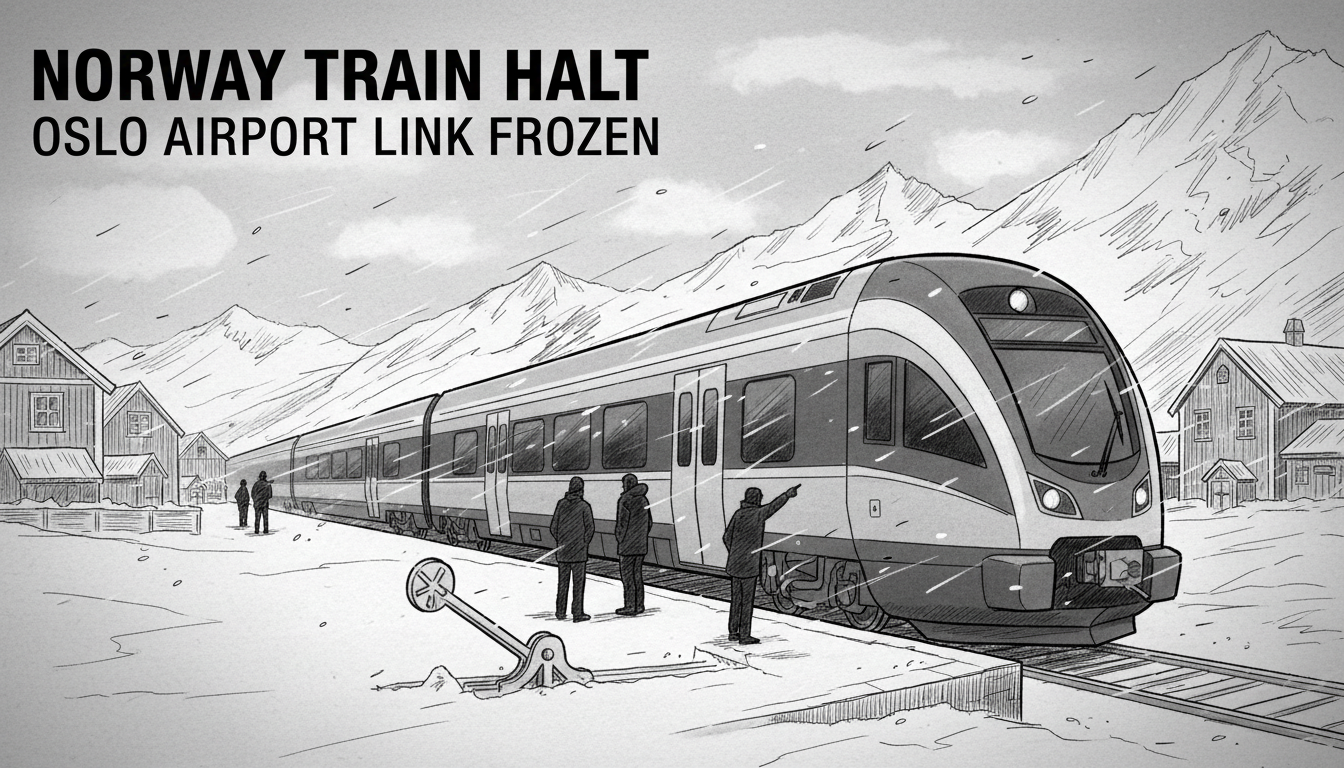
Oslo Airport Gardermoen serves over 28 million passengers annually, but a digital signaling failure has stopped all train traffic to Norway's busiest airport. A remote control outage on critical rail lines halted services between Lillestrøm and Gardermoen just before 10 AM today. Bane Nor, the state railway agency, confirmed the complete standstill affects both passenger and freight trains. 'This is due to failure of remote control between Gardermoen and Lillestrøm on the Gardermoen Line, and between Gardermoen and Jessheim on the Hovedbanen,' said Bane Nor press contact Anne Kirkhusmo. The agency cannot estimate repair time, leaving thousands of travelers stranded during peak travel hours.
Flytoget airport express trains have suspended multiple departures. Regional train services are also disrupted, creating long queues for alternative Flybussen airport buses. This incident exposes the fragility of Norway's technology-dependent transport infrastructure. It highlights a growing challenge for Nordic nations pioneering digital transformation in public systems.
Digital Signal Failure Freezes Critical Corridor
The Gardermoen Line is a 64-kilometer high-speed railway opened in 1998. It is essential for connecting Oslo Central Station to the airport in under 20 minutes. Remote control systems manage train movements and signals along this route. A failure means trains lose digital commands, making operation unsafe. 'Unfortunately, this impacts both passenger trains and freight trains,' Kirkhusmo added. Bane Nor has apologized to travelers but provided no timeline for resolution. Such outages are rare but have severe consequences given the line's high traffic volume.
Norway's railway network relies on increasingly automated signaling technology. This failure on the Gardermoen and Hovedbanen lines shows how single points of failure can cripple key routes. The Hovedbanen is one of Norway's oldest railways, now integrated with modern digital controls. Experts note that these systems require constant maintenance and backup protocols. Without them, cascading delays spread across the network.
Transport Network in Turmoil
Oslo Airport Gardermoen is Norway's primary international gateway. Daily, hundreds of flights connect to global destinations. The airport express train, Flytoget, operates as a separate company from Vy. It typically runs every 10 minutes with high reliability. Today's stoppage forces passengers onto congested roads and buses. Social media fills with complaints from missed flights and business meetings.
Flybussen services report significant delays due to sudden demand spikes. Taxi services near the airport are overwhelmed. Travelers using the Vy app or other journey planners receive constant cancellation alerts. This disruption affects not just air passengers but also commuters and freight logistics. Norway's reputation for efficient public transport takes a hit.
Tech Reliance Exposes Infrastructure Vulnerabilities
Remote control failures in railways are a known risk in digital transformation. Signaling systems use complex software and hardware to coordinate train movements. When they fail, manual operations are often impossible due to safety regulations. 'Railway signaling failures have cascading effects on the entire network,' said Lars Jensen, a transport technology consultant based in Oslo. 'Robust and redundant signaling systems are crucial to minimize disruptions, but today's event shows gaps.'
Norway has invested heavily in modernizing its rail infrastructure. Bane Nor oversees these upgrades as part of national transport strategy. However, this incident raises questions about system resilience. Norwegian tech startups in Oslo's innovation districts, like Fornebu and Grünerløkka, develop smart city solutions. Some focus on transport tech, including IoT sensors and AI for traffic management. Yet, core infrastructure remains vulnerable to technical glitches.
Innovation and Infrastructure: A Nordic Paradox?
Nordic countries are leaders in technology adoption and sustainability. Norway aims for all short-haul flights to be electric by 2040, pushing rail as a green alternative. This vision depends on reliable digital systems. The Gardermoen Line failure underscores a paradox: innovation accelerates, but basic infrastructure must keep pace. Oslo innovation news often highlights startups securing funding rounds for mobility apps. For example, recent ventures have raised millions to develop real-time transport analytics.
However, today's breakdown reveals a disconnect. 'We need more investment in foundational tech that prevents such outages,' said Mia Larsen, a CTO at a Oslo-based logistics startup. 'Our apps can reroute users, but if trains stop, software alone can't fix it.' Norwegian tech startups in the transport sector report increased interest from investors after incidents like this. They see opportunities to build more fault-tolerant systems.
Expert Analysis: Signaling Systems Under Scrutiny
Railway experts emphasize that remote control failures are particularly concerning. They halt all train traffic because safety protocols forbid movement without clear signals. 'Digital signaling is like a nervous system for railways,' explained Professor Henrik Dahl from the Norwegian University of Science and Technology. 'When it goes down, everything stops. We need better backup power and network redundancy.'
Norway's digital transformation in transport includes plans for autonomous trains and integrated ticketing. This incident may slow public confidence. Bane Nor has faced criticism before for delays in infrastructure projects. The Gardermoen Line outage will likely prompt reviews of maintenance schedules and tech upgrades. Other Scandinavian tech hubs, like Stockholm and Copenhagen, monitor such events to improve their own systems.
Looking Ahead: Implications for Norway's Transport Future
Bane Nor's technicians are working to restore remote control functions. Until then, train services on affected lines remain suspended. Travelers are advised to check official apps for updates. The Vy app, used by thousands for real-time schedules, now shows widespread cancellations. Flytoget's app also alerts users to avoid the airport train.
This failure occurs as Norway promotes rail travel for environmental benefits. The government aims to reduce short-haul flights by improving train connections. Events like today challenge that policy. They also highlight the need for interdisciplinary solutions combining tech innovation with practical engineering. Nordic technology trends show a shift towards resilient design, but implementation takes time.
Norway's railway system is a point of national pride. It embodies Scandinavian efficiency and sustainability. Today's breakdown serves as a reminder that digital dependence requires constant vigilance. As Oslo innovation news focuses on futuristic projects, perhaps more attention should go to maintaining present systems. Will this incident accelerate funding for infrastructure tech startups? Or will it reveal deeper issues in Norway's digital transformation journey? Only time will tell, but for stranded travelers, the immediate priority is getting moving again.