
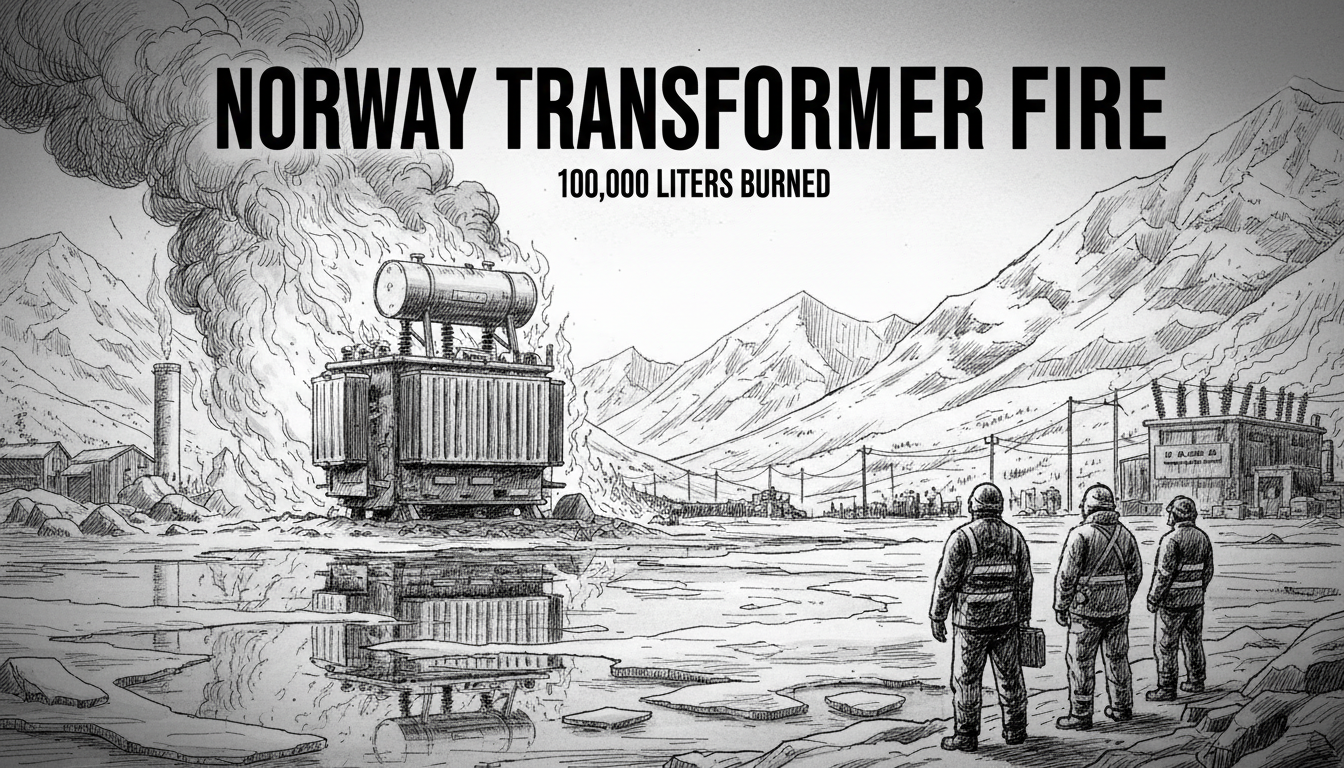
Norway transformer fire in Hallingdal involved 100,000 liters of oil before firefighters extinguished it Monday afternoon. The blaze at a critical substation on the border between Hol and Ål municipalities sent smoke billowing across the valley. Residents received urgent warnings to keep windows closed as crews battled the flames for hours. By 1:30 PM, authorities confirmed the fire was under control, averting a wider crisis in Norway's mountainous heartland. This incident spotlights vulnerabilities in the nation's energy backbone, even as it leads Europe in renewable power production.
Fire Contained After Hours-Long Battle
Emergency responders from Hallingdal fire department mobilized quickly after the alarm sounded Monday morning. The transformer station, a key node in the regional grid, contained approximately 100,000 liters of insulating and cooling oil. That volume represents a significant fuel load, comparable to the contents of a medium-sized oil tanker. Thick, black smoke developed rapidly, driven by the burning mineral oil. Local police and civil defense units issued immediate advisories via national alert systems. They urged people in nearby communities to seal their homes to avoid inhaling potentially toxic fumes.
The fire's location in a rural area between Hol and Ål complicated logistics. Access to transformer stations often requires specialized equipment and knowledge. Firefighters employed foam and cooling techniques to prevent the blaze from spreading to adjacent electrical components. A spokesperson for the responding brigade said in a statement that the rapid containment prevented cascading failures. No injuries were reported, and initial assessments suggest no structural collapse at the facility. The swift response underscores Norway's high preparedness standards for industrial accidents.
Environmental and Grid Concerns Rise
Transformer oil fires pose dual threats: environmental contamination and power disruption. The oil used in such stations typically contains hydrocarbons and can release pollutants when burned. While the smoke plume dissipated after the fire was put out, residual oil may have seeped into the soil. Environmental authorities from the Viken county council have dispatched teams to evaluate potential groundwater impacts. Hallingdal's rivers, part of the vital Hallingdalselva watershed, flow into the larger Buskerud region. Any contamination could affect local agriculture and wildlife.
From an energy perspective, this station steps down high-voltage electricity from Norway's hydroelectric network for local distribution. Norway generates over 90% of its power from hydropower, with a grid reliant on hundreds of similar substations. A prolonged outage here could have disrupted supply to thousands of homes in the valley. Grid operator Statnett monitors such incidents closely, as even temporary failures can strain alternative routes. This event occurred away from major Arctic energy projects, but it highlights systemic risks across the country's infrastructure.
Expert Insights on Infrastructure Safety
Energy infrastructure experts emphasize that transformer fires, while rare, demand rigorous prevention protocols. Dr. Ingrid Larsen, a power systems analyst at the University of Oslo, noted that transformer oil is both a coolant and an insulator. "Aging equipment, insulation breakdown, or electrical faults can ignite these fluids," she said. "Regular maintenance and thermal monitoring are non-negotiable for stations built decades ago." Norway's grid includes many substations from the mid-20th century hydropower boom, particularly in regions like Hallingdal.
Safety reviews often follow such incidents. The Norwegian Water Resources and Energy Directorate (NVE) sets standards for transformer stations, including fire suppression systems and oil containment berms. Early reports suggest this station had basic protections, but the fire's intensity tested them. Industry analysts point to newer, dry-type transformers or those using less-flammable fluids as potential upgrades. However, retrofitting entire networks is costly and time-consuming. Storting politicians from the Labor and Conservative parties have previously allocated funds for grid modernization, yet rural stations may not be top priorities.
Broader Implications for Energy Policy
This fire arrives amid national debates on energy security and green transition. Norway's Parliament, the Storting, is debating expanded power exports and grid resilience. Incidents like this could fuel arguments for increased domestic investment. Energy Minister Terje Aasland has championed a "double security" policy, ensuring backup for critical infrastructure. The Hallingdal event may prompt reviews of remote substation safeguards, especially with climate change increasing wildfire risks.
Norway's role as a stable energy supplier to Europe adds pressure. The country exports electricity via subsea cables to the UK and Germany, relying on a robust internal grid. Any weakness in regional distribution could have knock-on effects. Additionally, oil remains a sensitive topic; Norway is Europe's largest oil producer after the UK. Transformer oil fires, though unrelated to petroleum extraction, remind the public of hydrocarbon risks. The government's push for offshore wind and hydrogen projects must account for traditional grid stability.
Looking Ahead: Investigations and Resilience
Authorities have launched a technical investigation into the fire's cause. The Norwegian Fire Investigation Authority will examine electrical systems, maintenance records, and response efficacy. Results could influence regulations from the NVE and the Climate and Environment Ministry. Local officials in Hol and Ål will assess emergency coordination, a test for Norway's decentralized response model.
For residents, normalcy returns but with heightened awareness. The sight of smoke over Hallingdal's picturesque fjords serves as a stark reminder. As Norway advances its Arctic energy ambitions and digital economy, can it ensure the lights stay on in every valley? Grid modernization must balance innovation with the mundane work of protecting old transformers. This fire, though extinguished, leaves a lingering question about the cost of reliability in a nation powered by water and wire.