
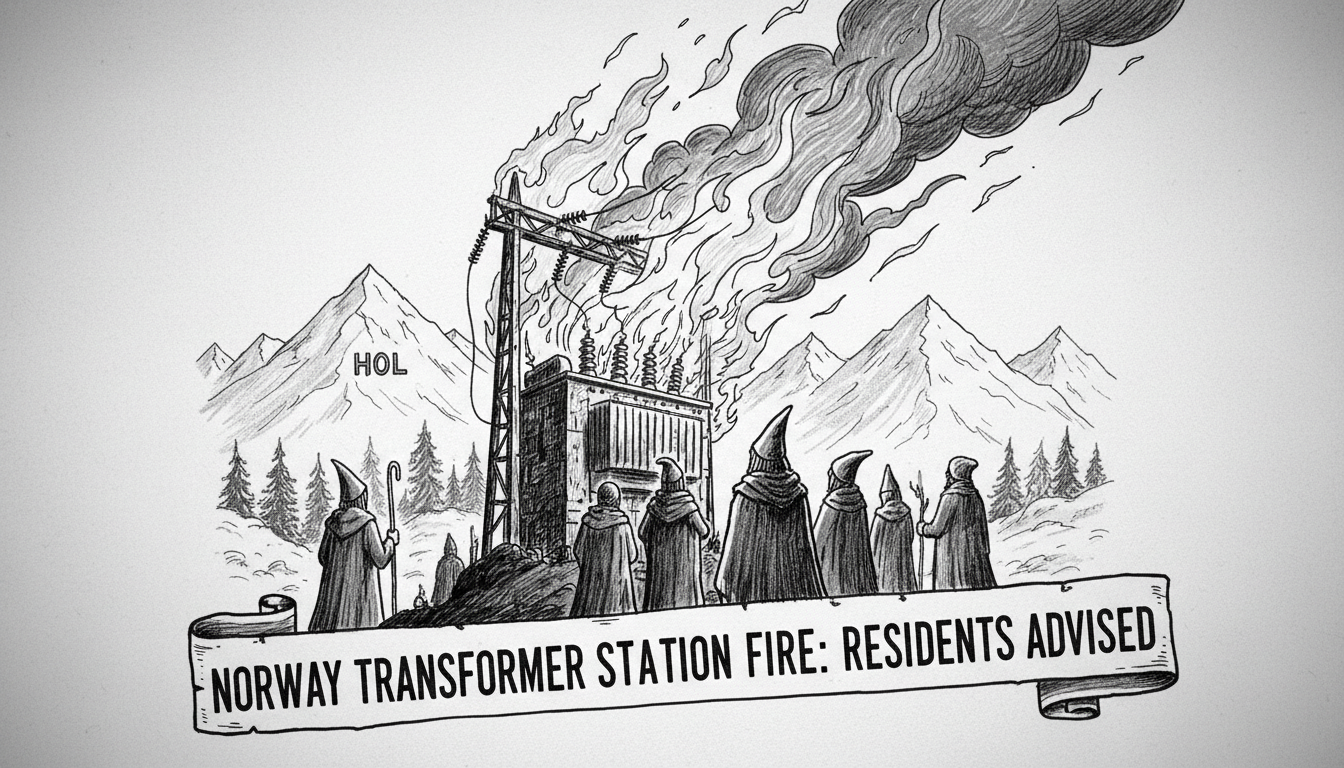
Norway fire services are battling a major blaze at an electrical transformer station in the Kleivi industrial park in Hol municipality. Police have advised residents to close windows and shut off ventilation systems due to toxic smoke. The incident has caused a localized power outage, raising immediate concerns over infrastructure resilience and public safety in the mountainous region.
Emergency responders arrived at the scene late Tuesday evening to find intense flames engulfing the fenced-off substation. The fire's origin and cause remain under investigation. Initial reports confirm significant damage to the station, a critical node in the local power distribution network. Officials have cordoned off the area, prioritizing fire containment and air quality management over the industrial park's eastern sector.
A Critical Infrastructure Failure
Transformer stations are the unsung backbone of the modern electrical grid. They convert high-voltage electricity from main transmission lines into lower voltages safe for homes and businesses. A fire at such a facility is more than a localized emergency; it represents a critical point of failure. The Kleivi station's malfunction has left parts of the industrial zone without power, disrupting operations and posing a potential cascading risk to the wider supply network.
Fires involving electrical infrastructure carry distinct hazards. The smoke can contain a cocktail of dangerous substances, including partially burned insulating oils and, in older equipment, potentially toxic polychlorinated biphenyls (PCBs). This explains the urgent health advisory from police. The directive to seal homes is a standard but serious precaution, indicating authorities believe the smoke plume poses a genuine inhalation risk.
Response and Environmental Scrutiny
The response protocol for this type of incident is highly technical. Firefighters cannot simply douse an electrical fire with water due to the risk of electrocution and spreading combustible fluids. They likely use specialized dry chemical or carbon dioxide suppressants. Simultaneously, technicians from the grid operator, likely Hafslund Nett or a local provider, work to isolate the damaged section to prevent further grid instability.
Environmental agencies will monitor the aftermath closely. Soil and water runoff from firefighting efforts must be contained to prevent contamination from transformer coolant oils. The incident spotlights the vulnerability of essential infrastructure, even in a nation with Norway's renowned technical and safety standards. It prompts questions about maintenance schedules, the age of assets, and the increasing strain on grids from both industrial demand and the green energy transition.
Hol's Context and Economic Impact
Hol municipality sits in the heart of some of Norway's most dramatic landscapes, bordering the vast Hardangervidda plateau. Its economy blends industry, tourism, and agriculture. The Kleivi industrial park is a significant local employer. Any prolonged power outage or operational disruption here has a direct economic impact on the community. While the full extent is not yet known, even a 24-hour stoppage can cost businesses tens of thousands of kroner in lost production and spoiled materials.
This event also tests municipal crisis coordination. Hol's emergency services, while proficient, are relatively small-scale. A complex, hazardous fire likely required mutual aid from neighboring districts in Viken county. The successful isolation of the threat without reported injuries so far suggests this inter-agency cooperation functioned effectively. It is a real-time drill for scenarios that emergency planners train for but hope never occur.
The Bigger Picture for Norwegian Energy
Analysts see this localized fire within a national context. Norway's energy system is in flux, moving from a centralized model toward a more distributed one with diverse renewable sources. Yet, the physical grid of cables and substations remains its vulnerable skeleton. Events like the Kleivi fire underscore that the nation's energy security depends on the integrity of hundreds of such installations, many of them aging and operating under increased load.
Investment in grid modernization and resilience is a constant discussion in the Storting. Proponents argue for accelerated upgrades, pointing to climate change-induced weather extremes that can cause equipment failures. Incidents like this provide concrete evidence for those arguments. They highlight the tension between maintaining affordable power and funding the massive, unseen infrastructure that delivers it.
Looking Ahead: Recovery and Review
The immediate priority remains extinguishing the fire and ensuring public safety. Following that, a lengthy period of investigation and recovery will begin. Power restoration to affected businesses depends on the damage assessment. In severe cases, replacing a large transformer can take months due to manufacturing and shipping times, requiring temporary solutions to be engineered.
A formal review will determine the cause—whether it was an equipment malfunction, an external factor, or a maintenance issue. The findings will be shared with national energy regulators. For the residents of Hol, the incident is a stark reminder of the complex systems that power daily life, systems that usually remain invisible until they dramatically fail. As the smoke clears over Kleivi, the questions about protecting Norway's critical infrastructure will only grow louder.
This fire, while contained geographically, ignites a broader conversation about resilience. How does a nation so dependent on reliable electricity protect the physical hubs of its grid? The answer requires continued investment, vigilant maintenance, and learning from every incident. The response in Hol will now be scrutinized as a case study for communities across the Nordic region facing similar invisible risks.