
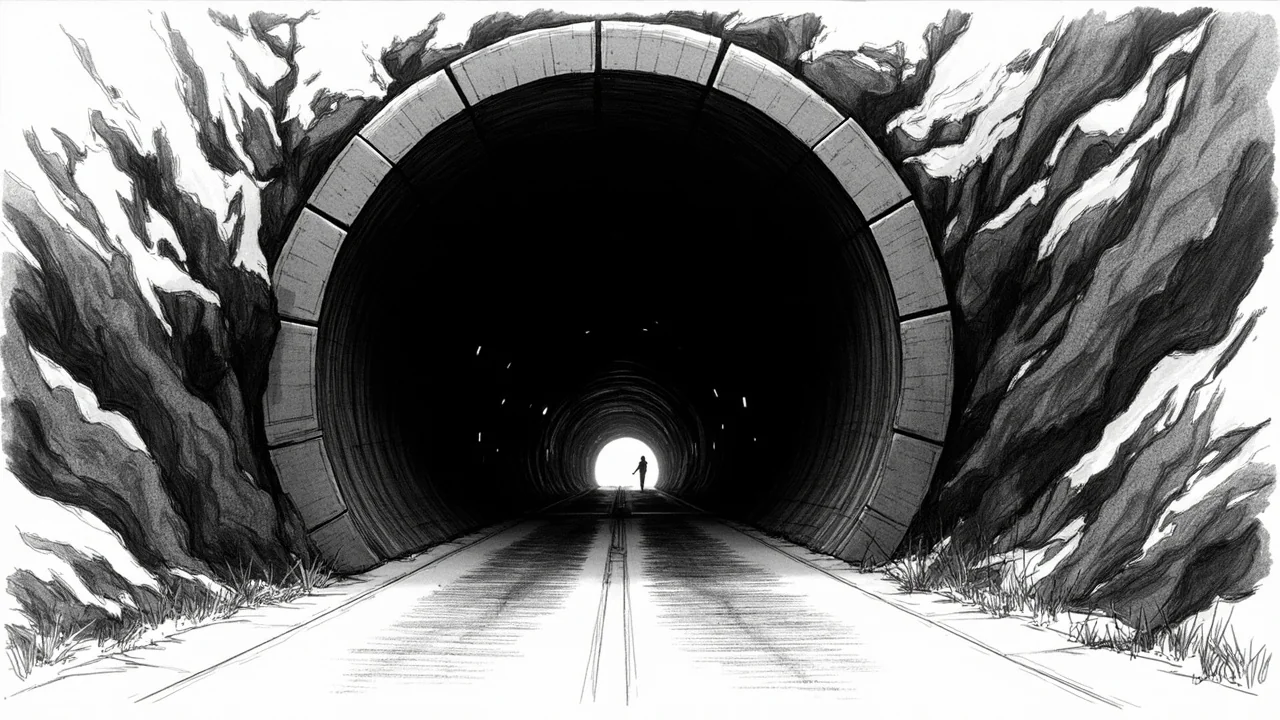
Norway's Oslofjord Tunnel became the scene of a major security scare early Saturday when a driver reversed through the 7.3-kilometer underwater passage. The motorist, appearing intoxicated, was later found with narcotics and a knife in his vehicle. State highway authorities monitoring the tunnel's cameras witnessed the dangerous maneuver and alerted police, leading to the driver's arrest and charges.
The incident occurred in the E134 Oslofjord Tunnel, a critical transport artery connecting the counties of Vestfold and Telemark. At its deepest point, the tunnel runs 134 meters beneath the fjord's surface. This depth and length make it a high-risk environment where any irregular traffic behavior poses severe dangers. The driver's decision to reverse created what police describe as an "extreme hazard" for other road users in the confined, submerged space.
A Submerged Highway Turned Hazard Zone
Norwegian road safety experts express profound concern over the event. "This is one of the worst-case scenarios for tunnel safety," said Lars Tennfjord, a senior advisor with the Norwegian Public Roads Administration. "The Oslofjord Tunnel is not just any road. It is a long, enclosed tube under significant water pressure. A collision or fire inside it could have catastrophic consequences, complicating rescue efforts immensely."
Tennfjord explained that tunnel safety protocols are designed for forward-moving traffic. Ventilation systems, emergency exits, and incident response plans all assume vehicles are traveling in the correct direction. A vehicle moving against the flow of traffic, especially at night, defeats these fundamental safety designs. The tunnel's length of over seven kilometers means a wrong-way driver could travel for minutes before encountering another vehicle, with both parties having little time to react.
Legal and Safety Repercussions Underway
The driver now faces multiple charges under Norwegian law. These likely include reckless endangerment, driving under the influence of narcotics, and possession of illegal substances and a weapon. The presence of a knife adds a layer of complexity to the case, potentially elevating the charges related to public safety threats.
Prosecutors will examine whether the driver's actions constitute a violation of Norway's strict traffic laws, which carry severe penalties for endangering others. A conviction could result in a lengthy driving ban, substantial fines, and possible imprisonment. The case also triggers a standard review by transport authorities to determine if current tunnel monitoring and intervention systems are sufficient.
The Critical Role of Surveillance Infrastructure
This incident highlights the vital importance of Norway's extensive tunnel surveillance network. The State Road Authority's ability to spot the reversing vehicle in real-time via camera was crucial in initiating a rapid police response. Norway, with its mountainous and fjord-rich geography, relies on over 1,000 road tunnels, many of them long and underwater. Continuous electronic monitoring is a non-negotiable component of national infrastructure security.
"The cameras did their job," Tennfjord noted. "But this event forces us to ask harder questions. How quickly can we physically stop a vehicle that is behaving so erratically in such a sensitive location? Our traffic management centers have protocols, but human behavior can be unpredictable." He suggested the incident might renew discussions about automated systems that can detect wrong-way travel and trigger immediate lane closures or alerts.
A Broader Look at Tunnel Security in Norway
Norway invests heavily in tunnel safety, a necessity given that the Oslofjord Tunnel is just one of many deep underwater passages. The similar but longer Lærdal Tunnel, for instance, stretches 24.5 kilometers and is the world's longest road tunnel. These engineering marvels come with unparalleled safety responsibilities. Norwegian regulations mandate strict standards for fire safety, evacuation routes, air quality monitoring, and emergency communication systems.
However, technology and regulations cannot fully account for deliberate human misconduct. This incident shifts the focus from passive safety systems to active threat mitigation. It raises uncomfortable questions about preventing individuals from using critical infrastructure as a venue for dangerous or potentially criminal activity. Security analysts point out that while Norway has low crime rates, its open society and accessible infrastructure can be vulnerable to isolated acts of negligence or malice.
Policy Implications for the Storting
The Oslofjord event is likely to resonate within the Storting, Norway's parliament. While not a systemic failure, it presents a clear case study of a single point of failure—an individual driver—threatening a major piece of infrastructure. Politicians from the Telemark and Vestfold regions, whose constituents depend on the tunnel, may call for reviews of enforcement and penalty structures.
"This goes beyond a simple traffic violation," said Ingrid Skogseth, a member of the Storting's Transport and Communications Committee. "When you compromise the safety of a subsea tunnel, you are risking lives and a vital economic link. The legal consequences must reflect the severity of that risk. We must also ensure our road authorities have the best possible tools for early detection and intervention." Her comments suggest potential for parliamentary hearings or mandate reviews for the Road Authority.
The Human Factor in Engineered Environments
At its core, the incident is a stark reminder of the human factor. Engineers can design tunnels to withstand immense water pressure and seismic events. Technologists can install advanced sensor networks. Yet, a single person making a profoundly poor decision can introduce chaos into the most controlled environments. The driver's alleged intoxicated state underscores the perpetual challenge of impairment on roads, a problem magnified in sensitive locations.
Behavioral psychologists note that tunnels can sometimes induce disorientation or anxiety in drivers, though nothing excuses the behavior reported here. The combination of alleged substance use, a weapon, and the bizarre decision to reverse suggests a level of impairment or intent that standard traffic safety campaigns are ill-equipped to prevent. This moves the incident from the realm of accident prevention into that of law enforcement and mental health intervention.
Looking Ahead: Safety Versus Accessibility
Norway faces a delicate balance. Its social model is built on trust and accessibility. Its geography necessitates complex, secure infrastructure. Bridging these two realities is an ongoing challenge. There will be no move to gate or restrict access to tunnels like the Oslofjord, as that would defeat their purpose as public highways. Instead, the response will focus on enhancing surveillance intelligence and response times.
The authorities may explore tighter integration between traffic cameras and automated number plate recognition systems to identify vehicles of concern before they enter tunnels. They might also review coordination procedures between the Road Authority's traffic centers and local police districts to shave critical minutes off response times. The goal is to stop threats before they reach the most vulnerable parts of the network.
This Saturday morning scare under the Oslofjord serves as a sobering drill. It tested systems that worked, but also exposed the terrifying simplicity of creating danger. As one police officer on the scene remarked, the difference between a close call and a national tragedy was a matter of minutes and the absence of oncoming traffic. For a country that has mastered the engineering of crossing its formidable fjords, managing the unpredictable nature of human behavior remains the more complex task. The investigation continues, and with it, a necessary examination of how to protect Norway's underwater highways from those who would use them as a stage for peril.