
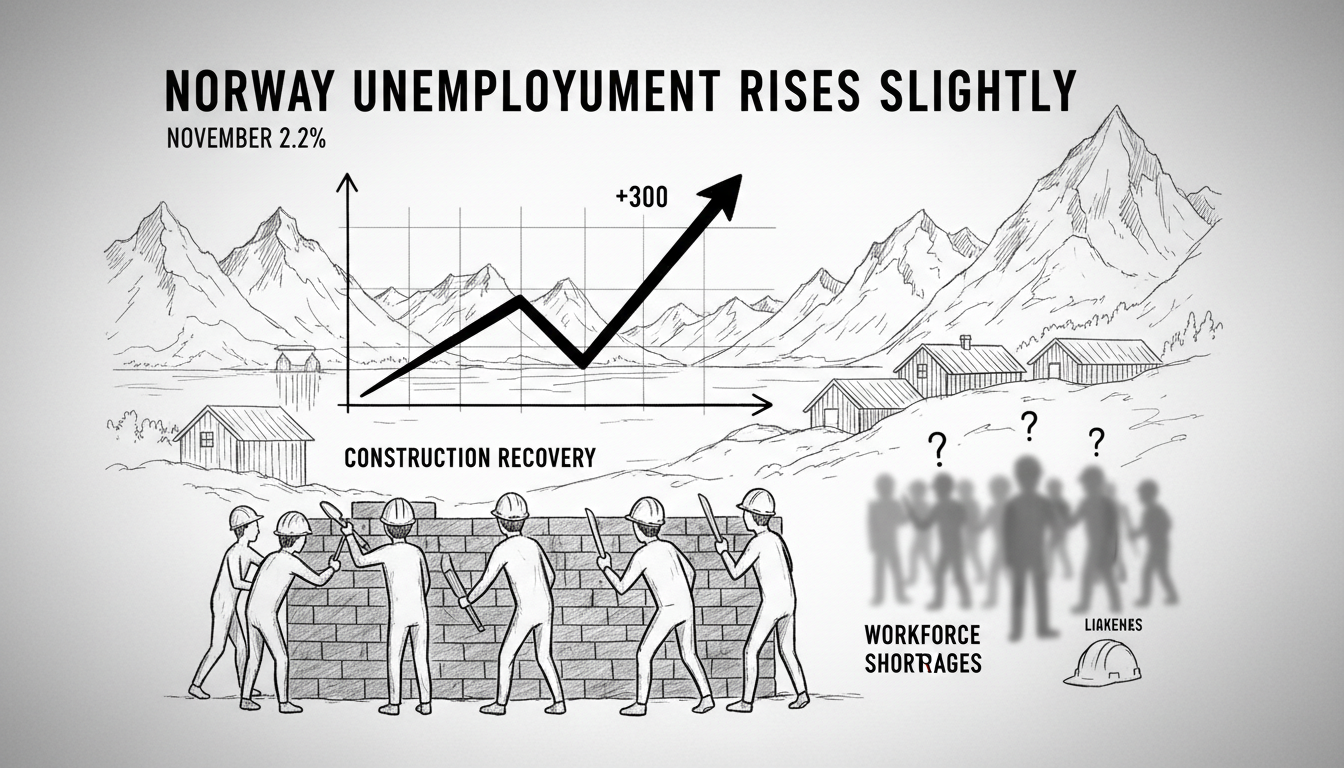
Norway's labor market showed modest softening in November with a slight uptick in unemployment figures. The country registered 300 additional fully unemployed individuals after seasonal adjustments. This brings the total number of jobless Norwegians to 65,076 people.
The seasonally adjusted unemployment rate remained steady at 2.2 percent of the workforce. Labor officials describe the trend as consistent with recent months. Most occupational categories experienced minor increases in joblessness.
Acting Labor and Welfare Director Eve Bergli noted the construction sector shows promising signs. We observe declining unemployment in building trades alongside substantial growth in advertised positions compared to last year. The construction industry rebound could signal broader economic resilience.
Bergli emphasized ongoing employment opportunities despite recent trends. Many positions remain available across most industries. Employers continue reporting workforce shortages to labor authorities. Companies could benefit from adjusting competency requirements to access needed workers.
This unemployment data arrives during Norway's ongoing energy transition debate. Petroleum industry employment remains crucial to many coastal communities near Stavanger and Hammerfest. The government faces balancing oil sector stability with green energy investments.
Parliament members from northern constituencies monitor these figures closely. They represent districts where oil and gas employment supports local economies. Any labor market shifts could influence upcoming Arctic policy discussions.
Norway's unemployment remains low by international standards. The country maintains strong social safety nets through its sovereign wealth fund. This financial cushion helps mitigate individual impacts of job transitions.
Labor market analysts watch whether this trend continues into next quarter. The data could influence Storting debates about workforce development programs. Government officials must consider both immediate needs and long-term economic planning.
Energy companies operating in the North Sea and Norwegian Sea follow employment trends closely. They require skilled workers for projects from the Troll field to newer developments. Workforce availability affects Norway's petroleum production targets and export capabilities.
The minor unemployment increase reflects normal economic fluctuations rather than crisis conditions. Norway's diversified economy includes strong maritime, energy, and technology sectors. This diversity provides stability during sector-specific challenges.