
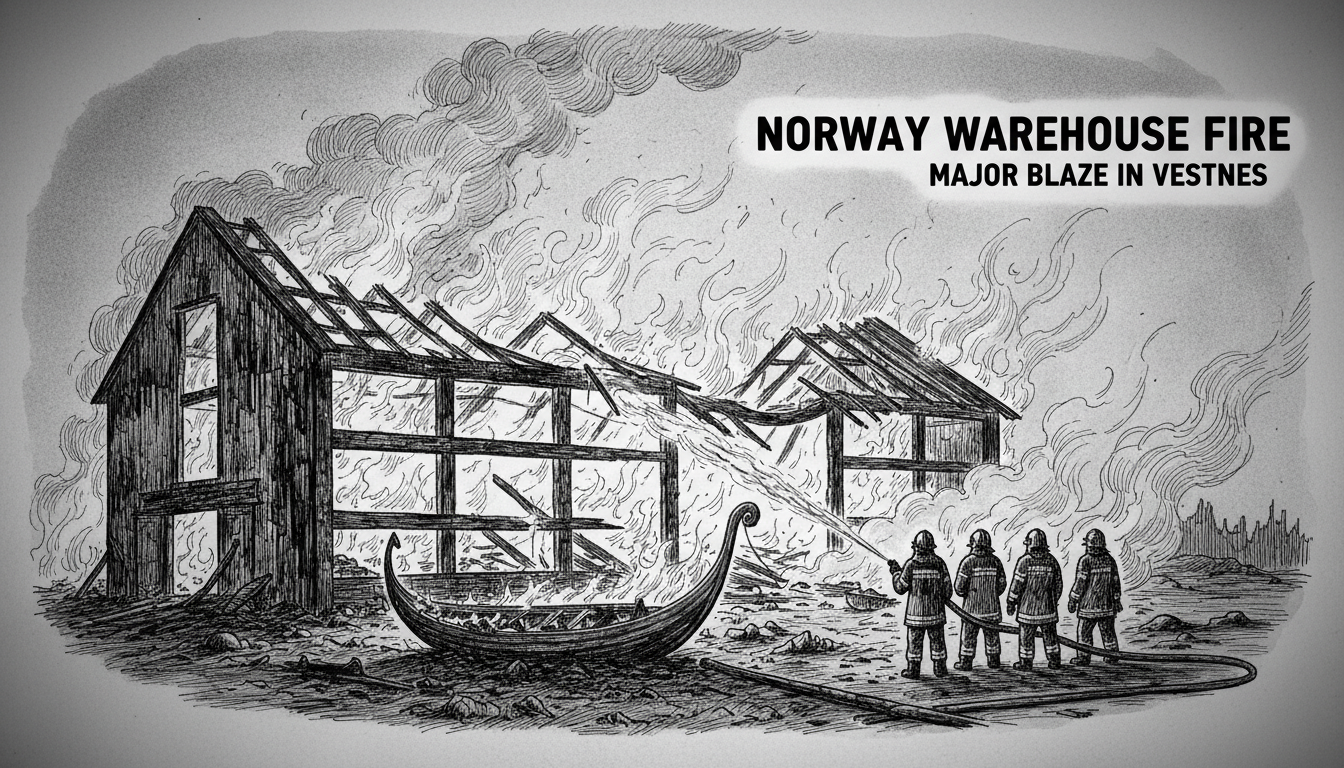
Norway's emergency services are battling a major industrial fire in the village of Tresfjord, Vestnes municipality. Two warehouse buildings are fully engulfed in flames, with firefighters conducting external extinguishing operations due to the intensity of the blaze. The structures contain wood chips and hydraulic oil, creating a complex and hazardous firefighting scenario.
Operational leader Rian Morrison from the 110 emergency center confirmed the severity. "The buildings are completely overtaken by fire and the fire department is now conducting external extinguishing," Morrison said. No injuries have been reported, and residents from the nearest house have been evacuated as a precautionary measure. The duration of the firefighting effort remains uncertain.
A Fiery Challenge in the Fjords
The fire presents significant challenges for the Møre og Romsdal emergency responders. The presence of wood chips, a highly combustible biomass material, provides ample fuel. Hydraulic oil, a petroleum-based fluid, adds to the fire's intensity and creates potential for toxic smoke and environmental runoff. Combating a fully developed fire in such conditions often requires a defensive strategy, focusing on preventing spread rather than immediate internal attack.
Vestnes, with a population of around 7,000, is situated on the Romsdalsfjord. The industrial area in Tresfjord is typical for many Norwegian coastal communities, where logistics and maritime support services are common. Fires in these settings can strain local resources, often requiring mutual aid from neighboring municipalities. The response likely involves units from the local volunteer fire brigade, supported by professional crews from larger towns like Molde or Ålesund.
Environmental and Safety Protocols Activated
The burning of hydraulic oil raises immediate environmental concerns. Runoff from firefighting water can carry contaminants into the nearby Tresfjorden, a branch of the iconic Romsdalsfjord. Norwegian authorities have strict protocols for such incidents, which likely include the deployment of containment booms and absorbent materials to protect the marine environment. The Norwegian Coastal Administration and the Norwegian Environment Agency may be involved in monitoring and mitigation efforts.
"Industrial fires involving stored materials are particularly dangerous due to the fuel load and unknown factors within the structure," said Lars Holm, a former chief fire officer and now a safety consultant in Oslo. "The decision for external attack is standard when the structural integrity is compromised or the interior is untenable. The key priorities are life safety, preventing expansion, and environmental protection, in that order."
The evacuation of nearby residents, though precautionary, highlights the rapid risk assessment conducted by incident commanders. Smoke plumes from burning synthetic oils and treated wood can contain harmful particulates and chemicals, making downwind evacuation a standard safety measure.
Industrial Fire Risks in Norwegian Context
This incident brings focus to industrial fire safety standards in Norway. The Norwegian Directorate for Civil Protection (DSB) sets regulations for the storage of flammable materials. Warehouses containing materials like wood chips—often used for biofuel—must have specific compartmentalization, detection, and suppression systems. Regular inspections are mandated, but the effectiveness relies on both compliance and maintenance.
Norway has a strong record of fire safety, with one of the lowest rates of fire fatalities in the world. This is attributed to robust building codes, a widespread network of volunteer and professional fire departments, and public awareness campaigns. However, industrial and warehouse fires remain a persistent challenge globally due to the high value of stored goods and the complexity of suppression.
Data from DSB shows that while residential fires have declined, the number of fires in commercial and industrial properties has remained relatively stable over the past decade. These fires account for a disproportionate share of total economic fire loss in Norway, often running into hundreds of millions of kroner annually.
Economic and Community Impact
While the specific company affected has not been named, a fire of this magnitude represents a severe economic blow. The loss of buildings, inventory, and machinery can cripple a local business. Interruption to operations may affect supply chains and employment in a municipality like Vestnes, where the local economy is interconnected.
Business interruption insurance is common in Norway, but the recovery process can be lengthy. Rebuilding an industrial facility requires navigating planning permissions, environmental assessments, and modernized building codes that may be stricter than those applied to the original structure.
The community impact extends beyond economics. A large, visible fire is a traumatic event, creating anxiety and disrupting daily life. The sight of a major emergency response, smoke plumes, and the evacuation of neighbors leaves a lasting impression. Local officials will likely provide public updates and psychosocial support if needed.
The Road Ahead for Vestnes
The immediate focus remains on fully extinguishing the fire and cooling the site to prevent rekindling. Once the scene is safe, investigators from the Fire Investigation Service (Brannskadetjenesten) will begin the meticulous process of determining the cause. This can take weeks or months, involving forensic analysis of the scene, electrical systems, and witness interviews. The findings are crucial for preventing future incidents and may inform updates to national safety guidelines.
For the affected company, the next steps involve liaising with insurers, assessing total losses, and planning for continuity or reconstruction. For the municipality of Vestnes, the event serves as a live test of its emergency preparedness plans. A formal review will evaluate the response time, resource allocation, inter-agency coordination, and the effectiveness of public communication.
This fire in the quiet fjord landscape of Møre og Romsdal is a stark reminder that industrial risk is present even in Norway's most picturesque settings. It underscores the perpetual need for vigilant safety practices, adequate emergency funding, and community resilience. The successful prevention of injuries is the primary victory in this incident, but the full cost—economic, environmental, and communal—is yet to be tallied. How will this event shape local industrial safety policies and preparedness for the next emergency?