
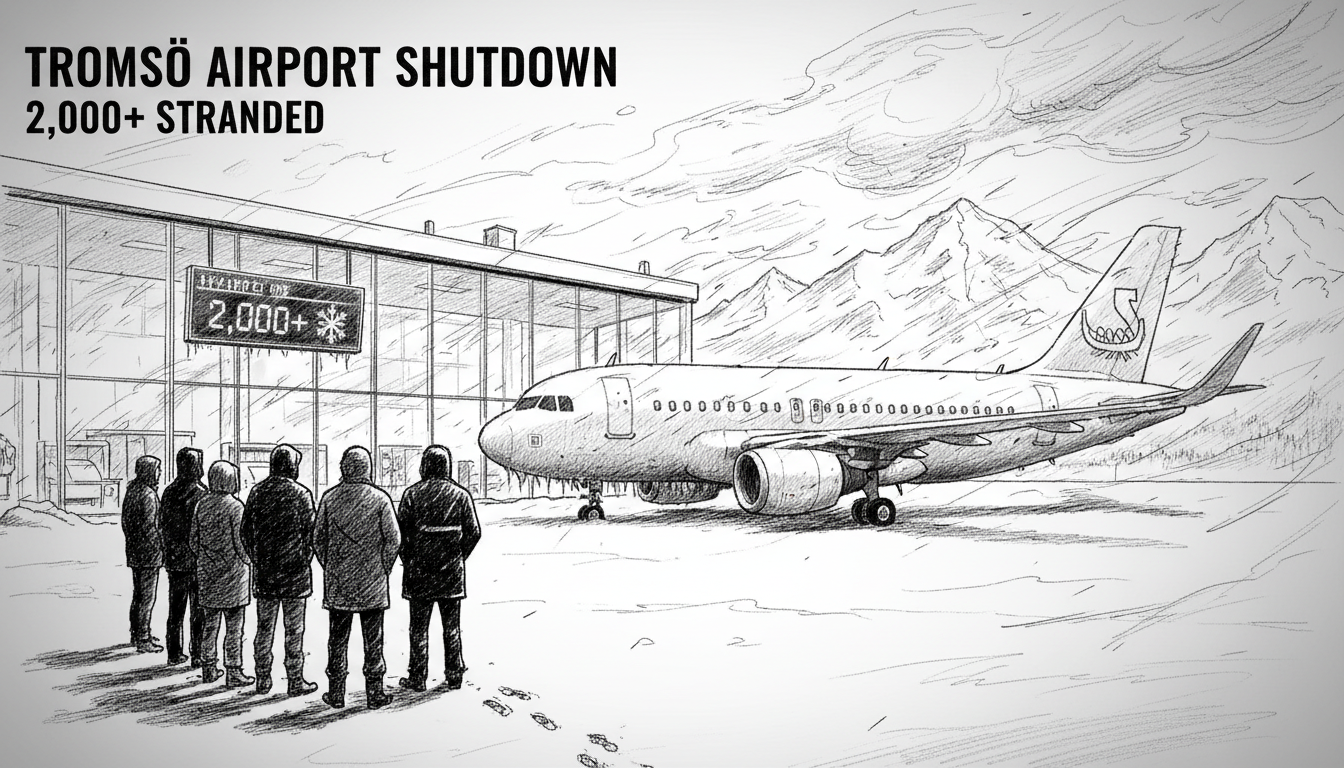
Norway's largest Arctic airport, Tromsø Airport, faces a full operational shutdown this Sunday afternoon, grounding all flights and stranding thousands of travelers. The closure was ordered by airport authorities due to severe and rapidly deteriorating weather conditions sweeping across Northern Norway. The sudden halt at this critical regional hub exposes the persistent vulnerability of modern air travel to Arctic extremes and triggers a major logistical crisis for remote communities.
An Arctic Hub Grinds to a Halt
Located just 5 kilometers from Tromsø's city center, Tromsø Airport (TOS) is far more than a local facility. It functions as the primary aerial artery for the entire northern region, connecting remote coastal and inland communities to the rest of the country. In 2023, it processed over two million passengers. The timing of this closure is particularly problematic, occurring on a weekend during the peak winter tourism season. December through February are traditionally the airport's busiest months, as visitors flock to the region for Northern Lights sightings and winter sports. The immediate impact is severe, with several thousand passengers already affected, and numbers expected to climb as delays cascade through the national and European flight network.
The decision to close was not taken lightly. Arctic airports like Tromsø are designed to handle significant snowfall and cold. However, the specific combination of factors in this weather system—likely involving extreme wind shear, blinding snow squalls, or sudden ice formation—exceeded operational safety parameters. "When an airport of this caliber in the North closes, it's because the conditions present a clear and immediate risk to safe take-offs and landings," explained a veteran pilot familiar with Nordic operations, who requested anonymity as he was not authorized to speak publicly. "The topography around Tromsø, with water and mountains, can create especially treacherous wind patterns that standard equipment cannot mitigate."
The Ripple Effect Across the North
The consequences extend far beyond cancelled holiday trips. Tromsø Airport serves as the central node for Widerøe's extensive regional network, which connects smaller towns like Alta, Kirkenes, and Svalbard (Longyearbyen) to the national grid. A prolonged shutdown at Tromsø severs these vital links. Patients requiring medical transport to university hospitals in Tromsø or Oslo face critical delays. Fresh seafood shipments, a key Arctic export, are grounded. Business travel across a region reliant on air connections for meetings in major southern cities like Oslo and Bergen grinds to a halt.
Local authorities and airlines are now activating contingency plans. Passengers are being directed to check airline websites and apps for rebooking information, but capacity on alternative routes is limited. Travel by road or sea is often not a feasible alternative in winter due to long distances, mountain passes prone to closure, and stormy coastal waters. This forces many travelers into an indefinite holding pattern, reliant on airport hotels and information desks. The economic cost is immediate for tourism operators, hotels, and restaurants in Tromsø, which see sudden cancellations, and for freight companies facing spoilage and contract penalties.
A Recurring Challenge for Arctic Infrastructure
This incident is not an isolated one but part of a recurring pattern challenging Norway's northern infrastructure ambitions. As the government promotes the North as a region of strategic and economic importance—highlighting Arctic research, shipping, and energy—the reliability of its core transport links remains at the mercy of the climate. While airports like Oslo Gardermoen have advanced systems to minimize weather disruption, the cost of implementing similar, even more advanced technology at smaller Arctic airports is prohibitively high. The question becomes one of investment priority and risk tolerance.
"These closures force a difficult conversation," says Lars Jacob Stene, a transportation analyst based in Bodø. "We are encouraging more economic activity and population growth in the North, but the foundational infrastructure is inherently fragile. Each major disruption renews debates about investing in more resilient technology, improving ground transport corridors as backups, or simply accepting these disruptions as an inevitable cost of operating in the High North." The Norwegian state, which owns operator Avinor, continually weighs these expensive upgrades against other national needs.
The Human Element: Stranded in the Arctic Circle
Behind the statistics of cancelled flights and economic loss are thousands of individual stories of frustration and adaptation. Families may miss connecting international flights from Oslo. Researchers could lose critical slots for field work dependent on specific weather windows. Tourists who saved for years to see the aurora borealis might spend their precious nights in an airport terminal instead of a snow hotel. The airport's staff, from gate agents to baggage handlers and air traffic controllers, face immense pressure managing crowds, disseminating information, and working to reopen as soon as humanly possible.
Communication is key during these crises. Past events have shown that passenger frustration escalates fastest when information is scarce or contradictory. Airlines and Avinor are tested on their ability to provide clear, consistent updates through multiple channels. The efficiency of re-accommodation procedures for stranded passengers, including hotel vouchers and meal tickets, becomes a direct measure of operational preparedness. For the people of Northern Norway, such disruptions are a familiar winter inconvenience, but for many visitors, it is a stark and unexpected introduction to the power of the Arctic environment.
Looking Beyond the Storm
As crews work to clear runways and await a break in the weather, the broader implications linger. This closure serves as a real-time stress test for Northern Norway's mobility. It highlights the region's dependence on a single point of failure—its major airport. Discussions around diversifying transport options, such as improving rail connectivity or fast-sea ferry services, often gain traction after such events, though they face geographical and economic hurdles.
For now, the focus remains on restoring operations safely. The reopening will be gradual, with priority given to essential medical and emergency flights. Commercial traffic will face a massive backlog, meaning disruptions will likely persist for 24-48 hours after the airport officially reopens. The incident is a potent reminder that in the race to develop the Arctic, nature still holds the ultimate veto power over even the most advanced human plans. The challenge for Norway is not just to build infrastructure in the North, but to build infrastructure that can withstand the North's formidable will.