
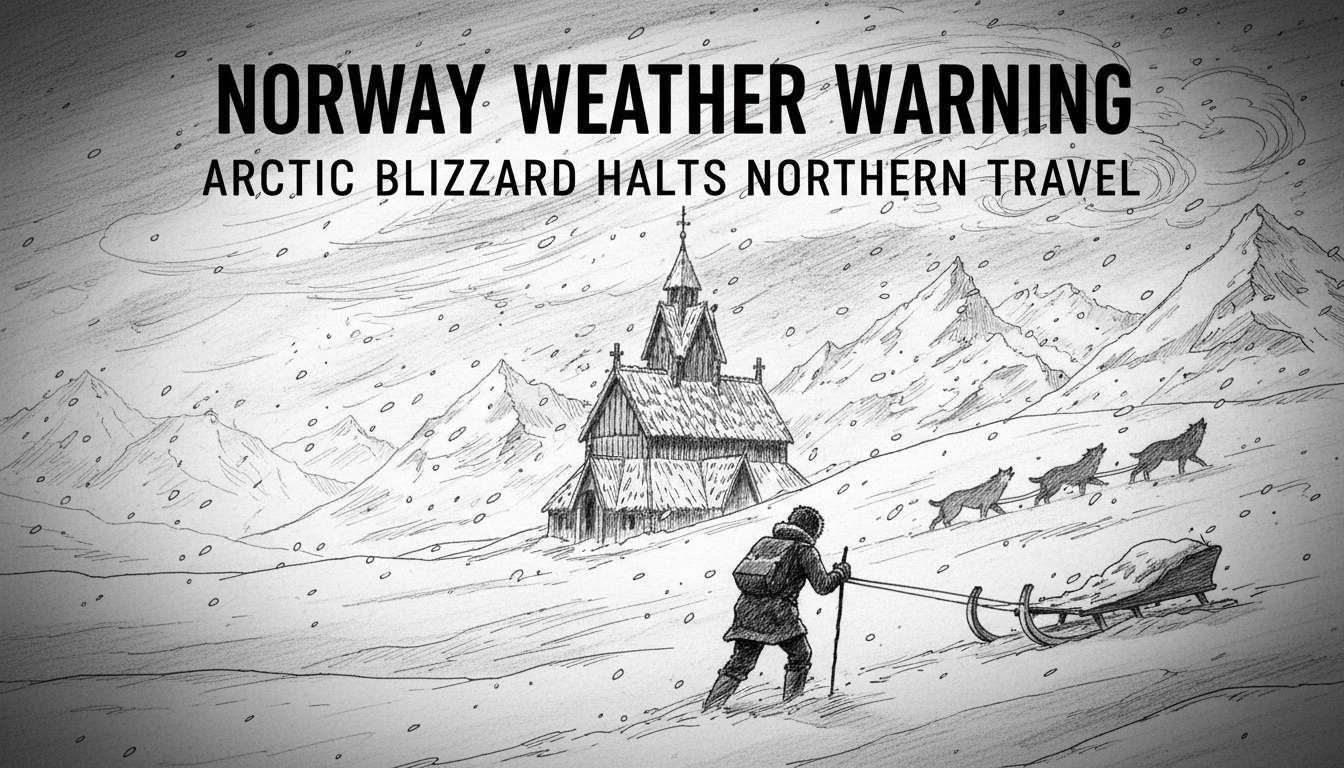
Norway's Meteorological Institute issued a severe yellow weather warning for intense snowdrifts across Finnmark, Nordland, and parts of Troms on Monday morning. The powerful Arctic blizzard, known locally as 'snøfokk,' has closed major roads, disrupted air travel, and stranded residents, highlighting the formidable challenges of winter in Europe's northernmost region.
Roads Become Impassable as Visibility Drops
Multiple key roads were shut down by Monday morning due to dangerous conditions. The route between Skapsvåg and Nordkapp is completely closed. Convoy driving, where vehicles follow a guide vehicle, is in effect on several other stretches, including over the Ifjordfjellet mountain pass. A vehicle recovery operation earlier forced the closure of the county road between Hopseidet and Mehamnelv. Traffic operators warn that more closures are likely as the storm continues. The E6 highway over Sennalandet and National Road 94 from the Kvalsund Bridge to Hammerfest are also at high risk of closure.
“There is a lot of snowdrift around on the roads, with a danger of snow banks and reduced visibility. In some places, driving conditions can be difficult,” said traffic operator Bente Nyland, describing the situation in Finnmark. She urged drivers to check road and weather conditions before traveling and to consider postponing trips where conditions are worst.
Air Travel Grinds to a Halt in Tromsø
The storm's impact extended into the skies, causing significant disruptions at Tromsø Airport, the largest in Northern Norway. Airport operator Avinor reported that demanding weather conditions led to disturbances in air traffic to and from the airport, with heavy pressure expected throughout Monday. Travelers were advised to stay in contact with their airlines for specific flight information.
The disruptions created chaotic scenes for passengers. Edny Vevang, who started her journey in Mehamn with a destination of Hammerfest, found herself unexpectedly in Tromsø. “I traveled from Mehamn, was supposed to go to Hammerfest and ended up here in Tromsø because of bad weather,” she said, describing it as “a real rollercoaster ride.” Vevang anticipated a long wait for a new flight to be arranged. Specific flights were canceled, including Widerøe's 11:35 AM departure from Tromsø to Hammerfest, with delays affecting numerous other services.
The Science Behind the Snøfokk
The term 'snøfokk' refers specifically to snow being lifted and blown by strong winds, drastically reducing visibility and creating deep, unpredictable drifts. It is a common but hazardous feature of the Arctic winter. Northern Norway's high latitude and exposure to Arctic weather systems make it particularly vulnerable to these intense storms. The current event is driven by a powerful low-pressure system combining heavy snowfall with sustained high winds.
Magnus Ovhed, the meteorologist on duty, explained the forecast for parts of Finnmark: “There is quite a bit of wind, so there will be a good deal of snowdrift when you get up in the heights.” This combination is what makes mountain passes and exposed coastal roads especially perilous.
Compounding the danger is a separate orange-level warning for considerable avalanche risk issued for parts of Finnmark, Troms, and Nordland. The orange alert is the second-highest level on Norway's four-tier scale, indicating that natural avalanches are likely and triggered avalanches are very likely. This dual threat of blinding drift and potential slides creates a complex emergency scenario for authorities.
A Test of Preparedness and Infrastructure
This storm tests Norway's robust systems for managing extreme winter weather. The country has extensive protocols, from the Meteorological Institute's detailed warnings to the Public Roads Administration's rapid response teams. The use of convoy driving is a standard tactic to keep traffic moving cautiously on otherwise impassable roads. However, the sheer geographic scale and isolation of Northern Norway present unique logistical hurdles.
Small communities like Husøy can become completely isolated by such weather, cut off from ferry and road connections. These events underscore the region's dependence on reliable air and sea links, which are themselves vulnerable to Arctic conditions. The disruptions at Tromsø Airport, a critical hub, demonstrate how a localized storm can have a cascading effect on regional mobility.
Experts consistently stress a community-focused approach to safety. “People must follow the weather and traffic reports, and take a look at how the weather develops during the day,” advised traffic operator Gunnar Dovland. This message of personal responsibility, paired with official warnings, forms the cornerstone of public safety during these frequent winter crises.
Living with the Arctic's Fury
For residents of Finnmark and Troms, such storms are not extraordinary news but a regular part of life from late autumn through spring. The ability to adapt plans, stock supplies, and heed warnings is ingrained. The infrastructure, from building design to vehicle standards, is engineered with these conditions in mind. Yet, each significant storm brings fresh challenges and reminders of nature's power.
The economic impact is immediate. Transport delays affect commerce, from fresh goods to critical supplies. Tourism, a vital industry in the North, faces cancellations and interruptions. Daily life for residents is put on hold, with commutes canceled and appointments missed.
As climate change alters weather patterns, there is ongoing scientific discussion about how Arctic storms may be affected. Some research suggests the potential for more intense precipitation events, even as winters warm overall. This places a greater emphasis on maintaining and adapting the region's resilience strategies.
The Path Ahead Through the Snow
As Monday progresses, authorities will focus on managing the immediate crisis: clearing key routes, assisting stranded travelers, and providing updates. The priority remains preventing accidents and keeping people safe. The storm serves as an annual reminder of the formidable environment at the top of Europe.
The true measure of success in these events is not just in advanced warnings or plow trucks, but in the collective decision of individuals to stay home when the sky turns white and the wind howls. In the vast, beautiful, and sometimes brutal landscape of Northern Norway, respecting the weather is the first rule of survival. Will this week's snøfokk become a routine case of winter resilience, or will it leave a more lasting mark on the communities it has isolated?