
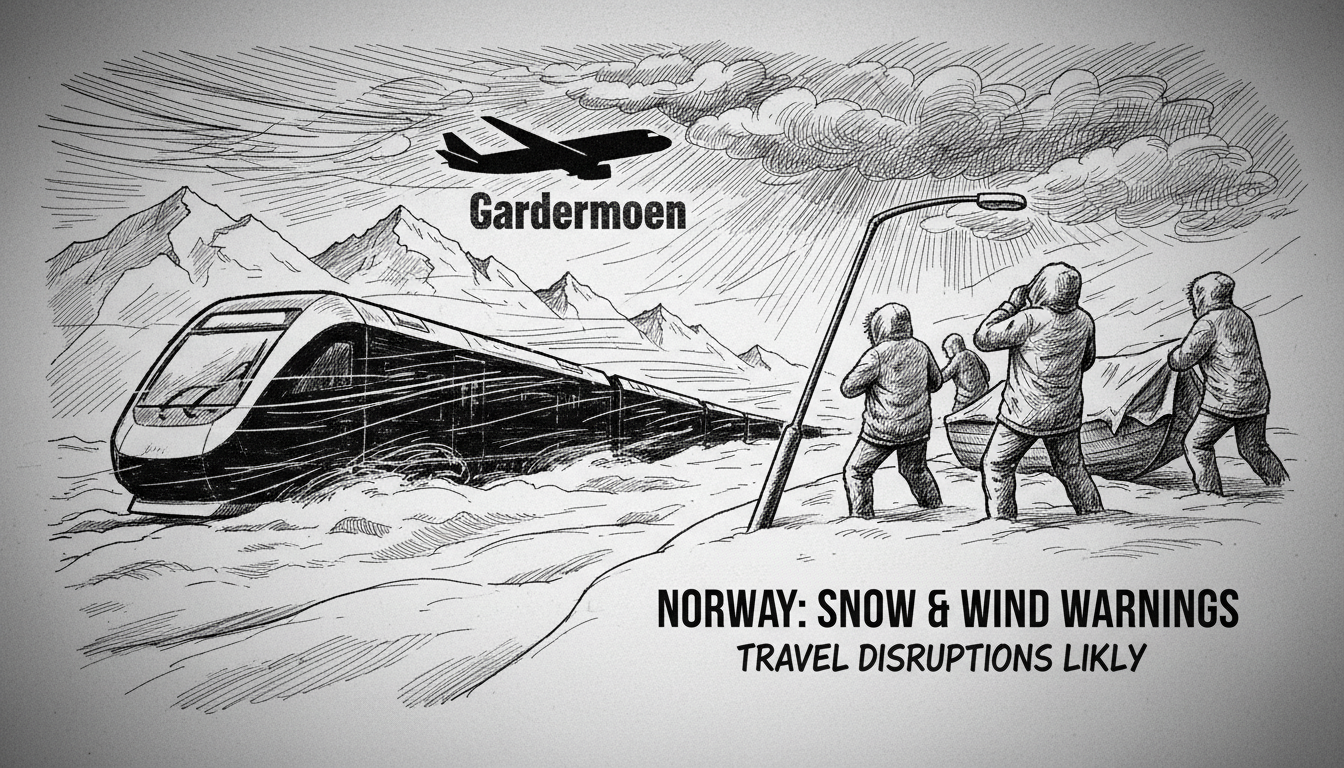
Norwegian authorities have issued yellow weather warnings for significant snowfall across Eastern Norway and powerful winds in northern coastal regions. The meteorological service predicts challenging travel conditions and potential airport disruptions as weather systems develop across the country.
The Eastern Norway warning remains in effect from early Sunday through Monday midnight. Meteorologists describe a developing low-pressure system south of the region moving inland. Coastal areas will experience rain while inland territories face sleet and substantial snow accumulation between 10-20 centimeters.
A meteorologist with the national weather service explained the transportation implications. Road conditions will likely become difficult and may affect operations at Gardermoen Airport. The exact transition line between snow and rain remains uncertain, prompting officials to recommend additional travel time during peak afternoon and evening hours.
Northern Norway faces separate challenges with yellow warnings for strong winds across Nordland and Troms counties. Weather officials note the situation approaches orange-level severity with significant uncertainty. A developing low-pressure system tracking along the Nordland coastline brings expected wind gusts between 30-40 meters per second.
The Lofoten region appears most vulnerable to storm conditions. Officials express particular concern about downslope winds descending from mountainous terrain. Residents in affected areas should secure loose outdoor objects and reconsider travel plans. Wind intensity will increase first in Lofoten and Salten before diminishing in Southern Troms.
These weather patterns demonstrate Norway's ongoing vulnerability to Arctic climate systems despite advanced infrastructure. The country's extensive coastline and mountainous terrain create complex weather dynamics that regularly test transportation networks and emergency response systems. Weather-related disruptions have become increasingly frequent in recent years, raising questions about climate adaptation strategies.
Norway's transportation ministry maintains contingency plans for severe weather events. The country's main airports, including Gardermoen, have sophisticated de-icing capabilities but may still experience delays during extreme conditions. Road maintenance crews remain on high alert throughout the warning period, particularly along the E6 highway connecting major population centers.
The energy sector monitors these developments closely as offshore installations in the Norwegian Sea and Barents Sea could face operational challenges. Norway's oil and gas production facilities maintain strict weather protocols, with evacuation procedures activated when wind speeds exceed safety thresholds. These regular weather events highlight the practical challenges of Arctic resource extraction.
Meteorological officials continue to refine forecasting models for Norway's complex topography. The country invests substantially in weather monitoring technology, particularly in northern regions where climate change produces increasingly volatile conditions. These warnings represent standard precautionary measures for a nation accustomed to navigating dramatic seasonal transitions.