
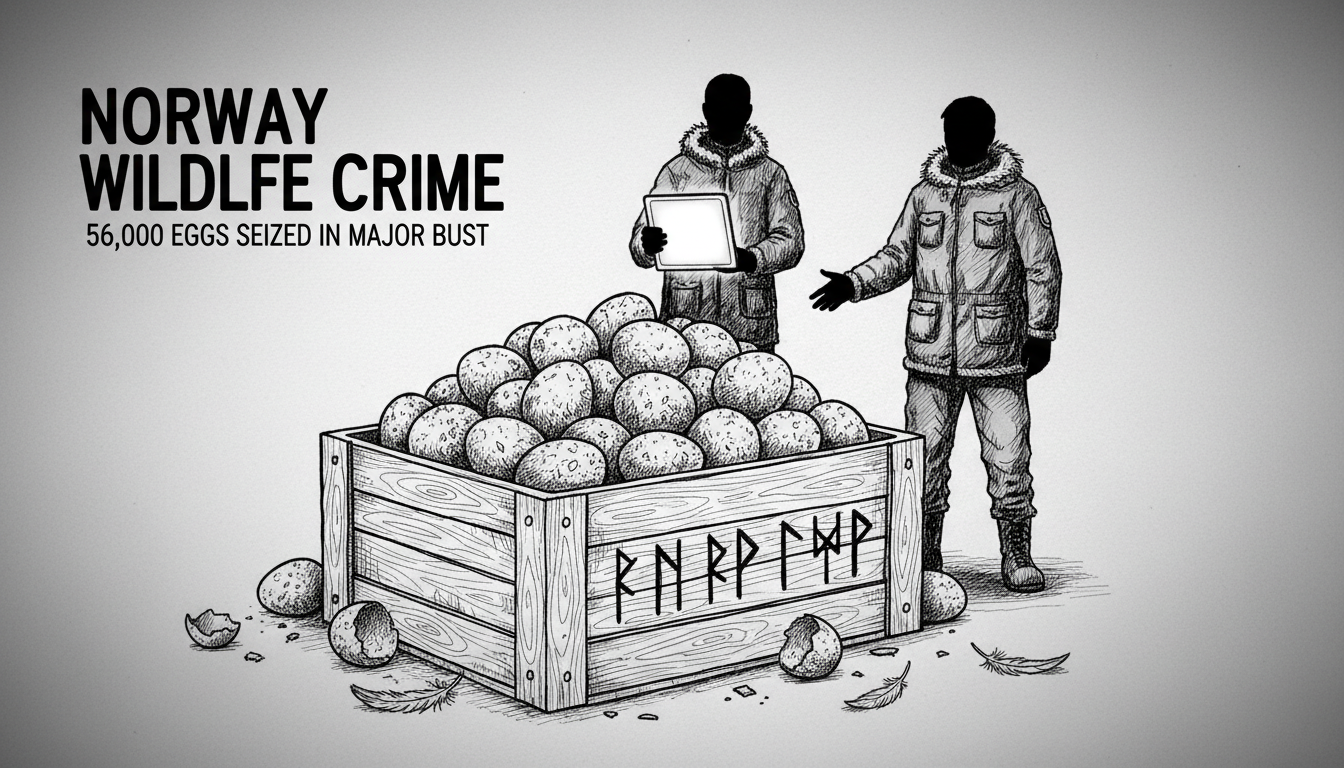
Norway's illegal bird egg trade has been exposed in a major police operation targeting a nationwide network of collectors. Two men from Møre og Romsdal are now formally indicted for serious violations of the Wildlife Act, accused of trading eggs from endangered species. A total of 16 men, aged 32 to 82 and living across the country, are implicated in the case. The scale of the operation is staggering: Norwegian authorities have seized 56,000 eggs since discovering the network, a haul that represents a significant threat to vulnerable bird populations.
A Network Spanning Generations and Geography
The case reveals a clandestine hobby turned criminal enterprise, connecting men from their early thirties to their eighties. This age range suggests the illegal trade involves both seasoned collectors and a new generation. Their geographic spread, from the southern coasts to northern regions, indicates a coordinated network rather than isolated incidents. The two indicted men from Møre og Romsdal are believed to be key figures. This county, with its dramatic fjords, coastal islands, and mountainous terrain, is a crucial habitat for many of Norway's seabirds and raptors, making it a prime target for egg thieves.
Police have not publicly named the specific endangered species involved, but Norway is home to several birds protected under strict national and international conventions. Species like the white-tailed eagle, golden eagle, peregrine falcon, and various seabirds could be potential targets. The removal of eggs from nests, especially for rare species with low reproduction rates, can have devastating consequences for local populations, potentially leading to extinctions in specific areas.
The Devastating Ecology of an Egg
Conservation experts express profound alarm at the volume of eggs seized. "A seizure of 56,000 eggs is not just a number; it represents a catastrophic loss for bird populations," said Dr. Ingrid Vardheim, an ornithologist at the University of Bergen. "For endangered species, each egg is critical to genetic diversity and population recovery. Collectors often take the first clutch of the season, forcing birds to lay a second. This drains the female's energy reserves and results in weaker chicks, if any survive at all."
The impact extends beyond the single egg removed. The act of collection often disturbs the nesting site, causing parents to abandon the nest entirely. For cliff-nesting birds, the physical act of accessing nests is dangerous and can damage the surrounding vegetation. The illegal trade creates a market demand that incentivizes this destructive behavior, targeting the rarest and most sought-after species.
Legal Repercussions and a Cultural Shift
The charges are brought under Norway's Wildlife Act (Viltloven), which carries severe penalties for trading in protected species. Serious violations can result in substantial fines and imprisonment for up to six years, depending on the conservation status of the species and the scale of the crime. The indictment for "grove brot" or serious violations suggests prosecutors are pursuing the harshest available penalties.
This case highlights a persistent conflict in Norway between a deep-seated cultural tradition of nature collection and modern conservation ethics. Egg collecting, or "oologi," was once a more common hobby, even for schoolchildren and scientists. Today, that practice is strictly regulated and, for all protected species, completely illegal. "There is a generational understanding gap," noted legal scholar Arne Foss. "What an older collector might view as a passionate hobby, the law correctly identifies as a crime that damages our shared natural heritage. The authorities are sending a clear message that this will not be tolerated."
The Challenge of Enforcement in Rugged Terrain
Enforcing wildlife law in Norway presents unique logistical challenges. Nesting sites for eagles and falcons are often on remote cliff ledges, while seabird colonies occupy isolated islands. Policing these vast areas is difficult. The success of this investigation likely relied on a combination of traditional police work, tip-offs from the public or conservation groups, and possibly digital forensics tracking online sales or communications between collectors.
"This network was operating under the radar for a significant time to amass such a collection," a senior investigator with the National Police Directorate said in a statement. "It demonstrates sophisticated methods on their part and a determined response on ours. Seizing the collection is a major blow to their trade." The police have not detailed where the seized eggs are being stored or their ultimate fate, though they may be used as evidence before being destroyed or placed in a controlled museum collection.
A Broader Pattern of Wildlife Crime
This egg trade bust is not an isolated incident in the Nordic region. It fits a pattern of wildlife crime that includes the illegal poaching of predators like wolves and lynx, the theft of rare orchids, and the smuggling of live birds and reptiles. These crimes are often driven by collectors seeking prestige, rarity, or financial gain in niche black markets. Interpol and the World Customs Organization have identified wildlife trafficking as a major transnational crime, often linked to other illegal activities.
In Norway, the Environment Agency (Miljødirektoratet) and the Norwegian Nature Inspectorate (SNO) work alongside police to combat these crimes. Their efforts include monitoring known nesting sites, conducting patrols in vulnerable areas, and running public awareness campaigns. The scale of this recent seizure suggests that despite these efforts, a determined underground market persists.
What 56,000 Eggs Represent
The number 56,000 is difficult to comprehend in ecological terms. If each egg represented a failed breeding attempt for a pair of birds, the impact is multiplicative. For a critically endangered local population of, for instance, 20 pairs of eagles, the loss of even a few eggs per year can halt recovery for a decade. This seizure likely represents the accumulated theft over many years, a sustained drain on Norway's avian biodiversity.
The case also raises questions about storage and preservation. Maintaining a collection of 56,000 eggs requires significant space, specialized knowledge for blowing out the contents to prevent decay, and meticulous cataloging. This points to a highly organized operation with a clear intent to preserve the eggs for display, trade, or sale.
The Road Ahead for the Case
The formal indictment of the two primary suspects moves the case from investigation to prosecution. The court proceedings will likely reveal more details about the network's operation, how eggs were bought and sold, and the specific species involved. The outcomes will be closely watched by conservationists and could set a precedent for sentencing in future wildlife crime cases.
For the broader group of 16 suspects, police and prosecutors will continue to evaluate evidence to determine if further indictments are warranted. The seizure of the egg collection itself is a major victory, effectively dismantling the physical asset at the heart of this network. However, the demand that fueled it may still exist.
The massive scale of this seizure serves as a stark reminder. It shows that the threat to Norway's endangered birds is not merely incidental but systematic. As the case moves through the legal system, it will test Norway's commitment to protecting its natural heritage against those who would plunder it for private collection. The true measure of success will be whether this prosecution deters the next generation from viewing rare eggs as collectibles, and instead sees them as vital components of a living, breathing wilderness that belongs to everyone.