
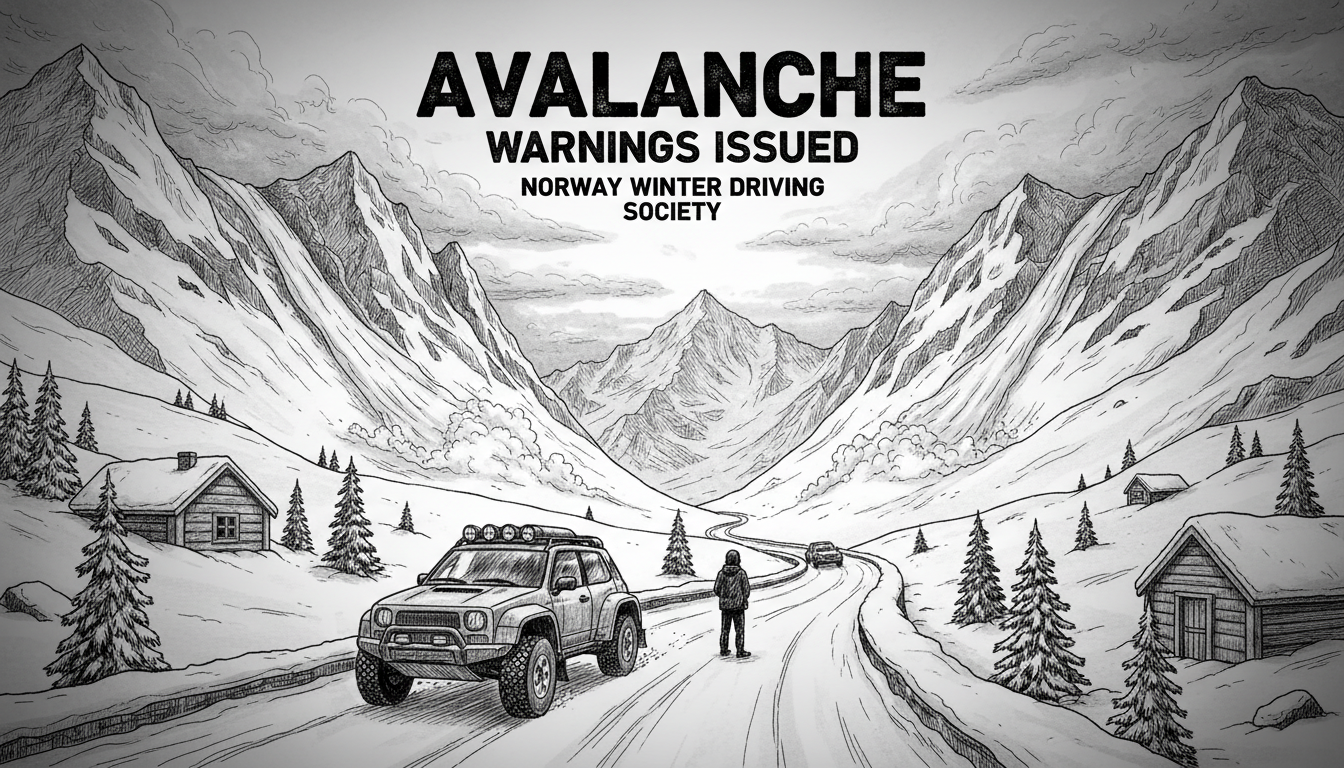
Norway winter driving conditions turned treacherous on New Year's Eve Eve, with multiple weather warnings issued across the country. Authorities sent a yellow-level warning for snow and blowing snow to areas north of the Dovre mountain range. In parts of Mid-Norway, the danger escalated to an orange warning for snow avalanches. The hazardous weather contributed to several traffic accidents on Norwegian roads in the preceding days, highlighting the perennial challenge of winter mobility in Scandinavia's most mountainous nation.
A Nation Braced for Winter's Onslaught
This pre-holiday weather event is not an anomaly but a seasonal reality. Norway's dramatic geography, with its deep fjords, high mountain passes, and long coastline, creates a complex meteorological landscape. The Norwegian Public Roads Administration, known as Statens vegvesen, maintains constant vigilance. Their teams monitor conditions on critical arteries like the E6 through Gudbrandsdalen and the E134 crossing the treacherous Hardangervidda plateau. When snow accumulates rapidly or winds exceed critical speeds, the agency's warnings are the first line of defense for motorists. "Checking the road reports is as essential as fueling your car," says Lars Moe, a veteran transport safety advisor based in Oslo. "A road can be clear in Otta but impassable just thirty minutes north at Dovrefjell."
The color-coded warning system is a crucial public tool. A yellow warning, like those issued north of Dovre, signals that weather conditions may cause local disruptions and minor damage. It advises the public to be aware and follow updated information. An orange warning, however, indicates a dangerous situation. For avalanches in Mid-Norway, this means a significant risk that loose snow packs could slide, threatening roads and isolated communities. These warnings often lead to preemptive road closures, a disruptive but necessary measure. The system's effectiveness relies on public trust and comprehension, built over years of consistent use by the Norwegian Meteorological Institute and the roads administration.
The Human and Economic Toll of Icy Roads
Behind the official warnings are thousands of individual calculations and risks. The 'several traffic accidents' reported in the source material represent delayed journeys, damaged vehicles, and in worst-case scenarios, serious injuries. Norway maintains one of the world's lowest rates of road fatalities, a point of national pride. This record is tested each winter. The Norwegian Road Federation (OFV) tracks this data meticulously, noting spikes during periods of rapid weather deterioration. Accidents often cluster on specific road types: shaded forest stretches where ice persists, exposed mountain passes vulnerable to white-outs, and coastal roads like those in Møre og Romsdal lashed by wet snow and strong winds.
For commercial transport, these conditions have a direct economic impact. Deliveries are delayed, logistics chains are strained, and costs increase. The Port of Narvik, a vital hub for iron ore, and the coastal supply routes to the offshore oil installations in the North Sea all feel the ripple effects of mainland road closures. "Winter readiness isn't just a public safety issue; it's an economic imperative," notes economist Silje Hagen. "A single day of closure on the E39 coastal highway can disrupt supply chains for hundreds of businesses." The state invests heavily in winter maintenance, deploying a fleet of plows and salt spreaders, but nature often holds the upper hand.
Technology and Tradition in Winter Preparedness
Norway's approach to mitigating these dangers blends advanced technology with deeply ingrained cultural practices. The Statens vegvesen website and its associated mobile app provide real-time traffic information, webcam feeds from key mountain passes, and detailed forecasts. This digital layer is complemented by a robust legal framework. Winter tire laws, requiring specific tread depth and patterns during the colder months, are strictly enforced. Many Norwegians go further, opting for studded tires for superior grip on ice, despite the environmental trade-off of increased road wear.
There is also an unspoken cultural protocol. Carrying an emergency kit—blankets, food, a shovel, and a reflective vest—is considered basic common sense for winter travel. The tradition of the 'vinterdekkfest' (winter tire party), where friends help each other change seasonal tires, underscores the collective understanding of shared risk. Expert driving courses for handling skids on ice are popular, often utilizing special facilities like the one at the former airport in Gardermoen. This combination of state infrastructure and personal responsibility forms the bedrock of Norwegian winter road safety.
Climate Change Reshapes the Winter Threat
Looking ahead, climate scientists present a complex forecast for Norway's winter driving challenges. While overall warming may reduce the length of the winter season in some southern areas, it is also increasing volatility. The country is experiencing more frequent episodes of extreme weather. This includes sudden, heavy snowfall events that overwhelm even prepared systems, and more frequent freeze-thaw cycles that create perilous black ice. Warmer temperatures can also lead to wetter, heavier snow—the type that increases avalanche risk in regions already under an orange warning, like Mid-Norway.
"The patterns are becoming less predictable," explains meteorologist Kari Nystøl. "We see more situations where coastal areas get heavy, wet snow while inland areas remain dry, or where a sudden temperature shift turns rain to instant ice. This requires even more dynamic forecasting and public communication." For road planners, this means adapting infrastructure for a wider range of conditions and investing in more resilient systems. The challenge is no longer just managing deep cold and dry snow, but navigating a broader spectrum of icy, slushy, and unstable conditions.
The Road Ahead: Adaptation and Vigilance
The pre-New Year's warnings serve as an annual reminder of Norway's fragile truce with its winter environment. The nation's prosperity and connectivity depend on maintaining mobility through some of Europe's most demanding terrain. Continued investment in monitoring technology, road maintenance, and public education remains critical. The next frontier may involve smarter, connected vehicles and even more granular weather modeling that can predict hazards at the level of a single hillside or bridge.
For now, the advice from experts remains timeless, yet urgent. Before setting out, check the detailed road reports from Statens vegvesen. Ensure your vehicle is properly equipped with suitable tires and supplies. Adjust your speed and following distance to the conditions, not the speed limit. The majestic landscape that defines Norway—from the peaks of Dovre to the fjords of the west—commands respect, especially when winter asserts its power. The true test of the country's famed resilience is not just in building roads through mountains, but in navigating them safely when the snow begins to fall.