
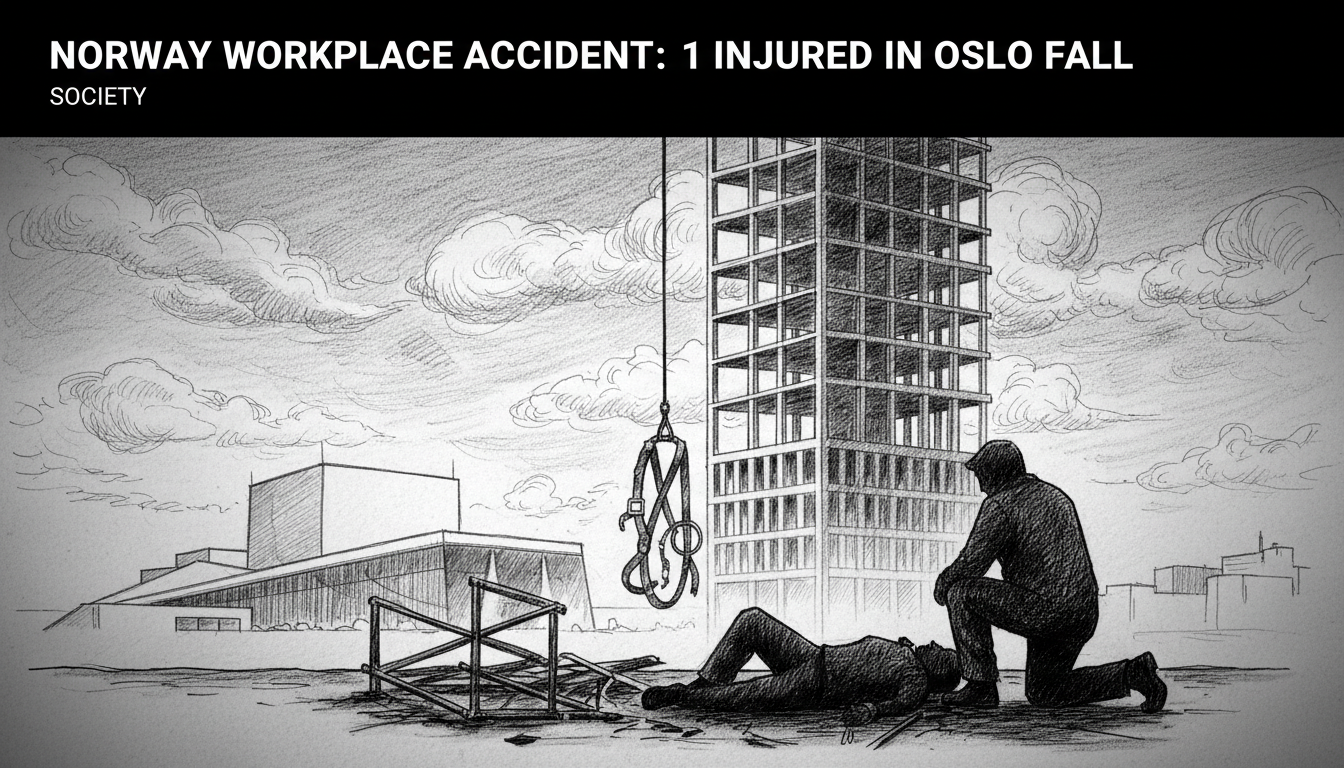
Norway workplace safety is under scrutiny after a serious accident in central Oslo. Emergency services responded to a worksite where one person fell from a significant height. Police confirmed the individual was transported to a hospital for treatment. The exact sequence of events remains unclear, and officers are speaking with witnesses at the scene.
This incident highlights the persistent dangers of working at height, a leading cause of serious injury in Norwegian industry. The Norwegian Labour Inspection Authority (Arbeidstilsynet) will launch a formal investigation. Their mandate is to enforce strict health, safety, and environment regulations designed to protect workers.
A Capital Under Construction
Oslo, as Norway's largest and fastest-growing city, is a landscape of cranes and construction sites. From the ongoing development of the Fjord City urban area to numerous residential and commercial projects, high-risk work is commonplace. This accident serves as a stark reminder that safety protocols must be rigorously maintained even in a country with a global reputation for stringent workplace standards.
Every serious accident triggers a mandatory response from the Labour Inspection Authority. Inspectors will examine the site, review safety plans, and interview all involved parties. Their goal is to determine whether safety regulations were followed or if violations contributed to the fall. The authority has the power to issue substantial fines and order work to cease until hazards are corrected.
The Persistent Hazard of Working at Height
Falls from height remain one of the most significant causes of fatal and life-altering workplace injuries in Norway. The construction sector is particularly vulnerable, but other industries like shipping, logistics, and maintenance also face these risks. Proper fall protection—including guardrails, safety nets, and personal fall arrest systems—is non-negotiable under Norwegian law.
Experts in occupational safety stress that prevention relies on a multi-layered approach. "It starts with a thorough risk assessment before any work begins," explains a senior safety consultant familiar with Norwegian sites, who asked not to be named as the investigation is active. "Then, you need the correct equipment, competent training for every worker using it, and continuous supervision to ensure procedures are followed every single time. Complacency is the enemy."
The Labour Inspection Authority conducts thousands of inspections annually, with a specific focus on fall hazards in construction. While comprehensive national statistics for the current year are still being compiled, historical data consistently shows falls as a top category for serious reports. Each incident represents a profound human cost and a systemic failure that regulators are determined to address.
The Human and Regulatory Aftermath
For the injured worker, the immediate concern is medical care and recovery. The physical and psychological impact of such a fall can be long-lasting. For their colleagues on site, the accident creates trauma and disruption. For the employer, the process involves cooperating fully with the authorities while conducting an internal review.
The Labour Inspection Authority's investigation will be methodical. Inspectors will seek answers to critical questions: Was the work properly planned? Were the correct safety measures identified and implemented? Was the worker adequately trained and equipped? Were there any defects in the equipment or the working environment?
Findings can lead to a range of outcomes. If serious regulatory breaches are found, the company can face enforcement notices, compulsory corrective actions, and significant financial penalties. In extreme cases of negligence, matters can be referred to the police for potential criminal prosecution under Norway's Working Environment Act.
A National Commitment to Safety
Norway prides itself on a strong social contract that prioritizes worker welfare. The "Working Environment Act" (Arbeidsmiljøloven) forms the legal backbone of this commitment, establishing clear rights and responsibilities. The principle of "internal control" requires companies to systematically manage their own safety standards, with the Labour Inspection Authority acting as the auditor and enforcer.
Despite this robust framework, accidents still occur. They often point to a breakdown in one of the safety system's layers—a missed risk, a procedural shortcut, a lapse in supervision, or faulty equipment. Each investigation aims to patch these systemic holes to protect future workers.
"The goal is zero," says the safety consultant. "Zero serious accidents. It's an ambitious goal, but it's the only acceptable one. Every accident is preventable in theory. Our job is to make that prevention a reality on the ground, in the rain and wind, when people are tired and deadlines are looming."
As Oslo continues its rapid urban development, the tension between progress and safety is constant. Construction is essential for the city's future, but it must not come at an unacceptable human price. The response to this single accident will be a test of Norway's enforcement resolve and a lesson for every foreman and project manager in the country.
Looking Ahead: The Path to Prevention
The coming days will see the Labour Inspection Authority establish its preliminary findings. The injured person's condition will become clearer. The worksite may remain closed for the investigation's duration. For the industry, it is another somber case study.
Prevention hinges on culture as much as regulation. It requires every worker to feel empowered to stop work if conditions seem unsafe. It needs management to allocate sufficient time and resources for safe practice, not just productive output. It demands that safety is the first item on the agenda, every single day.
Norway's workplace safety record is among the world's best, but that is cold comfort to the individual in the hospital and their family. This incident in the heart of the capital asks an uncomfortable question: in the rush to build a modern Oslo, are the foundational principles of worker protection being upheld as steadfastly as they should be? The integrity of the answer depends on what the investigation finds and how the entire industry chooses to respond.