
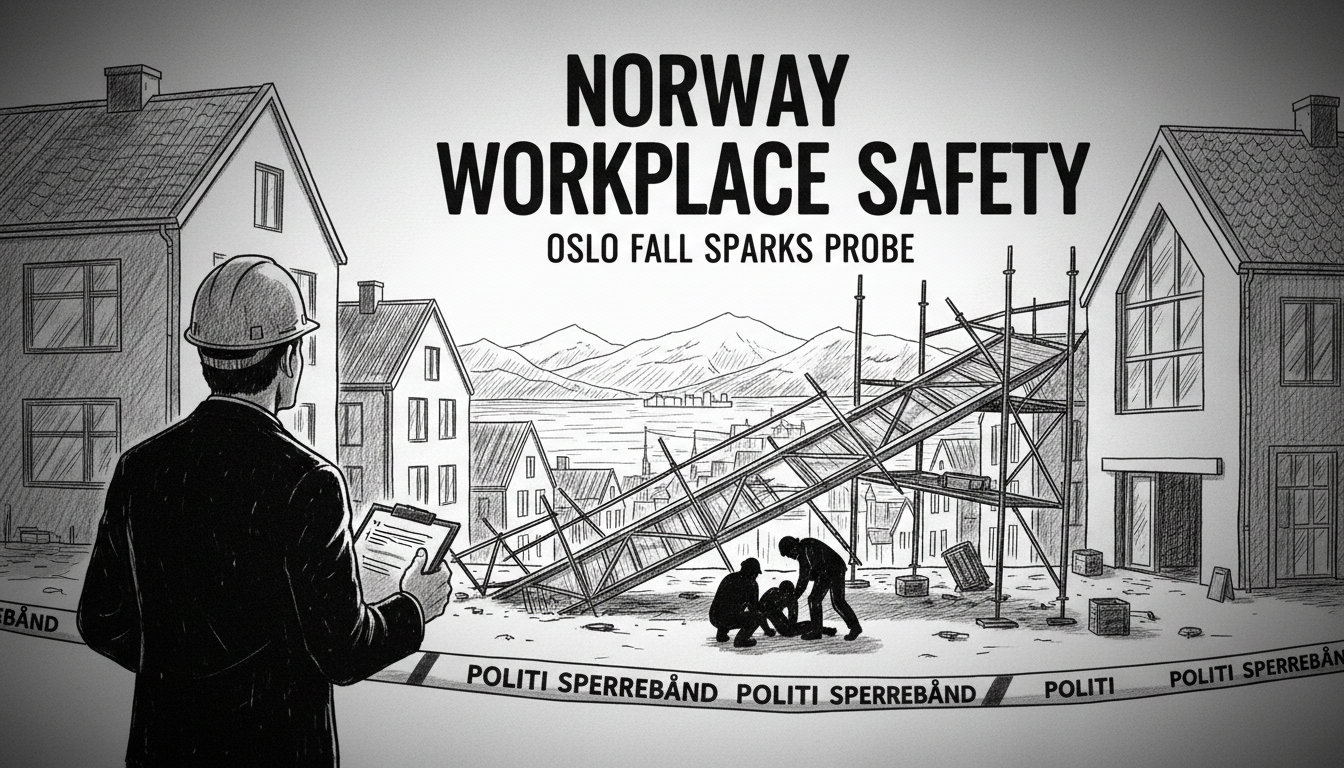
Norway's capital was the scene of a serious workplace accident Tuesday evening, raising immediate questions about safety protocols in high-risk urban industries. A man was seriously injured after falling from what police described as a container or similar structure in central Oslo. Emergency services rushed to the scene and transported the man to a hospital for treatment. Police have classified the incident as a work accident, confirming the man's employer was present and is responsible for notifying the Norwegian Labour Inspection Authority, Arbeidstilsynet.
"We have no information to suggest anything criminal has occurred," said operations manager Gabriel Langfeldt in a statement to the press. Police are interviewing several witnesses who saw the accident unfold. The immediate focus is on the victim's condition and the initial response, but the incident will trigger a formal investigation into how a routine work situation turned catastrophic.
A System Built on Prevention
This accident will test Norway's renowned workplace safety framework, which is built on a principle of proactive prevention rather than reactive punishment. The Norwegian Labour Inspection Authority (Arbeidstilsynet) is now central to the process. Employers are legally obligated to report serious accidents to the authority immediately. Arbeidstilsynet then determines the scope of an investigation, which can range from a review of the employer's own report to a full-scale, on-site inquiry by its own inspectors.
The goal is never simply to assign blame. "The purpose of investigating work accidents is to uncover the causes and implement measures to prevent similar accidents from happening again," states the authority's official guidance. This systematic approach has helped Norway maintain one of the lowest rates of fatal workplace accidents in Europe. However, each serious incident serves as a stark reminder that theoretical safety and on-the-ground practice can diverge, often with painful consequences.
The Persistent Hazard of Falls
While the specific details of the Oslo fall are still under investigation, falls from height remain one of the most persistent and deadly hazards in several Norwegian industries. The construction sector, along with shipping, logistics, and certain maintenance fields, consistently reports higher incident rates. Work involving containers, scaffolding, roofs, and elevated platforms carries inherent risk that must be managed through rigorous controls.
These controls are well-established in Norwegian law: proper risk assessment, the use of correct and inspected safety equipment like harnesses and guardrails, and comprehensive training for workers. The critical question investigators will ask is which, if any, of these controls failed. Was the equipment absent, faulty, or not used? Was the training adequate? Was the work method itself unsafe? Witness statements from the Oslo scene will be crucial in piecing together this sequence.
Oslo's Unique Risk Landscape
As Norway's largest and most densely populated urban center, Oslo presents a unique set of challenges for workplace safety. The city is a perpetual construction site, with new residential and commercial projects rising alongside the renovation of older buildings. Its busy port and logistics hubs involve constant movement of goods, often using containers and cranes. This creates a high concentration of high-risk work in a compact area, increasing the potential for accidents and the public's exposure to them.
A serious accident in the city center, witnessed by multiple passersby, also carries a significant public impact. It shatters the perception of safety in everyday environments and places the issue of occupational risk squarely in the public eye. This visibility can pressure both companies and regulators to ensure compliance is more than a paperwork exercise. The investigation's findings, though focused on one employer, will be scrutinized by the entire industry as a case study in urban work safety.
The Human and Economic Cost
Behind the regulatory process and industry analysis lies a profound human cost. A serious fall can result in life-altering injuries—spinal damage, traumatic brain injury, or multiple fractures—leading to long-term disability, chronic pain, and psychological trauma for the worker and their family. The economic ripple effects are also substantial. Beyond the immediate medical costs, there are losses related to sick leave, potential disability benefits, and the loss of a skilled worker from the labor force.
For the employer, a serious accident triggers not just a regulatory investigation but potential increases in insurance premiums, reputational damage, and operational disruptions. The Norwegian system of "enforcement notices" can mandate immediate changes to work practices, and in severe cases of negligence, the matter can be referred for criminal prosecution. The financial and legal incentives for maintaining a safe site are designed to be compelling.
A Test for Norway's Safety Model
This incident in Oslo serves as a real-time test of Norway's workplace safety model. The system's strength relies on transparency, swift reporting, and a learning-oriented investigation. The employer's immediate obligation to report sets the process in motion. The witness interviews conducted by police will provide vital early evidence. The independent scrutiny from Arbeidstilsynet will determine whether this was a tragic fluke or a symptom of broader safety failures.
Experts in occupational health often stress that accidents are rarely caused by a single error. They are typically the result of a chain of failures—a missing safety procedure, a piece of equipment not checked, a time pressure that encouraged shortcuts, a training gap. The investigation will seek to map this chain. Its conclusions will contribute to the national body of knowledge on risk prevention, potentially influencing future safety campaigns and inspection priorities for Arbeidstilsynet, particularly in urban construction and logistics.
Looking Ahead: From Response to Prevention
The coming days will focus on the injured man's medical prognosis. In the following weeks, the investigative machinery of the Norwegian state will engage fully. The outcome will be more than a report. It will be a set of mandatory corrective actions for the company involved and, potentially, new safety advisories for an entire sector. Norway's philosophy is that every accident, especially a serious one, must be made to count for something. It must force learning and change.
For now, the scene in central Oslo is quiet, the emergency vehicles departed. But the work is just beginning. The questions raised by this fall echo beyond the specific site: In a country famed for its commitment to worker protection, how do such dangerous lapses still occur? And what must every employer, foreman, and worker on a risky job in a Norwegian city do tomorrow to ensure their site does not become the next headline? The answer lies not just in rules written on paper, but in a culture of safety practiced every minute on the ground.