
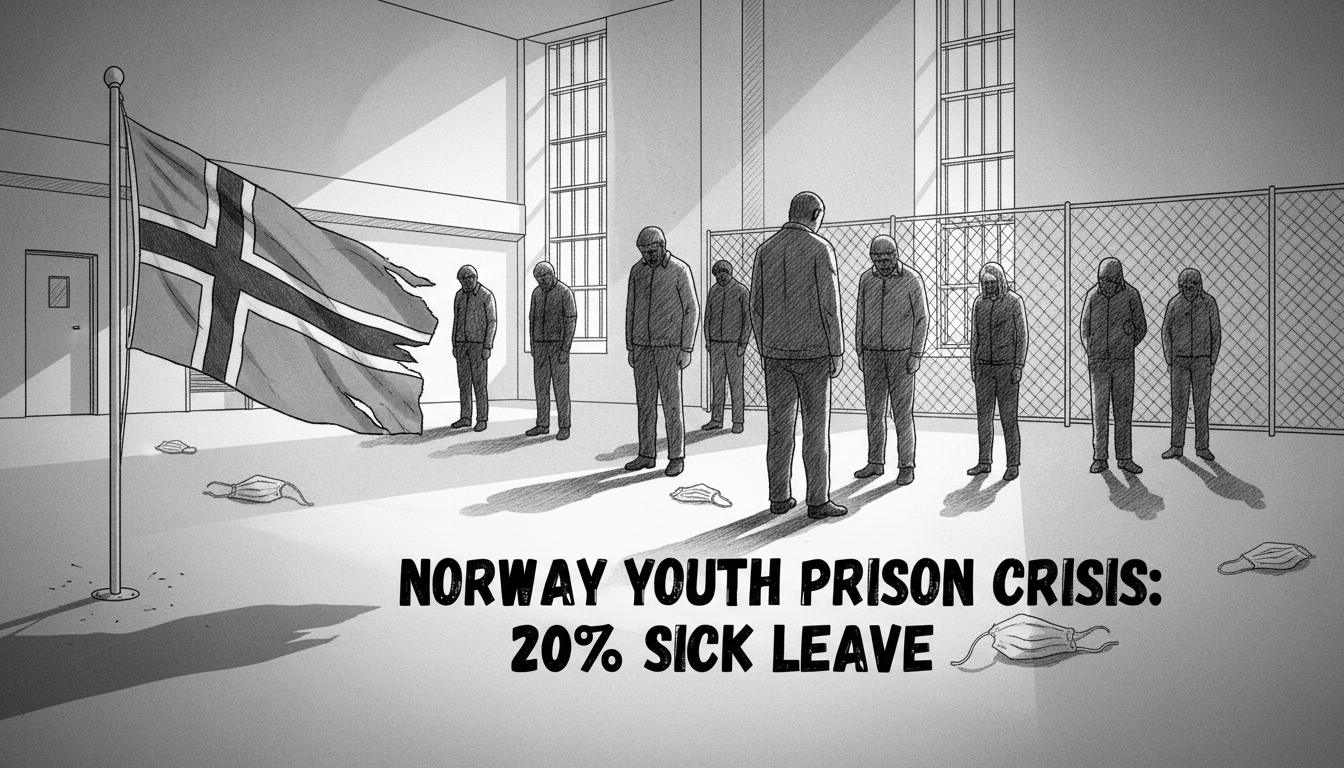
Norway's youth prison unit records a 20 percent staff sick leave rate amid violent conditions that risk violating children's rights. A damning report from the country's Supervisory Council for the Correctional Services (Tilsynsrådet) exposes severe failings at the Ungdomsenheten, a national facility for offenders aged 15 to 18. The council warns of a high risk of illegal use of security cells and inhumane treatment, directly contradicting Norway's renowned focus on rehabilitation.
A System in Crisis
The four-bed Ungdomsenheten, intended as a secure yet rehabilitative space, is instead described as a pressure cooker. The supervisory report paints a picture of a daily work environment marked by high conflict levels, violence, and threats. This instability has pushed employee absenteeism to periods of nearly 20 percent. Verna Rege Nilssen, leader of the Supervisory Council, states that such conditions have direct consequences for the detained youth. 'When employees over time are in a work situation characterized by high pressure and insecurity, it directly impacts the teenagers,' she said. This breakdown in staff welfare creates a cycle where children, already in a vulnerable state, receive inadequate care and supervision.
Isolation and Invasive Searches
A primary concern is the increased use of isolation and security cells. The report references earlier criticism from the Civil Ombudsman (Sivilombudet) in 2025 regarding the questionable use of such restrictive measures. Isolation is particularly damaging for developing adolescents, potentially exacerbating trauma and mental health issues. Compounding this, the unit lacks a body scanner. This technological gap leads to a higher frequency of physical body searches on minors. 'Body searches are a particularly intrusive measure for children,' Rege Nilssen emphasized. These practices raise serious questions about proportionality and the unit's commitment to minimizing harm, a cornerstone of Norway's juvenile justice philosophy.
Education and Rights Neglected
Beyond physical conditions, the report faults the unit for failing to adequately uphold the youths' right to education. Instruction is predominantly theoretical, with a glaring absence of practical vocational training. This omission undermines the goal of reintegration, leaving young people without tangible skills for life after release. The Norwegian correctional system legally mandates that the best interests of the child are paramount, prioritizing education and mental health support. The current offering at the Ungdomsenheten falls short of this standard, potentially setting these teenagers up for future failure rather than providing a foundation for change.
Expert Analysis on Juvenile Trauma
Child psychology and juvenile justice experts consistently warn against the use of restrictive measures like isolation for young offenders. Dr. Lena Hagen, a clinical psychologist specializing in adolescent trauma, explains that such environments can re-traumatize youths and hinder neurological development. 'The adolescent brain is still forming, especially in areas related to impulse control and empathy,' Hagen notes. 'Punitive, insecure environments can cement antisocial pathways rather than redirect them. Norway's model is supposed to be about healing and teaching, but this report suggests it is failing at a basic level.' She advocates for trauma-informed care that addresses root causes like abuse, neglect, or mental illness, which are often prevalent among juvenile offenders.
The Rehabilitation Ideal Versus Reality
Norway's international reputation for humane prisons, with a recidivism rate among the world's lowest, is built on principles of normality, respect, and preparation for life outside. Facilities for adults often resemble campuses more than fortresses. The situation at the Ungdomsenheten presents a stark contrast. Kriminalomsorgen, the Correctional Service, has acknowledged the report, calling it a 'serious development.' In a statement, they said they are reviewing the findings and are committed to improving conditions. However, the council's report implies that budgetary pressures cannot excuse the erosion of children's rights. 'The Correctional Service has a particular responsibility for children deprived of their liberty. Pressured finances can never justify that children's rights are weakened,' Rege Nilssen stated firmly.
Staff Burnout and Systemic Failure
The high sick leave rate is both a symptom and a cause of the unit's problems. It indicates a workforce under unsustainable stress, which leads to understaffing and reduced quality of intervention. Employees facing constant threats may resort to restrictive measures like isolation more readily, creating a vicious cycle. This environment prevents the consistent, relationship-based work that is crucial for rehabilitating young people. The report suggests the system is failing its staff as much as the children, undermining the entire purpose of the specialized youth unit.
Looking Ahead: Calls for Reform
The supervisory council's findings are a clear call for immediate action. Needed reforms include investment in body scanning technology to reduce invasive searches, mandatory training in de-escalation and trauma-informed care for all staff, and a complete overhaul of the educational program to include practical skills. Moreover, a transparent review of isolation protocols is essential to ensure they are used only as an absolute last resort and for the shortest possible duration. The Norwegian parliament's justice committee will likely scrutinize these findings, potentially leading to increased oversight or funding reallocation.
Norway faces a critical test of its values. The treatment of its most vulnerable detained citizens—children—is a benchmark for its commitment to human rights and social justice. Without significant and swift intervention, the Ungdomsenheten risks becoming a symbol of neglect rather than rehabilitation. The question now is whether the system can recalibrate to protect both the staff and the youth in its care, restoring the principles that have long defined Norwegian correctional philosophy.