
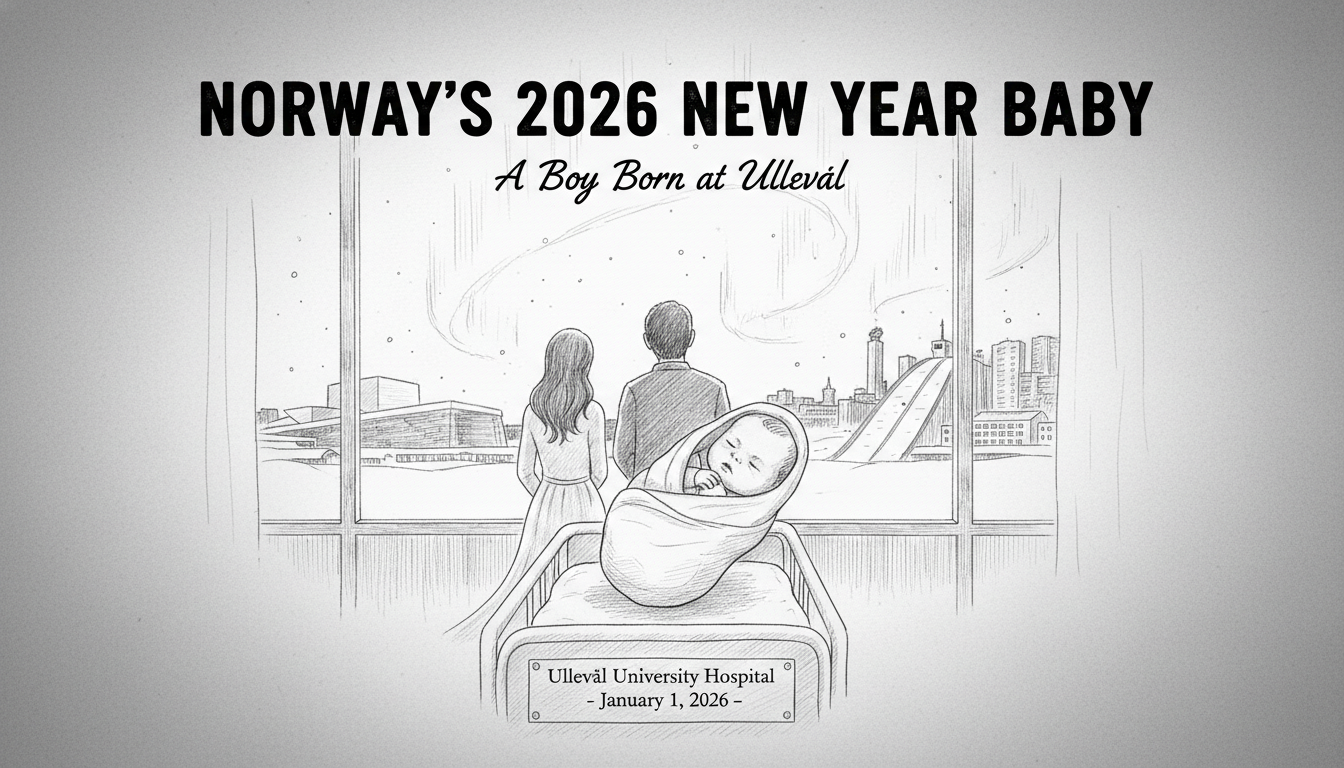
Norway's first baby of 2026 arrived 36 minutes into the new year at Oslo University Hospital, Ullevål. The hospital's press officer, Anders Bayer, confirmed the birth of a healthy boy, writing simply, 'A beautiful boy it became!' This annual event, a symbol of hope and continuity, unfolded smoothly in one of the nation's busiest maternity wards despite the holiday hour.
While the identity of the parents remains private, the announcement follows a long-standing tradition of reporting the year's inaugural birth. The event highlights the round-the-clock nature of healthcare services. Medical staff at Ullevål worked through the New Year's Eve celebrations to ensure safe deliveries for all expecting mothers.
A Tradition of Hope and New Beginnings
The arrival of the New Year's baby is a soft news staple across Norway, offering a moment of shared optimism. It cuts through the usual political and economic headlines with a simple human story. For the staff at Ullevål, it is a point of quiet pride, a welcome highlight during a shift that spans the turning of the year.
'These moments remind us of the core, life-affirming work we do,' said a senior midwife at the hospital, who spoke on condition of anonymity due to hospital policy. 'It’s business as usual in the delivery room, whether it’s a Tuesday afternoon or the first minutes of January. But there’s no denying the special feeling when you help bring the first baby of the new year into the world.'
The Engine Room of Oslo's Healthcare
Oslo University Hospital, Ullevål, is a cornerstone of Norwegian healthcare. Its women's clinic is one of the country's largest, handling thousands of births annually. The facility is equipped with specialized neonatal intensive care units, making it a referral center for high-risk pregnancies from across the region.
The seamless delivery on New Year's Day underscores the hospital's operational readiness. Planning for holiday coverage is meticulous, with senior consultants on call and full teams rostered to manage any eventuality. This incident-free birth reflects the robust systems in place within Norway's publicly funded health service.
Demographic Context in a Stable Nation
While a single birth is a personal milestone, it occurs against a backdrop of national demographic trends. Norway's birth rate has seen a gradual decline in recent years, mirroring patterns in other Nordic and European nations. In 2023, the total fertility rate fell to 1.41 children per woman, one of the lowest levels ever recorded in the country.
Oslo, however, often bucks the national trend slightly. The capital city typically has a higher birth rate than the national average, attributed to its younger population and high levels of immigration. 'Urban centers like Oslo are demographic engines,' noted Dr. Lena Kjøren, a sociologist at the University of Oslo focusing on family studies. 'The New Year's baby is a charming symbol, but the real story is whether policy supports all families throughout the year, with accessible childcare, parental leave, and housing.'
Norway's generous parental leave policy, offering 49 weeks at full pay or 59 weeks at 80% pay, is a significant factor for many families. Experts argue that such policies, while beneficial, must continually adapt to economic pressures and changing workforce participation to effectively support family planning.
The Unseen Work on a Holiday Night
The focus on the first baby often overshadows the other births that occur simultaneously. On any given night at Ullevål, multiple delivery rooms are active. The New Year's period is no exception, with staff managing several labors and deliveries concurrently.
The press officer's brief statement came from a hospital communications department that manages information flow around significant events. Their role is to acknowledge the public interest in such milestones while strictly protecting patient confidentiality. The announcement is typically the only detail shared, preserving the family's right to privacy during an intimate moment.
A Symbol Beyond the Statistics
In a nation deeply connected to cycles of nature and season, the New Year's baby carries symbolic weight. It represents a fresh start and collective hope for the future. For a few hours, the news shifts focus from parliamentary debates in the Storting or fluctuations in the oil fund to a fundamental human experience.
The story resonates because it is universal yet uniquely local. It is about a specific boy in a specific hospital in Oslo, but it also connects to a shared understanding of family and new beginnings. It is a narrative stripped of controversy, offering a rare moment of uncomplicated good news.
Looking Ahead: The Child of 2026
This boy, whose name we may never know, enters a Norway facing familiar and new challenges. He will grow up in a society renowned for its equality, natural beauty, and high standard of living, but also one grappling with the costs of that welfare, integration, and long-term economic diversification beyond oil and gas.
His birth year, 2026, will see Norway continue its ambitious transition to renewable energy, with major investments in offshore wind and green industry. The political landscape may shift, but the foundational support systems of healthcare and education that welcomed him will likely remain central pillars of the state.
As the sun rose on January 1st, 2026, over the snowy rooftops of Oslo, life at Ullevål hospital continued. Nurses completed their charts, doctors made their rounds, and new parents, including those of the year's first child, experienced the profound quiet that follows a successful birth. It was a routine miracle, expertly facilitated, marking not just a new year, but a new life poised to shape the Norway of tomorrow.