
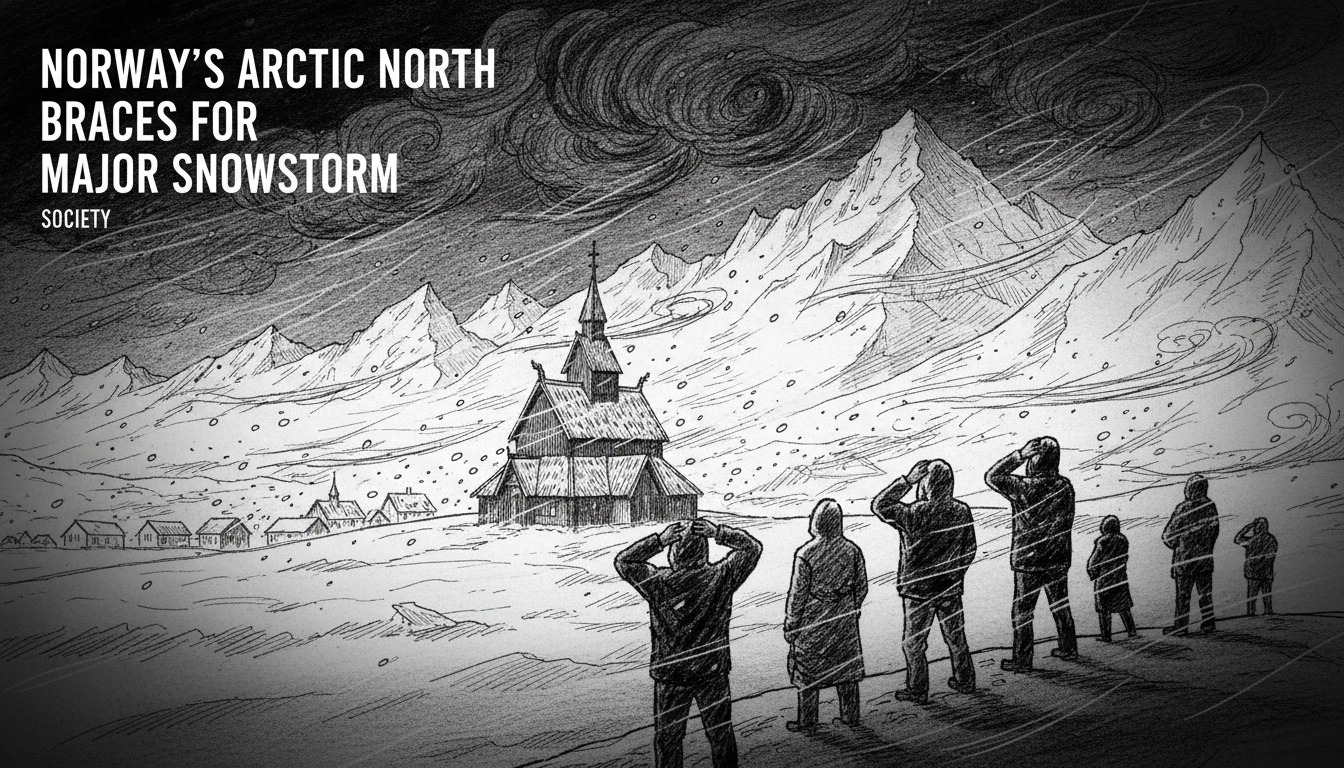
Norway's northern counties of Troms and Finnmark face a severe multi-day winter storm, with the national meteorological agency issuing widespread yellow-level danger warnings. The Norwegian Meteorological Institute forecasts more than 30 centimeters of snow for parts of Nord-Troms, coupled with strong winds creating blizzard conditions and significant avalanche risk across the region. This persistent weather system threatens to paralyze road travel, disrupt air traffic, and cause potential power outages in vulnerable Arctic communities.
A Persistent Arctic Onslaught
The current storm is not an isolated event but part of a prolonged period of harsh winter weather refusing to release its grip on Northern Norway. Meteorologists describe the system as slow-moving and intense, with conditions expected to deteriorate further on Monday. The combination of heavy snowfall and powerful winds will create severe snowdrift, known locally as snøfokk, reducing visibility to near zero in exposed areas. This creates a dual threat for transportation and public safety.
"When we issue a yellow warning for this region, it signifies a weather situation that demands real attention and preparedness," a senior meteorologist with the Norwegian Meteorological Institute said in a briefing. "The expected snow amounts, combined with wind and existing snowpack, create a complex hazard scenario impacting ground travel, aviation, and avalanche risk simultaneously."
The institute's color-coded warning system is a critical public tool. A yellow warning, the second level, advises the public to be aware of potentially dangerous weather that may affect daily activities. It prompts municipal agencies, the Norwegian Public Roads Administration (Statens vegvesen), and energy companies to activate contingency plans.
Transportation Networks Under Threat
Road authorities are preparing for extremely difficult driving conditions and probable closures, particularly on key routes like the E6 and E8 highways through the affected counties. The Norwegian Public Roads Administration has advised against all unnecessary travel in Nord-Troms. Snowplow operators are on high alert, but continuous snowfall and drifting can outpace clearing efforts.
Aviation faces parallel disruptions. Airports in Tromsø, Alta, and smaller regional hubs like Lakselv and Kirkenes are monitoring conditions closely. Strong winds and blowing snow can lead to sudden reductions in visibility, forcing delays, diversions, or cancellations. This isolates communities heavily reliant on air links, especially in Finnmark where distances are vast and road alternatives are few.
For residents, the warnings trigger practical preparations. "It means checking your emergency kit, ensuring you have supplies if you get stranded, and frankly, just staying home if you can," explained Lars Mikkelsen, a preparedness advisor from Troms county. He emphasizes the particular risks of avalanche danger, which is now rated as significant (betydelig) for nearly all of Troms and parts of Finnmark. The Norwegian Geotechnical Institute (Norges Geotekniske Institutt) advises people to stay away from steep terrain and to heed local avalanche bulletins.
The Infrastructure and Energy Challenge
Beyond immediate travel chaos, the storm tests critical infrastructure. Power lines, especially in coastal areas battered by wind, are vulnerable to icing and damage from falling trees or branches weighed down by wet snow. Energy company Troms Kraft has mobilized repair crews in anticipation of possible outages. In remote villages, a power loss can quickly become serious, cutting off heat and communication in freezing temperatures.
The resilience of Norway's northern infrastructure is a recurring topic in the Storting, especially as climate change is observed to alter weather patterns. While winters remain cold, some studies suggest precipitation may fall more frequently as rain or wet snow, increasing load on structures and the risk of ice-induced damage. This storm, a classic intense Arctic low-pressure system, acts as a live stress test for the region's preparedness.
Expert Analysis on a Changing Climate Context
Climate researchers caution against linking a single storm to climate change, but note the broader context. "The Arctic is warming faster than anywhere else on the planet," noted Dr. Elin Nilsen, a climate scientist at the University of Tromsø. "This doesn't eliminate winter storms—in fact, it can energize them by increasing the temperature contrast between the Arctic and lower latitudes, or by putting more moisture into the atmosphere. The key for Northern Norway is building resilience against a wide spectrum of extreme weather events, from heavy snowfall to sudden winter rain."
This resilience hinges on accurate forecasting and timely public communication, areas where the Norwegian Meteorological Institute has invested heavily. Their detailed regional models are crucial for a nation where geography creates vastly different microclimates. A yellow warning in the populated south might mean moderate inconvenience, but in the sparsely populated, exposed north, it carries greater weight and risk.
A Way of Life Tested by Winter
For the people of Troms and Finnmark, severe weather is an inherent part of life above the Arctic Circle. Preparedness is woven into the culture. Yet, each major storm brings fresh challenges, particularly for the fishing industry, reindeer herders, and tourism operators who must work outdoors. The Sami Parliament has issued advisories to herders about the avalanche risk in mountain pastures, where reindeer might be vulnerable.
As the storm intensifies, the focus turns to community response. Local volunteer organizations, like the Norwegian Red Cross and Norsk Folkehjelp, often play vital roles in checking on elderly or isolated residents during such events. Municipal emergency management teams coordinate shelter resources, though the hope is that widespread heeding of the warnings will keep people safe at home.
The coming days will reveal the full impact of this Arctic onslaught. The persistent nature of the system means dangers will accumulate, with new snow layering onto old, increasing avalanche risk even after the snowfall eases. For now, Northern Norway hunkers down, a testament to living in one of Europe's last great wilderness frontiers, where nature's power routinely dictates the terms of daily life. The question remains: as extreme weather patterns evolve, how will Norway's resilient north adapt its formidable defenses to meet an uncertain future?