
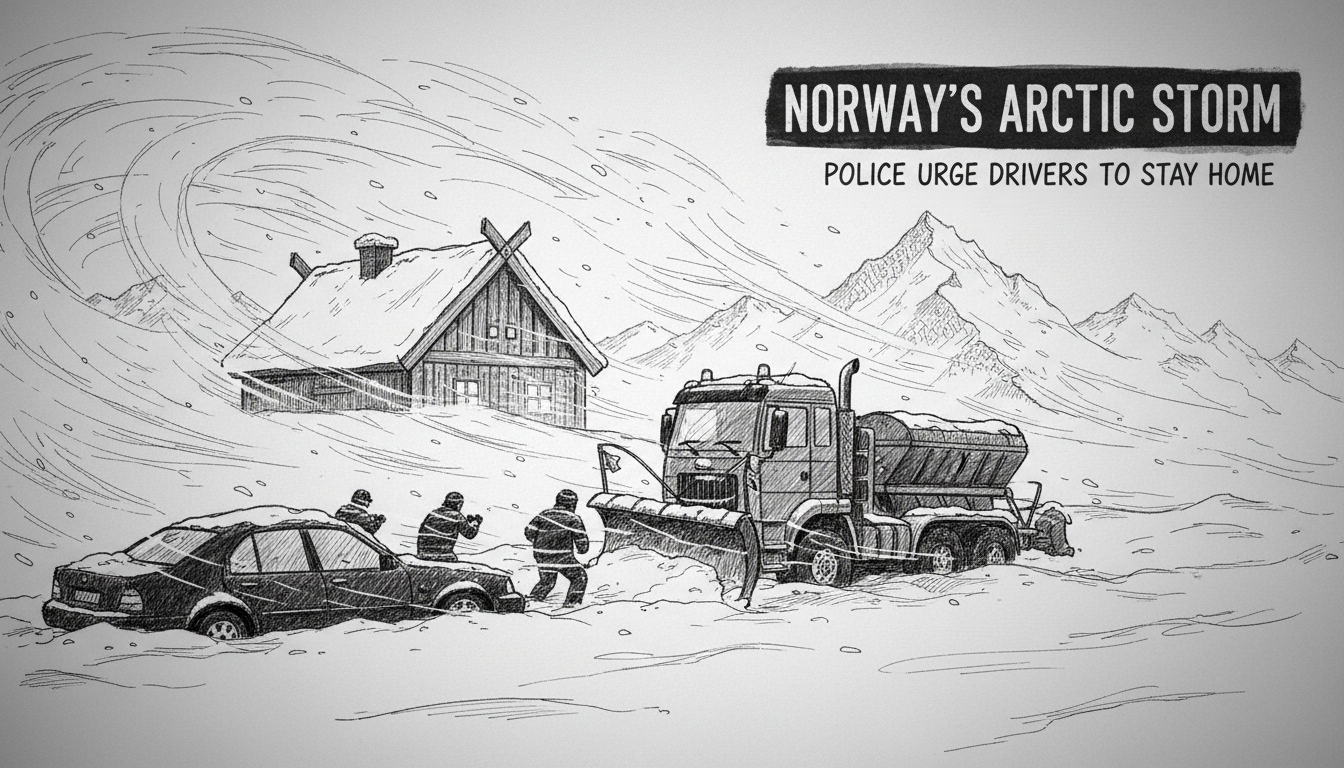
Norway weather in Troms turned treacherous on Sunday, prompting urgent police warnings for drivers to avoid all non-essential travel. Operations manager Henrik Melsbø issued a stark advisory as authorities received numerous reports of vehicles sliding off roads and collisions. "Large parts of the road network are experiencing near-zero visibility and slippery driving conditions," Melsbø stated. "Police strongly recommend postponing driving if possible." The sudden deterioration highlights the volatile nature of Arctic coastal weather, where conditions can shift from manageable to dangerous within minutes.
A Region at the Mercy of the Elements
Troms, situated well above the Arctic Circle, is no stranger to harsh winter conditions. Its geography—a rugged coastline meeting steep mountains—creates a perfect storm for rapidly changing weather. The Norwegian Meteorological Institute (MET Norway) had issued warnings for the region, citing a combination of heavy precipitation, strong winds, and freezing temperatures. These factors coalesced to create what locals describe as a "kombinasjonsvær" or combination weather event, one of the most hazardous scenarios for drivers. Near-zero visibility, often called "hvitkjøring" or white-out driving, removes all visual references, making it easy to become disoriented even on familiar roads.
The police advisory is not a casual suggestion but a critical safety measure rooted in grim statistics. While comprehensive national figures for 2023 are still being compiled, historical data shows that a significant percentage of serious winter accidents in Northern Norway occur during such sudden weather bursts. The average winter temperature in Troms hovers around -4°C, but wind chill during a storm can make it feel far colder, and ice formation on roads is instantaneous. The Norwegian Public Roads Administration (Statens vegvesen) continuously updates its online road condition maps, which on Sunday showed vast stretches of red, indicating "difficult driving conditions," across the county.
The Human and Systemic Response
When such warnings are issued, a well-rehearsed protocol activates across Northern Norway. Police districts increase patrol readiness, tow truck operators are placed on standby, and emergency services prepare for a potential surge in calls. The core message, repeated for years by traffic safety organizations like Trygg Trafikk, is simple: the safest decision is often not to drive at all. "The weather is changeable and can worsen in a short time even if it is fine exactly where you are now," Melsbø cautioned, emphasizing the localised and unpredictable nature of these Arctic systems. This advice is particularly aimed at those who might be traveling between microclimates, such as from a sheltered fjord interior to an exposed mountain pass.
For residents, the warning necessitates quick changes to Sunday plans. Grocery trips, social visits, and even some work commutes are postponed. The culture in Northern Norway generally respects such weather warnings, born from generations of experience with the power of nature. Schools and public institutions often make early decisions to close or delay opening based on forecasts. This communal approach to risk mitigation is a defining feature of life in the north. It contrasts with more urban settings where infrastructure might allow life to proceed with fewer interruptions.
Preparedness and the Limits of Technology
Modern vehicles equipped with advanced stability control and mandatory winter tires—studded tires are common from November to April—provide a false sense of security in extreme conditions. Experts consistently state that no tire or vehicle system can compensate for a complete loss of visibility or black ice formed by freezing rain. The necessary preparedness goes beyond the vehicle itself. Authorities recommend that anyone who must travel carries an emergency kit including warm clothing, blankets, food, water, a shovel, and a fully charged phone. Many drivers also inform someone of their route and expected arrival time.
The incident underscores the ongoing challenges of maintaining connectivity and safety in a region with a sparse population and long distances between communities. While main highways like the E8 and E6 are prioritized for ploughing and salting, secondary and tertiary roads can remain hazardous for hours after a storm passes. This reality shapes daily life and economic activity in Troms, where weather is a constant factor in logistics, business, and personal planning. The cost of these disruptions, from delayed freight to emergency service deployments, is a significant but accepted part of the regional budget.
A Broader Lesson in Climate and Infrastructure
This storm event, while routine for the season, occurs within a broader context of a changing Arctic climate. Meteorologists note that while the frequency of extreme cold snaps may be altering, the intensity of precipitation events appears to be increasing. This places even greater importance on adaptive infrastructure and public communication. The police's clear, direct warning represents one effective tool in preventing accidents. Their message avoids technical jargon, focusing instead on actionable advice for the public.
The effectiveness of such warnings relies on public trust and the credibility built by agencies like MET Norway and the Police. When they advise against travel, the public generally heeds the warning, knowing it is based on concrete data and operational experience. This trust is hard-earned and crucial for public safety. It also relieves pressure on emergency services, allowing them to focus on critical incidents rather than preventable weather-related accidents.
Looking Ahead: Resilience in the North
As Sunday's situation gradually eased with the passing of the storm front, the clean-up began. Tow trucks retrieved stranded vehicles, and road crews worked to improve conditions. Each such event serves as a real-world test of the region's resilience. For newcomers to the north, it is a stark introduction to the power of Arctic weather. For long-term residents, it is a seasonal reminder of the respect the environment demands.
The final analysis from this incident will feed into ongoing public safety campaigns. The near-misses and the accidents that did occur will be studied to improve future responses. The core lesson, however, remains timeless and simple, as articulated by the police: when the Arctic weather turns, the smartest choice is often to let the car stay parked. This philosophy of caution over convenience defines winter survival in Norway's north, where human schedules must always yield to the forces of nature. The question for the future is how infrastructure and communication can evolve to support communities when staying home is the only safe option.