
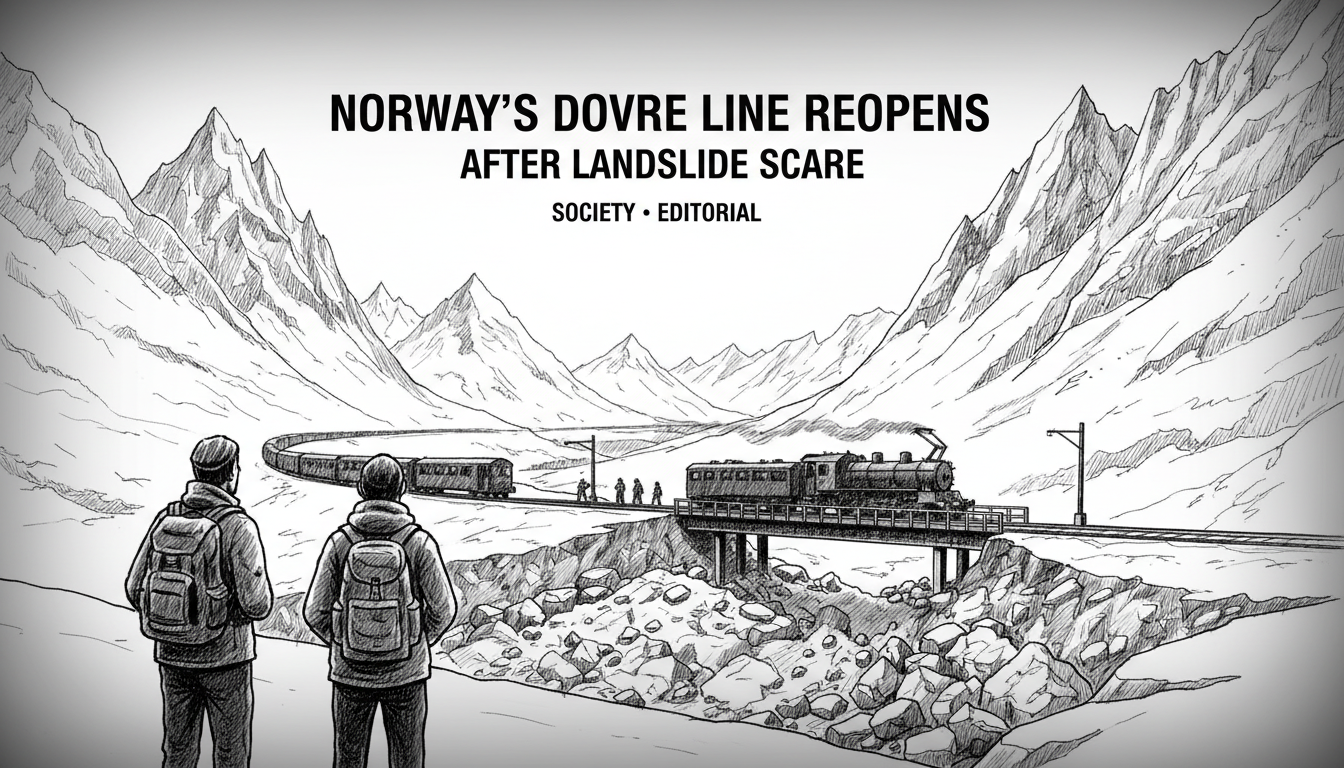
Norway's vital Dovre Line railway is back in operation after a precautionary closure due to a landslide threat. The main rail artery connecting Oslo to Trondheim resumed normal service after safety officials confirmed the tracks were not damaged. Bane Nor, the state-owned railway infrastructure company, implemented the temporary shutdown as a standard safety measure.
"The Dovre Line is open," confirmed Anna Langhammer, a press officer for Bane Nor. "The railway was not hit by the landslide. Trains are running as normal. We closed it as a safety precaution." The swift assessment and reopening highlight Norway's established protocols for managing natural hazards along its critical transport corridors. This incident underscores the persistent environmental challenges facing infrastructure in the mountainous region.
A Critical Artery for a Nation
The Dovre Line is far more than just a railway. It is a 600-kilometer economic lifeline, facilitating the movement of people and freight between Norway's capital region and its third-largest city. Construction began in 1916, with the full line opening in 1921, representing a major engineering achievement of its time. Today, it supports regional economies, tourism, and national connectivity, with frequent passenger services and essential freight transport.
Its path through the rugged terrain of central Norway, while scenic, makes it vulnerable. Landslides and avalanches are a recurring, documented threat along this and other mountain routes. The line's history is punctuated by similar precautionary closures and, in rare cases, disruptive incidents. This geographic reality forces infrastructure managers to balance operational continuity with absolute passenger and crew safety.
The Safety Calculus of Mountain Rail
Experts in railway safety point to this incident as a textbook example of proactive risk management. "The decision to close a major line is never taken lightly, given the disruption it causes," explains a veteran railway safety consultant familiar with Norwegian operations. "But in mountainous terrain, the calculus is clear. A temporary, precautionary closure is always preferable to the catastrophic alternative."
This approach relies on sophisticated monitoring of weather conditions, ground saturation, and slope stability. Investment in preventative infrastructure, such as avalanche sheds and reinforced cuttings, has been significant over the decades. However, the dynamic nature of Norway's landscape means human judgment and conservative protocols remain the final layer of defense. The system is designed to err decisively on the side of caution.
Economic Ripples from a Temporary Halt
While the closure was brief, any stoppage on the Dovre Line sends immediate ripples through the transport network. Passenger services, including the popular InterCity and regional trains, face cancellations and delays, stranding travelers. For freight operators, a halted line disrupts supply chains for everything from consumer goods to industrial components moving between key ports and inland destinations.
The financial cost of such closures accumulates quickly for both the railway operator and the wider economy. It reinforces the argument for continued state investment in making the line more resilient. Each incident provides data to prioritize where reinforcement projects or advanced monitoring technology could best reduce future disruption. The line's reliability is a direct factor in regional economic planning and development.
A Persistent Challenge in a Changing Climate
The recurring threat of landslides and avalanches to Norwegian railways takes on new dimensions in the era of climate change. Warmer temperatures and changing precipitation patterns can destabilize slopes that have remained secure for generations. Geotechnical engineers are increasingly studying the long-term impacts of a warmer, wetter climate on Norway's steep fjords and valleys.
This environmental shift may require an evolution in safety protocols and infrastructure design. The principles of precautionary closure will remain, but the thresholds for action could change. More frequent extreme weather events may test the capacity of current monitoring systems and response plans. The incident on the Dovre Line, while routine today, is a data point in a larger trend that infrastructure planners are watching closely.
Looking Down the Track
The seamless reopening of the Dovre Line is a testament to a well-practiced safety regime. For passengers boarding trains in Oslo Central Station or Trondheim today, the disruption will be a minor footnote, if remembered at all. Yet for the engineers and managers at Bane Nor, it is another validation of a cautious, proactive philosophy that prioritizes lives over schedules.
Norway's ambition to shift more freight and passenger travel onto its railways depends on the perceived and actual reliability of lines like the Dovrebanen. Every safe passage through the mountainous heart of the country strengthens the argument for rail as the sustainable transport backbone of the future. The line will continue to face challenges from the landscape it traverses, but the response to this latest scare shows the system is built to handle them. The real test is whether funding and focus can stay ahead of the moving target of environmental risk, ensuring this historic line remains secure for the next century.