
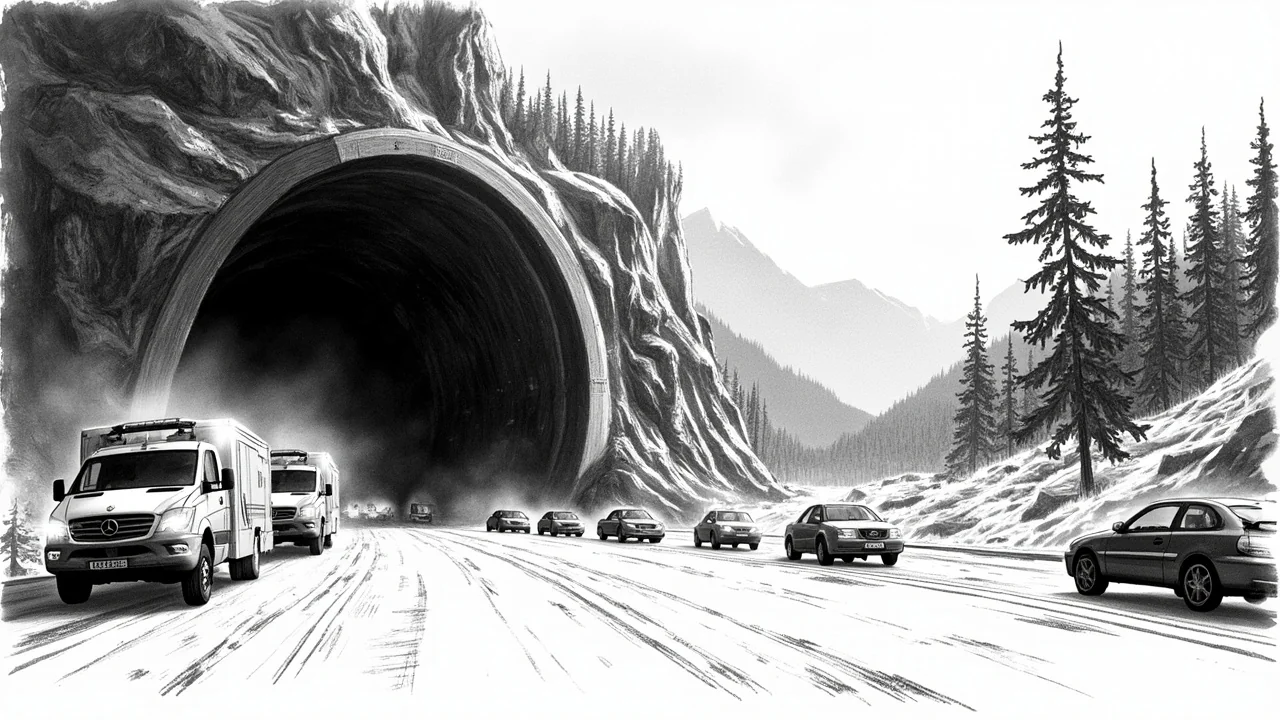
Norway's vital E18 motorway faces a complete closure near Tønsberg after a serious collision inside a tunnel. Police confirm a passenger car caused the incident, blocking one lane entirely. A second vehicle involved managed to exit the tunnel. Operations manager Espen Reite with the South-East Police District stated crews are working to bring a recovery vehicle to the scene. This shutdown paralyzes a critical national artery linking Oslo to the southern coast.
A National Artery Severed
The E18 is not just another road. It is the primary transport corridor connecting the capital region to major cities like Kristiansand and the ferry ports linking Norway to continental Europe. The closure at Tønsberg, approximately 100 kilometers southwest of Oslo, creates an immediate logistical crisis. Traffic is being diverted onto already congested local roads, causing significant delays for commuters and commercial transport. The incident highlights the vulnerability of Norway's infrastructure, where a single accident in a confined space like a tunnel can have outsized regional consequences.
Emergency services face a complex task. Extricating vehicles from a tunnel environment presents unique challenges compared to open-road accidents. Ventilation, limited access for heavy equipment, and potential secondary hazards must be managed. Police have not released details on possible injuries, but the deployment of a recovery vehicle suggests at least one car is not drivable. The focus remains on clearing the scene safely to restore traffic flow on this essential route.
The Economic Ripple Effect
Every hour the E18 remains closed carries a tangible economic cost. The route is a lifeline for the freight industry, moving goods from the busy port of Kristiansand northward. Delays disrupt supply chains for businesses across the region. For the energy sector, though not directly impacting oil fields, it hinders the movement of personnel and equipment. The closure also affects tourism, a key industry in the Vestfold region, where Tønsberg is a popular destination.
This incident forces a conversation about infrastructure resilience. Norway has invested heavily in its road network, with countless tunnels and bridges conquering its challenging geography. However, this investment creates pinch points. A blockage in one of the many tunnels along the E18, such as the one near Tønsberg, lacks easy alternatives. The government's ongoing National Transport Plan continually debates funding for road capacity versus public transit. Events like this strengthen arguments for building redundancy into critical networks, even at tremendous expense.
Political and Policy Implications
Infrastructure failures quickly land on the desk of Transport Minister Jon-Ivar Nygård. While accidents are unpredictable, the systemic vulnerability of key routes is a known policy issue. The Storting, Norway's parliament, has committees dedicated to transport that will likely reference this closure in future debates on budget allocations. Opposition parties may question whether maintenance and safety protocols on these vital tunnels are sufficient.
The closure also tests the coordination between national and local authorities. The South-East Police District manages the immediate response, but the Norwegian Public Roads Administration (Statens vegvesen) is responsible for the road itself and managing traffic diversions. Their effectiveness in communicating alternative routes to the public via apps and variable message signs is under real-time scrutiny. Smooth cooperation is essential to mitigate the economic and social disruption.
A Nation Dependent on Connectivity
Norway's prosperity is built on connectivity. From the offshore installations in the North Sea to the salmon farms in its fjords, efficient transport is non-negotiable. The E18 shutdown is a stark reminder of this dependency. For residents, it means missed appointments and family time lost in traffic. For businesses, it translates into higher costs and logistical headaches. The country's famed work-life balance is disrupted when a commute of one hour suddenly triples.
Analysis from transport economists often cites the high value of travel time savings in Norway. This event provides a crude, real-world example. The collective hours lost by thousands of motorists represent a direct drain on productivity. It reinforces why major infrastructure projects, though controversial and expensive, remain a top government priority. The balance between developing new roads and maintaining existing ones becomes acutely clear when a main road fails.
Looking Ahead: Safety and Solutions
As recovery crews work to reopen the E18, broader questions linger. Tunnel safety standards in Norway are among the world's highest, featuring advanced fire suppression systems and strict regulations on dangerous goods transport. However, human error and mechanical failure remain ever-present risks. This accident may prompt reviews of traffic control measures in specific tunnels or lead to calls for enhanced incident response protocols.
The long-term solution is not simply building more roads. The government's focus is increasingly on creating a more integrated and resilient transport system. This includes improving rail alternatives along the Oslo-Kristiansand corridor and investing in smarter traffic management technology that can dynamically respond to incidents. The goal is to ensure that no single point of failure can cripple a region.
For now, the people of Vestfold and countless travelers are stuck in a frustrating standstill. The tunnel near Tønsberg will reopen, and traffic will eventually flow again. But the memory of this closure will inform Norway's infrastructure debates for years to come. It underscores a fundamental truth of modern Norway: its economic engine is powered by mobility, and that mobility depends on a network that is only as strong as its most vulnerable link. How will Norway fortify its critical corridors against the inevitable next disruption?