
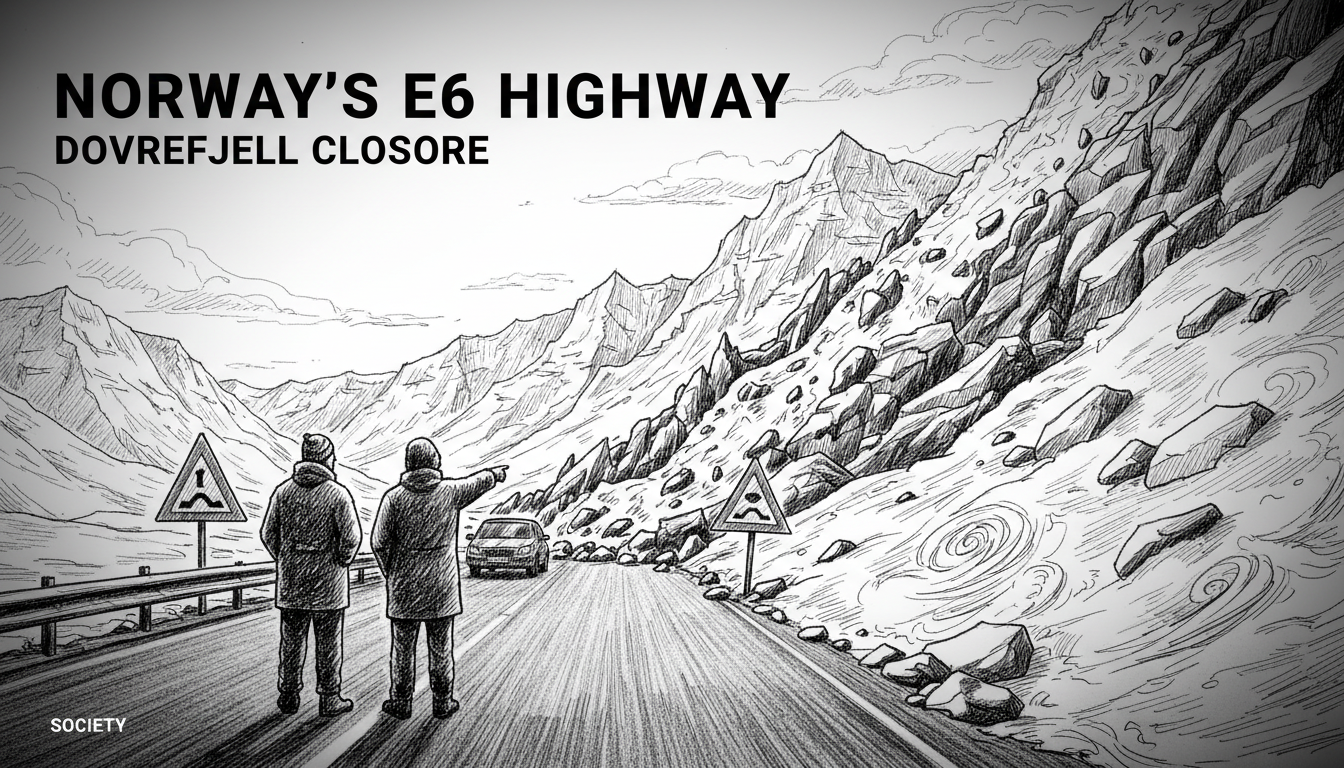
Norway's E6 highway, the nation's critical north-south artery, faces potential immediate closure over the Dovrefjell mountain range. The Norwegian Public Roads Administration (Statens vegvesen) issued the warning due to reports of dangerously icy driving conditions. Authorities are urging all motorists to carry and use tire chains for the treacherous mountain crossing.
This is not a routine winter advisory. It is a stark reminder of the immense geographical challenges at the heart of Norway's infrastructure. The E6 is more than just a road; it is the primary logistical and economic lifeline connecting southern cities like Oslo and Trondheim with the northern regions of Nordland, Troms, and Finnmark. A closure, even for a few hours, disrupts freight transport, tourism, and daily commutes for thousands.
The Perilous Mountain Passage
The Dovrefjell section represents one of the most vulnerable points on the entire 3,170-kilometer route of the E6. The mountain range acts as a formidable natural barrier, with the road climbing to significant altitudes where weather can change with violent speed. Heavy snowfall, strong winds, and rapid ice formation are common from late autumn through spring. The road administration's decision to warn of a potential short-notice closure is a standard safety protocol, but it underscores the persistent threat.
"Our primary duty is to ensure public safety," a senior road administration official said in a statement. "When conditions deteriorate to a point where even experienced drivers with proper winter tires are at high risk, we must consider closing the road. It is a difficult decision with major consequences, but human safety comes first." The administration maintains a network of weather stations and road sensors across Dovrefjell, providing real-time data that informs these critical calls.
Economic and Social Lifeline at Risk
The economic impact of an E6 closure over Dovrefjell is immediate and significant. Long-haul transport companies face costly delays. Fresh produce and goods destined for northern markets sit idle. Tourism operators in regions like Trøndelag and further north watch as potential visitors cancel or reroute plans. For local communities on either side of the mountain, the road is their connection to essential services, larger hospitals, and supply chains.
This vulnerability has long been a topic of political and strategic discussion. The E6's reliability is a matter of national interest. Proposals for alternative routes, extensive tunnel systems, or improved all-weather protections are perennial features of infrastructure debates in the Storting, Norway's parliament. However, the extreme cost and environmental considerations of major engineering projects in such a sensitive alpine landscape often stall ambitious plans.
Expert Advice for Winter Mountain Travel
Road safety experts are unequivocal in their guidance for travel on Norwegian mountain passes in winter. "The legal requirement for winter tires is a minimum standard, not a guarantee of safety on a place like Dovrefjell," explains a traffic safety consultant familiar with the route. "Carrying and knowing how to fit tire chains is non-negotiable. Drivers must also check road reports (vegvesen.no) continuously, not just at the start of their journey. Conditions can evolve in minutes."
The experts also emphasize driver preparedness. This includes having a full fuel tank, warm clothing, food, and water in the vehicle in case of a sudden closure or long queue. The road administration often implements convoy driving behind snowplows during severe weather, a process that requires patience and caution from drivers.
A Recurring Challenge with No Easy Fix
The situation on the E6 over Dovrefjell is a clear example of Norway's ongoing battle with its own geography. The country's prosperity is linked to mobility and connectivity, yet its landscape of fjords and mountains naturally impedes it. While coastal shipping and air travel offer alternatives for some passengers and goods, road transport remains the backbone for most land-based freight and personal travel.
Investment in more robust avalanche protection, heated road surfaces in critical sections, and advanced weather forecasting are part of the mitigation strategy. Yet, the fundamental challenge remains: taming a mountain pass that is exposed to some of the harshest inland weather in Europe. Each winter season is a test of infrastructure, logistics, and public compliance with safety advice.
Looking Ahead: Resilience and Adaptation
The immediate focus is on managing the current hazardous conditions. However, the recurring threat of closure fuels a broader conversation about long-term resilience. Climate change adds a layer of uncertainty, potentially altering snowfall patterns and the frequency of freeze-thaw cycles that create black ice. Future infrastructure planning must account for this increased volatility.
For now, the message from authorities is clear. Travel over Dovrefjell on the E6 should be undertaken with extreme caution, proper equipment, and flexibility. Drivers must be prepared for the possibility that the vital ribbon of asphalt connecting north and south Norway could be severed, however temporarily, by the formidable power of winter on the mountain. The standoff between human engineering and natural force continues, with public safety hanging in the balance.