
Norway's electricity system failed 72-year-old Øystein Gjelseth for 1,527 kroner. His daughter, Marianne Gjelseth, now keeps that exact sum's worth of unpaid bills in a clear plastic box on her living room table. The collection includes police documents, autopsy reports, and a handwritten prayer from her father. 'Pappa died for 1,527 kroner,' she states, her voice steady with a grief hardened by anger. 'That should never happen again.' This is the human cost of an energy market designed for efficiency, not protection.
A Frozen Discovery in the Arctic Dark
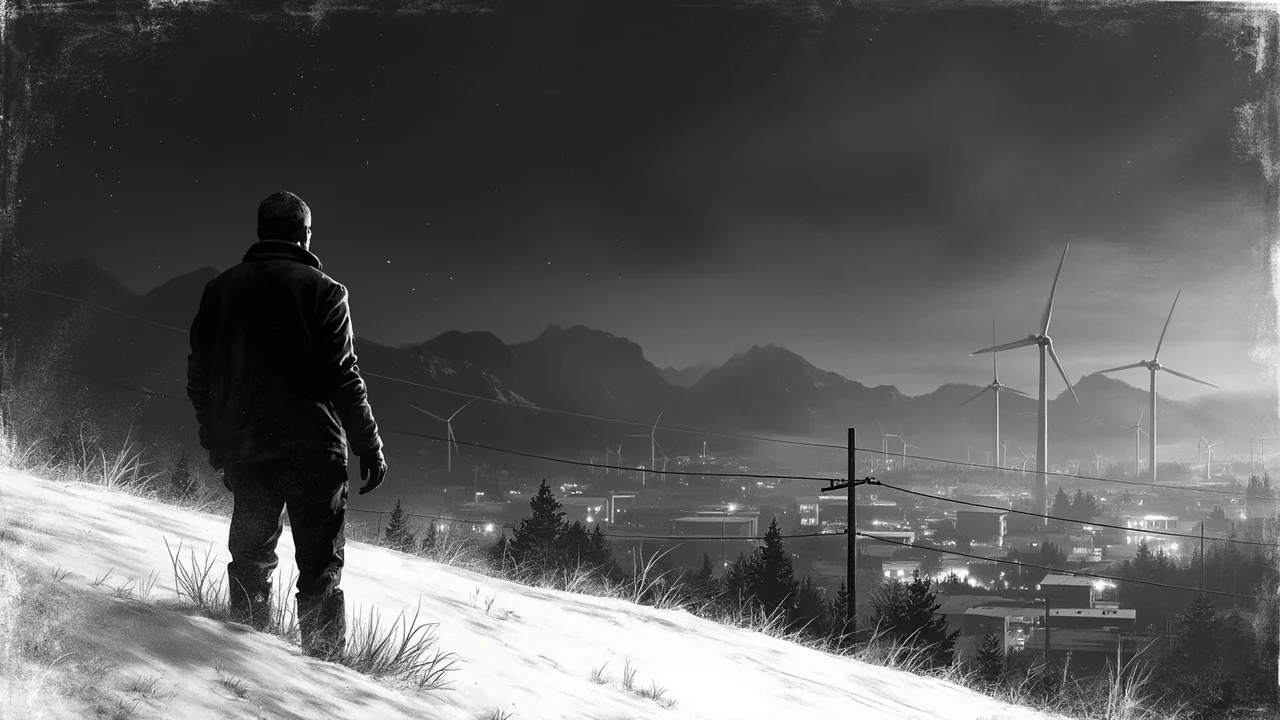
The cold held Namsskogan in an iron grip that January day in 2024. Temperatures plunged toward minus 25 degrees Celsius. Thick frost coated trees and rooftops. During the Christmas holidays, neighbors noticed Øystein's house was dark. This wasn't unusual—he often visited his daughter and her family in eastern Norway. But after an extended period without a glimpse of light, a neighbor went to check. She contacted Marianne, describing a chilling sight: the windows were completely covered in frost. She didn't dare go closer. Seventy miles to the south, Marianne felt panic surge. This wasn't like her father. She called the police. Officers soon stood outside the frozen home. They received permission to force entry. The frozen door was pushed open. On the sofa lay Øystein—lifeless and frozen through. When the phone rang at Marianne's home on Strømmen, her world collapsed. 'I just sat and screamed,' she recalls. 'I couldn't think.'
The Last Normal Conversation
Their final conversation was on Christmas Eve. Marianne was in Sweden; Øystein was home in Namsskogan. He had a cold but was in good spirits. He planned to go to church, then home for dinner. Everything seemed normal. 'If anyone had said something, I would have saved the situation immediately,' Marianne says. 'That's what leaves me with such a bad conscience.' The autopsy report could not establish one clear cause of death. It listed pneumonia and cardiac arrhythmia, linked to ischemic heart disease, as possible causes. Crucially, the report did not rule out that prolonged cold and hypothermia may have contributed to the fatality. Øystein also had diabetes, which can impair the body's ability to handle stress and illness. A week later, Marianne traveled north with her eldest son, Robin. They were going into the house for the first time since his death.
Walking Into the Cold Truth
Even before stepping over the threshold, Marianne saw the notice. The power company had placed a final warning of disconnection on the door. Inside, the reality of her father's last days became horrifyingly clear. The house was ice cold. The refrigerator was warm and empty. The only food was some frozen bread. The electricity had been cut off. The unpaid bill that triggered the disconnection totaled 1,527 kroner—approximately 130 euros. For that amount, a retired man was left without heat in the depths of an Arctic winter. Marianne discovered her father had been struggling silently. He had received notices but hadn't asked for help. He was a proud man who managed on his own. The system, designed for digital communication and automated payments, had failed to see the human being behind the account number.
How Norway's Safety Net Developed Holes
Norway, one of the world's wealthiest nations, has extensive social welfare systems. Yet, Øystein's case reveals critical gaps where technology and bureaucracy override human judgment. Energy companies operate under strict regulations for disconnection, especially in winter. However, these protocols often rely on customers self-identifying as vulnerable or responding to written warnings. For an elderly person living alone, potentially confused by digital invoices or deteriorating health, these warnings can be meaningless. 'The system is built on the assumption that everyone is digitally competent and financially fluent,' says Lars Håkon, a sociologist specializing in welfare technology. 'When you have an aging population living in remote areas, that assumption is dangerous. A disconnection notice is just a piece of paper or an email. It doesn't measure the temperature in the living room.'
The Silent Struggle of the Elderly
Experts point to a growing problem of isolation and silent hardship among Norway's elderly, particularly in rural districts. Pride, fear of losing independence, and simple confusion can prevent them from seeking help. 'We have moved so many essential services online—banking, bills, official communication,' notes Anna Berger, head of the Norwegian Pensioners' Association. 'For a generation that did not grow up with this, it's not just inconvenient. It can be a wall they cannot climb. They might see a red letter and feel shame, not understanding the urgent help available.' In Øystein's municipality, social services had no flagged concerns. He was not on any 'at-risk' register. He was, in the system's eyes, just another account holder who didn't pay his bill.
A Daughter's Campaign for Change
Marianne Gjelseth has transformed her grief into a fierce campaign. She is not seeking compensation. She wants systemic change to prevent another similar death. She has met with local politicians, energy company representatives, and the Norwegian Water Resources and Energy Directorate (NVE). Her demands are specific: mandatory human checks before any winter disconnection, better collaboration between power companies and municipal welfare services, and clearer, more proactive outreach to elderly customers. 'A machine should not decide to turn off the heat in January,' she argues. 'There needs to be a person who asks: Who lives here? Are they old? Are they sick? What is the temperature outside?' Her advocacy is cutting through bureaucratic inertia. The local energy provider has expressed deep regret and initiated an internal review of its procedures.
The National Reckoning on Energy Poverty
This incident has ignited a national debate in Norway about 'energy poverty'—a term many Norwegians thought belonged to other, less affluent nations. Despite being a major hydropower producer, Norway's integration into the European energy market has led to volatile prices. While government subsidies shield most consumers, those on fixed, low incomes like many pensioners remain vulnerable. Politicians from across the spectrum are now calling for legislative review. Proposals include a legally mandated 'vulnerability check' before disconnection, a ban on winter disconnections for households with residents over 70, and a duty for power companies to alert municipal health services if an elderly customer falls behind on payments. 'We regulated for the market, not for the citizen,' admits one center-party politician involved in energy policy. 'This tragedy shows we must rebalance that.'
A Preventable Tragedy with a Lasting Legacy
Øystein Gjelseth was a father, a grandfather, and a man who loved his home in Namsskogan. His death, tied to a small unpaid bill, forces a uncomfortable question: How many others are silently shivering in the dark? Marianne keeps the plastic box of documents as a tangible reminder of her mission. 'I can't sit down and grieve properly,' she confesses. 'I'm not sure I would get back up to continue the fight.' But she does continue. Every meeting, every interview, is a step toward ensuring no other family receives that frozen, heart-stopping phone call. The price of failure, she proves, is not measured in kroner, but in human lives. As Norway continues its digital transformation, this case stands as a stark warning: efficiency without empathy can have fatal consequences. The challenge now is to build a smarter system—one that sees people, not just payments.