
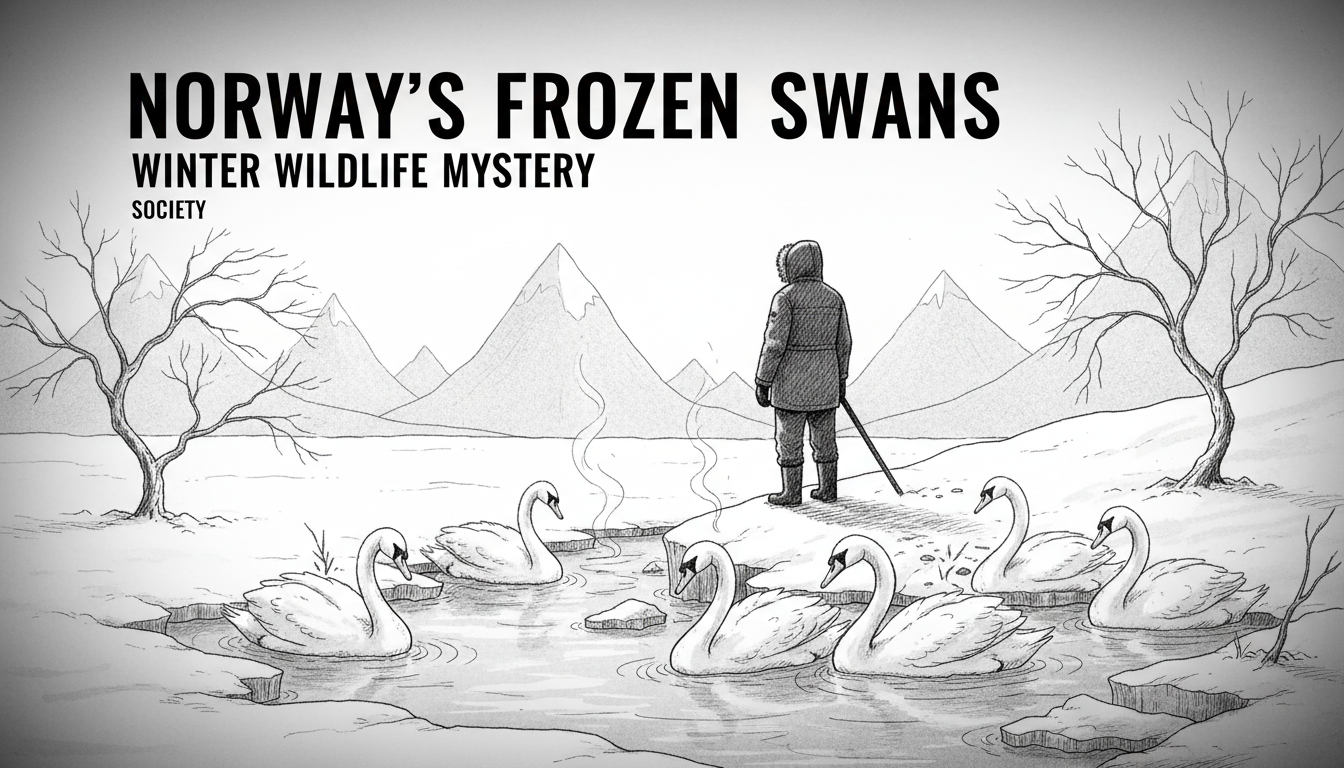
Norway's winter landscape often sparks concern for its iconic mute swans, with residents repeatedly reporting the large white birds frozen solid in icy fjords and coastal inlets. The reality, according to emergency services, is a widespread misunderstanding of natural survival behavior, where human anxiety clashes with avian adaptation.
Every significant cold snap on Norway's western coast triggers a wave of urgent calls to local fire and rescue departments. Worried citizens describe swans that haven't moved for hours, seemingly trapped by the ice, leading to fears the birds will perish. "We get such reports every time it gets properly cold," said Dag Botnen, fire chief for Haugaland Fire and Rescue. "People become worried. They are large birds, and when they lie completely still and don't move for many hours, it looks dramatic to many."
The Annual Cycle of Concern
This phenomenon repeats with seasonal predictability. In regions like Vestlandet, where prolonged, stable freezing periods are less common, the arrival of sharp frost consistently brings an influx of public alerts. The sight of a majestic swan, motionless on a sheet of ice, tugs at the heartstrings of nature-loving Norwegians. The instinct to help a creature in apparent distress is powerful, driving calls to the very authorities tasked with human rescue.
The fire department has taken to social media to preemptively educate the public. In a detailed Facebook post, they explain the situation plainly: "When the frosty days come, so do the calls about swans that have supposedly frozen fast in the ice and are sitting there freezing until spring comes (!). It is fortunately not that dramatic." The post acknowledges the good intentions behind the reports, describing callers as "bird-loving and caring people," while gently correcting the misconception about the "great, white, and somewhat lazy swans."
Energy Conservation, Not Entrapment
The explanation, experts say, is rooted in basic biology and energy economics. Mute swans (Cygnus olor) are remarkably well-adapted to cold climates. Their primary strategy for surviving freezing temperatures is radical energy conservation. By remaining almost perfectly still, often huddled close to a mate, they drastically reduce calorie expenditure. Beneath their striking white plumage lies a dense layer of down feathers, creating an insulating barrier that retains body heat effectively.
Furthermore, ice cover presents a practical feeding problem. Their typical aquatic vegetation becomes inaccessible, forcing them to fast or seek out scarce alternative food sources. Moving around burns precious energy reserves with little chance of replenishment. Therefore, adopting a stationary, energy-saving posture is not a sign of crisis but a calculated survival tactic. "The swans save energy when it is cold and keep warm by being still," Botnen emphasized. "This is usually completely normal behavior."
When Rescue Services Actually Respond
While most reports are false alarms, the fire department does occasionally encounter a genuine case. "It happens, but it is rare," Botnen noted, recalling an incident several years prior where a swan was authentically stuck. The key for emergency responders is a careful triage process to avoid diverting critical resources unnecessarily. Their first assessment focuses on ambient temperature and the specific conditions reported.
"The first thing we consider is how cold it actually is," Botnen explained. "We often wait because we know the reality that the birds usually manage perfectly fine on their own." When a situation merits closer inspection, technology provides a low-disturbance solution. Fire crews can deploy drones for an aerial assessment. The approach of the drone often provides the definitive answer. "When the drone gets close, the swan becomes restless and moves," said Botnen. "Then the answer is probably given."
This measured approach ensures that the professional rescue capacity, vital for human emergencies, remains focused while still allowing for animal welfare interventions when absolutely necessary. The incidents rarely strain winter resource preparedness.
The Ornithologist's Perspective
Wildlife biologists and ornithologists strongly support this cautious stance. They point out that unnecessary human intervention can be more harmful than helpful. Disturbing a swan in its energy-conserving state forces it to expend vital reserves fleeing or reacting to perceived threats. A well-meaning attempt to break ice around a bird or scare it into flight could cost it energy it cannot afford to lose during a prolonged freeze.
"The public's concern is born from compassion, which is positive," said a Norwegian ornithologist familiar with the species. "But we must trust that these birds have evolved with these conditions. Their stillness is a feature, not a bug, of their winter survival strategy. The greatest risk during a cold spell is not freezing, but starvation from depleted energy stores." The expert confirmed that while mute swans are hardy, extended periods of extreme cold coupled with complete ice cover can threaten populations, making energy conservation all the more critical.
A Cultural Reflection on Nature
This recurring winter story reveals a deeper narrative about Norway's relationship with its natural environment. The public's vigilance reflects a society deeply connected to and responsible for its wildlife. The willingness to pick up the phone to report a suffering animal speaks to a collective ethic of care. Yet, the story also highlights a knowledge gap between human perception and animal behavior, where actions that signal distress in a mammal context mean something entirely different for a bird.
Authorities face the continuous task of channeling this public concern into informed awareness. The core message from rescue services is simple and direct: "Therefore: Let the birds be in peace. Then they can rest and take it easy until food is available again." It is a plea for quiet trust in natural processes, even when they appear unsettling to the human eye.
Looking Ahead to Future Winters
As climate patterns shift, the frequency of such cold snaps may change, potentially altering this dynamic. However, the fundamental biology of the mute swan will remain. The annual cycle of concern, explanation, and public education is likely to continue. For fire chiefs like Dag Botnen, it represents a predictable, if poignant, element of winter operations.
The image of the serene, motionless swan on ice endures as a powerful winter symbol in Norway. It is a test of observation and understanding, asking residents to discern between true peril and profound adaptation. The next time a deep frost settles over the fjords, the hope among responders is that fewer phones will ring, not from indifference, but from a public that now sees the still swan not as a victim of the ice, but as a master of its winter domain.
Ultimately, this story is less about swans and more about human interpretation. It asks a fundamental question: In our desire to protect the natural world, are we sometimes too quick to project our own vulnerabilities onto creatures far better equipped for their environment than we assume? The silent swan on the ice holds the answer, if we are willing to watch and learn.