
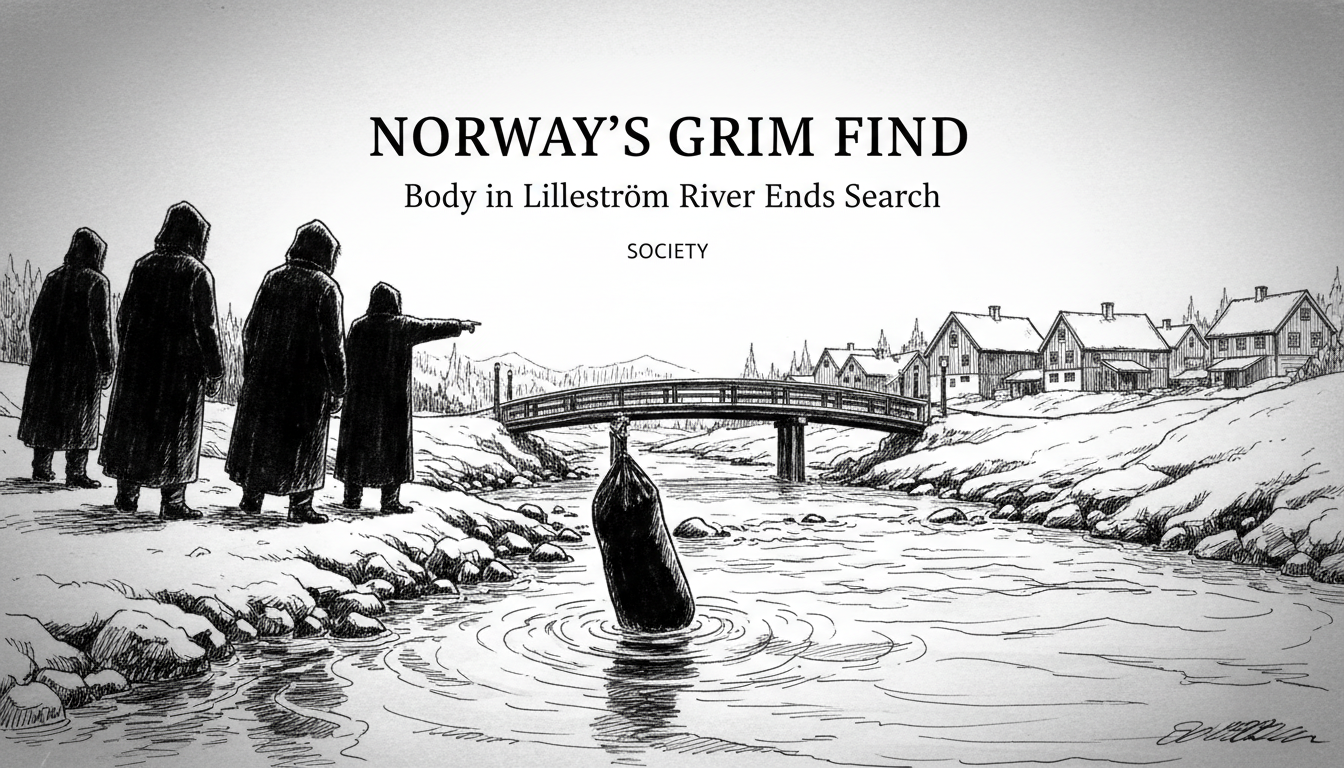
Norway records over 6,000 missing person reports annually, a statistic that turned tragically real for a Lillestrøm family this week. The body of a man reported missing on Saturday was discovered in the Sagelva river on Tuesday morning, ending a four-day search. Volunteers associated with the man’s own family made the grim discovery at Skjærvagapet, a specific point on the river, at 11:10 AM.
Police Operations Manager Henrik Larsen confirmed the identification. "It is confirmed that the deceased is the missing person," Larsen said in a statement. "Both fire and police resources are on site and have assisted the family after the discovery. The next of kin are on site and have been notified in that regard." The man's name has not been released, respecting common Norwegian practice during family notification. The case is under investigation, and an autopsy will be conducted to determine the precise cause of death.
A Community-Led Search Effort
The discovery concluded an intensive search operation that mobilized both official and community resources over the weekend. Police confirmed that a helicopter and numerous volunteers participated in the effort to locate the man after he was first reported missing. The fact that family-associated volunteers ultimately found the body underscores the profound community involvement typical in such Norwegian searches. In a country with vast, rugged terrain, volunteer organizations like Red Cross Missing Persons and local groups often work in close coordination with police, bringing vital local knowledge to the operation.
This collaborative model is a cornerstone of Norway's search and rescue framework. The immediate deployment of a helicopter indicates authorities treated the disappearance with high priority, likely due to concerns about the man's welfare or the environmental risks posed by the river and cold water temperatures.
The Sagelva: A Waterway Through the Suburbs
The Sagelva river, where the man was found, is a defining geographical feature of Lillestrøm. This town, part of Viken county, sits squarely within the Oslo metropolitan area, blending urban accessibility with natural landscapes. The Sagelva flows through the community before eventually emptying into the vast Øyeren lake. Øyeren itself is part of the Glomma river system, Norway's longest and largest watershed, which stretches from the mountains near Røros to the outer Oslofjord.
The specific location mentioned by police, Skjærvagapet, is known locally. Such gaps or narrows in a river can have complex currents, especially during seasonal runoff. The presence of a body in the water will trigger a standard but meticulous police procedure. "The investigation will now focus on establishing a timeline and the circumstances leading to the man entering the water," said a former police investigator familiar with such cases, who spoke on condition of anonymity. "The autopsy is crucial. It will distinguish between accidental drowning, medical incident, or other causes. Police will also work to reconstruct his final known movements."
Standard Procedure in the Aftermath
The steps now underway follow a well-defined protocol. The formal identification of the deceased, often via dental records or DNA when necessary, is the first official step. The post-mortem examination, or autopsy, will be performed by a forensic pathologist. This examination aims to determine the medical cause of death—for instance, drowning, hypothermia, or a potential underlying cardiac event. Simultaneously, detectives will conduct a parallel investigation into the circumstances. They will interview family, friends, and any witnesses, review CCTV footage from the area, and examine the man's personal history and state of mind. The primary goal is to rule out criminal involvement, such as foul play or negligence by another party.
Until the police conclude their investigation and release a statement, speculation about the cause is both unproductive and disrespectful to the grieving family. The police's primary communication at this stage is with the next of kin, not the public. A press conference or detailed public update typically only occurs if the investigation reveals a public safety concern or criminal element.
The Human Toll of a Missing Person Case
Beyond the statistics and procedures lies the profound human tragedy. A missing person report initiates a period of agonizing limbo for families, a void filled with hope, dread, and relentless uncertainty. The transition from a search-and-rescue mission to a recovery operation, implied by the involvement of a helicopter and days of searching, marks a devastating psychological shift for those involved. The fact that the family's own volunteers found the body adds a particularly poignant and traumatic layer to the loss.
Community solidarity, while a strength of the Norwegian response system, also means the shockwaves of such a tragedy spread through local networks, churches, and workplaces. Grief support services, often provided by municipal health services or organizations like Kirkens SOS, typically become engaged to support the bereaved family and sometimes the volunteers affected by the discovery.
A Broader Look at Safety and Riverine Risks
While the facts of this specific case remain under investigation, the incident draws attention to water safety in Norwegian communities. Rivers like the Sagelva, though often scenic and integrated into parks and walking paths, can be deceptively dangerous. Water temperatures, even in late spring, remain cold enough to induce shock or incapacitate a person quickly. Currents can be stronger than they appear, especially after rainfall or snowmelt in the surrounding uplands.
Local municipalities often install safety barriers and warning signs along particularly hazardous stretches of urban rivers. It will fall to the police and local authorities, after their investigation, to determine if any review of safety measures near Skjærvagapet or the surrounding area is warranted. For now, the focus remains on supporting the bereaved and conducting a thorough, factual inquiry.
The discovery in Sagelva is a somber reminder of how quickly routine life can be fractured. It highlights the efficiency and community heart of Norway's response to crises, but also the immutable fact that not all searches end with a reunion. The coming days will see the slow, painful work of mourning begin for one Lillestrøm family, their private loss forever marked by this public search in the waters of their hometown river.