
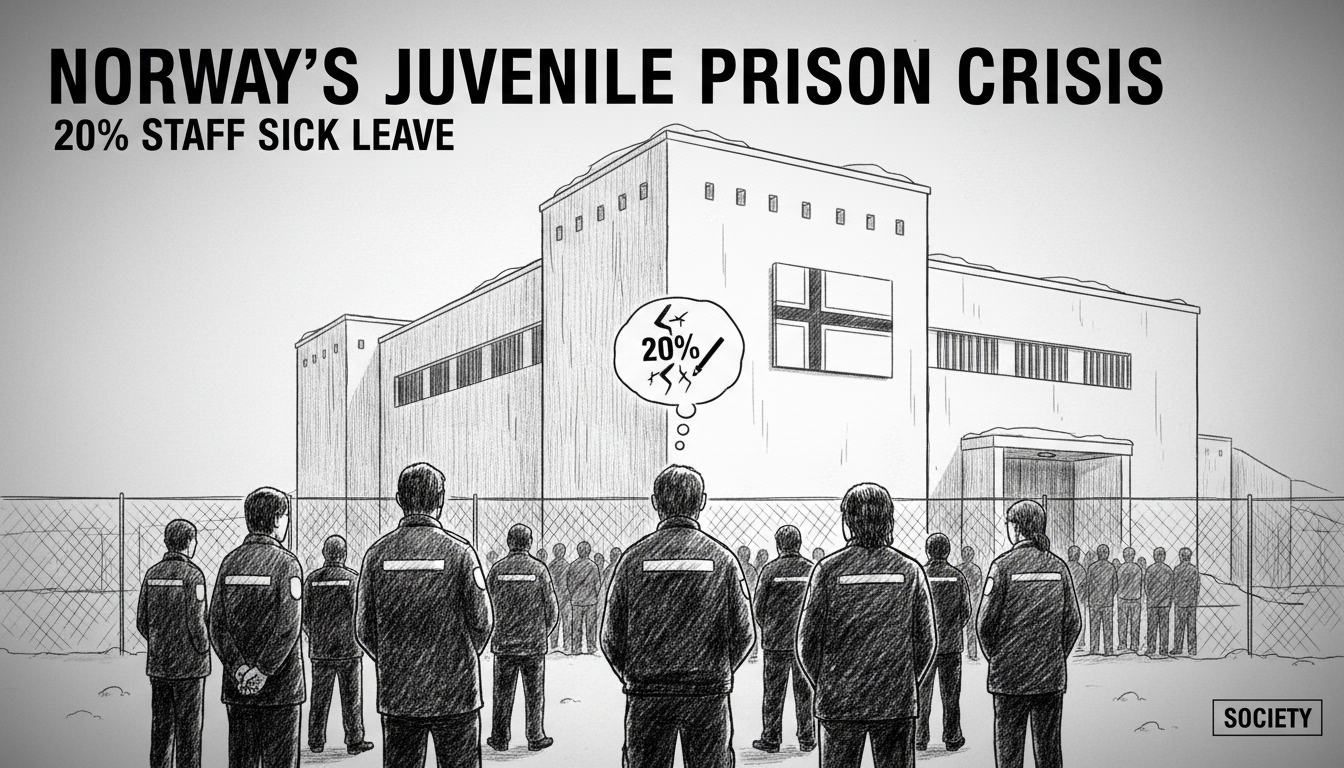
Norway's juvenile prison system faces a severe crisis after a damning inspection report revealed dangerous conditions for incarcerated minors. The Civil Affairs Authority (Sivilrettsforvaltningen) has issued a formal warning about the youth unit at Bjørgvin Prison, citing a high risk of children's rights violations. The report highlights inadequate services and a troubling increase in the use of isolation for teenagers aged 15 to 18. Staff shortages are critical, with sick leave rates approaching 20 percent among employees.
This situation presents a stark paradox for a nation celebrated for its humane and rehabilitative justice model. Norway's correctional philosophy emphasizes rehabilitation and successful reintegration into society. Its approach to juvenile justice specifically aims to provide supportive, age-appropriate measures. The findings at Bjørgvin, one of the country's few facilities housing minors, threaten to undermine these core principles. The prison accepts both pre-trial detainees and convicted youths from across the entire country, concentrating a vulnerable population in a failing system.
A System Under Strain
The inspection report points to systemic failures within the youth unit. Investigators found "deficient offerings" for the young inmates, which likely refers to shortages in education, therapy, and structured activities. These are fundamental components of Norway's rehabilitative model. More alarmingly, the report notes an increased use of isolation. For developing adolescents, solitary confinement can cause severe psychological harm, contradicting Norway's commitment to humane treatment.
The 20 percent staff sick leave rate is both a symptom and a cause of the unit's problems. Chronic understaffing creates a vicious cycle: remaining employees face excessive workloads and stress, leading to more burnout and absence. This environment makes it nearly impossible to provide the consistent, attentive supervision and support that juvenile inmates require. Experts in correctional management state that high absenteeism directly impacts safety and care quality, especially in settings with vulnerable minors.
Contradicting Norwegian Values
Norway's justice system is often held up as a global example of progressive penology. Recidivism rates are among the lowest in the world, a fact attributed to a focus on human dignity and skill-building. The conditions at Bjørgvin's youth unit stand in direct opposition to this ethos. "The Civil Affairs Authority fears a high risk of breaches of children's rights," the report states, a serious accusation in a country that is a signatory to the UN Convention on the Rights of the Child.
The facility's role as a national hub for juvenile detention magnifies the problem. Teenagers from different regions, separated from local support networks, are placed in an institution already struggling to meet basic standards. This isolation from family and community further hampers rehabilitation efforts. The report suggests the system is failing at its most basic duty: to protect and care for children in state custody, regardless of their crimes.
The Human Cost of Institutional Failure
Behind the statistics on sick leave and isolation are young individuals at a critical juncture. Neuroscience shows the adolescent brain is still developing, particularly in areas governing impulse control and risk assessment. Incarceration in a stressed, under-resourced environment can cement negative pathways rather than redirect them. Age-appropriate treatment, education, and mental health support are not luxuries in this context; they are necessities for any chance at positive change.
The use of isolation is particularly concerning. International human rights bodies increasingly condemn solitary confinement for juveniles, citing risks of depression, anxiety, and self-harm. In a Norwegian prison, where the official goal is rehabilitation, such practices are indefensible. They represent a punitive, security-first approach that the country has publicly rejected. Each instance of isolation represents a failure to engage and a lost opportunity for intervention.
A Call for Immediate Action
The Civil Affairs Authority's warning is not a minor critique. It is a formal regulatory reaction demanding immediate rectification. The authority has the power to compel changes and follow up with further inspections. The ball is now in the court of the Norwegian Correctional Service (Kriminalomsorgen) and the Ministry of Justice and Public Security. They must address the severe staffing crisis and review practices in the youth unit.
Solutions require more than just hiring temporary staff. They demand a systemic review of resources allocated to juvenile corrections. Are there enough dedicated, trained youth workers? Is the physical and psychological environment suited to adolescents? The high sick leave indicates a toxic work environment that must be healed to attract and retain qualified personnel. This may require significant investment, but the cost of inaction—ruined young lives and future re-offending—is far greater.
The Broader Implications for Norwegian Justice
This scandal at Bjørgvin forces a uncomfortable national conversation. Does Norway's renowned correctional model extend fully to its youngest and most vulnerable offenders? The country takes pride in its low prison populations and focus on rehabilitation, but this case exposes a potentially neglected corner of the system. It tests the nation's commitment to its principles when applied to a small, stigmatized group.
The situation also raises questions about the use of pre-trial detention for minors. Bjørgvin houses youths awaiting trial, meaning they are legally presumed innocent. Subjecting them to a deficient and potentially harmful institutional environment is a serious matter. Alternatives to detention, or vastly improved conditions for those who must be held, must be prioritized.
Looking Ahead: Rehabilitation or Stagnation?
The response from the Justice Ministry and correctional authorities will be telling. A swift, transparent action plan to overhaul the youth unit at Bjørgvin is the minimum required. This should include an immediate review of isolation protocols, a crisis intervention for staff support and recruitment, and an audit of educational and therapeutic programs. Independent oversight from child welfare advocates could help restore trust.
Norway stands at a crossroads. It can treat this as a localized management failure and apply technical fixes. Or, it can see it as a warning sign—a indication that even the most progressive systems can develop blind spots and allow degrading conditions to fester. The true measure of Norway's justice system will not be found in its treatment of model prisoners, but in its care for those who are most difficult, most troubled, and most in need of its famous humanity. The children in Bjørgvin's youth unit are waiting to see which path the nation chooses.