
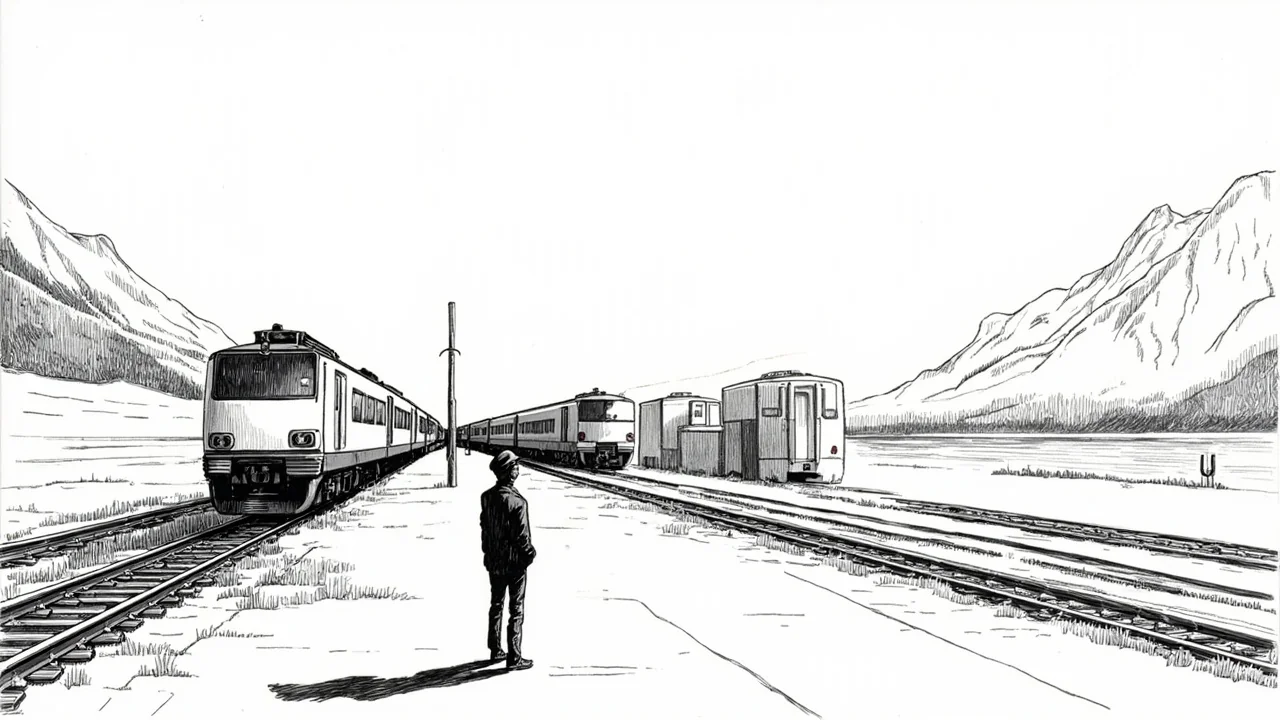
Norway's plan to double commuter train frequency on a critical coastal route has been derailed by manufacturing delays. The promised upgrade to four trains per hour between Tønsberg and Oslo is postponed indefinitely, leaving thousands of daily commuters with a slower, less reliable service. The announcement deals a significant blow to the government's green transport ambitions for the populous Oslofjord region.
Acting Rail Director Marit Rønning confirmed the setback, citing problems with the supplier of new local trains. "To implement four trains per hour we are dependent on the delivery of the new local trains, which unfortunately are delayed from the supplier," Rønning said in a statement. She emphasized that once the trains finally arrive, travelers will see major improvements in punctuality, travel time, onboard space, and departure frequency.
Political Promises Meet Manufacturing Reality
The delay exposes a recurring challenge in Norwegian infrastructure: ambitious political timelines clashing with complex industrial delivery chains. The four-train plan was a flagship promise for improving connectivity in Vestfold county, a region experiencing steady population growth with many residents commuting to the capital. The route, part of the vital Vestfold Line, is a bottleneck where intercity and freight traffic compete with local commuter services.
"This is deeply disappointing for everyone who relies on this line," said a local Conservative Party (Høyre) representative from Vestfold, who requested anonymity as they were not authorized to speak publicly. "We have sold this future service to constituents based on government assurances. Now we must explain why it's not happening." The issue is likely to be raised in the Storting's transport committee, putting pressure on the Minister of Transport.
The Technical Hurdle: Awaiting New Rolling Stock
The core of the problem lies with the new "Type 78" electric multiple-unit trains, ordered from Swiss manufacturer Stadler. These trains are a key component of the national rail operator Vy's fleet renewal strategy. Designed for regional and suburban lines, they offer more seats, better accessibility, and improved energy efficiency compared to older models. Their delayed entry into service creates a domino effect, preventing the redistribution of existing trains needed to increase frequency on the Tønsberg-Oslo corridor.
Rail experts note that such delays are not uncommon in complex European rolling stock projects, which involve stringent safety certifications and customization for national rail systems. Norway's strict winter weather requirements and specific technical standards add layers of complexity to the production and testing process. The delay undermines efforts to shift travel from road to rail along the E18 highway corridor, a key objective for reducing carbon emissions.
Commuter Frustration and Economic Impact
For the estimated 8,000 daily commuters between Vestfold and Oslo, the postponement means continued crowding and less flexible travel options. The current schedule, with two trains per hour during peak times, is often insufficient, pushing people towards private cars. A regular commuter from Tønsberg, Kari Johansen, expressed her frustration: "You plan your life, where you live and work, around these promises. Every year they talk about better trains, and every year we are left standing on a crowded platform. It makes you question the entire investment."
The economic implications are tangible. Reliable, high-frequency rail service is a catalyst for regional development, influencing business location decisions and property values. Prolonged uncertainty about service improvements can stifle growth in towns along the line, from Tønsberg to smaller stations like Holmestrand and Skoppum. It also affects tourism, as the line serves coastal destinations popular with Oslo residents.
A Broader Pattern of Transport Setbacks
This delay fits a pattern of challenges facing Norway's transport infrastructure upgrades. Other major projects, including the Follobanen high-speed line (which opened after significant delay) and the ongoing modernization of the Nordland Line, have faced budget overruns and scheduling problems. These issues often stem from Norway's difficult terrain, high labor costs, and a complex procurement model that balances national interests with European single market rules.
The situation invites comparisons with neighboring Sweden, which has faced its own crises with new train deliveries from different manufacturers. The pan-Nordic struggle highlights a European industrial sector under strain, where a handful of large manufacturers juggle multiple national orders, each with unique specifications. The result is a fragile supply chain for essential public assets.
Looking Beyond the Delay
While the immediate news is negative, Rail Director Rønning's statement points to the transformative potential once the new trains arrive. The four-train-per-hour frequency would represent a step-change, making the train a truly competitive alternative to the car for a wider range of trips, not just traditional peak-hour commuting. It would enable a "turn-up-and-go" service model, similar to urban metro systems, fundamentally changing how people view mobility in the region.
The key question for policymakers is how to manage expectations and mitigate the impact of industrial delays. Some analysts suggest Norway needs to build more buffer time and risk assessment into its public transport planning. Others argue for greater investment in domestic maintenance and assembly capabilities to reduce dependency on external suppliers for critical infrastructure.
For now, the wait continues. Commuters on the Vestfold Line will monitor the progress of the new trains with a mix of hope and skepticism. The success or failure of this upgrade will serve as a benchmark for Norway's ability to execute its ambitious, rail-centered transport policy. The government's credibility on climate action, where rail plays a central role, is partially tied to delivering on these concrete, local service improvements. The postponed plan is more than a schedule change; it's a test of political will meeting operational execution in Norway's push for a greener transport future.