
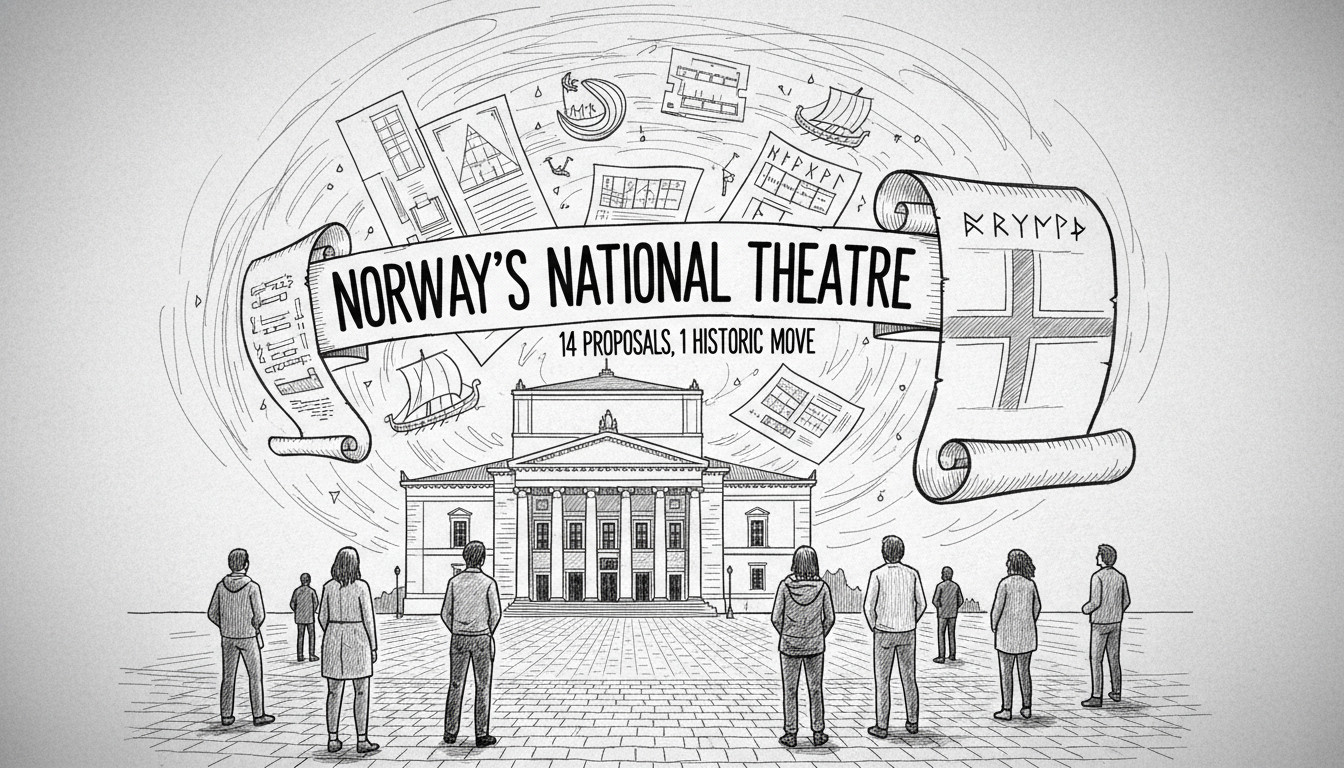
Norway's National Theatre faces a historic relocation as its iconic Oslo building requires extensive renovation. The state property agency Statsbygg has received 14 proposals for a temporary main stage and permanent smaller stages, sparking a competitive bidding war among major developers. The leading contenders aim to move the cultural institution from its traditional city center home to emerging urban hubs on the city's east side.
Sonja Horn, CEO of real estate giant Entra, stands on the platform at Brynseng T-bane station, gesturing toward a vast area of asphalt and concrete. "This is the best place," she states firmly, alongside Hilde Vatne, head of JM Norge. Their joint vision for Bryn sentrum includes 600 new homes, 5000 workplaces, and a central role for the Nationaltheatret. "The most important advantage here is that it's the transport hub on the east side of the city with the best public transit offer," Horn explains.
A Battle for Cultural Prestige
The competition extends far beyond Bryn. When Statsbygg requested proposals for locations near Ring 3 earlier this year, 14 offers flooded in. While Statsbygg has not released names, two other major players have publicly declared their interest. Økern Sentrum ANS, backed by Steen & Strøm and Storebrand, presents itself as "the new capital on Oslo's east side." Its large-scale plan for the area around the high-rise and the defunct shopping center was approved by the Oslo City Council in August.
"Our assessment is that Økern sentrum as the new capital east in Oslo is the best alternative for the Nationaltheatret," says development director Thomas Holth of Steen & Strøm. On the opposite side of Ring 3, at Løren, Oslo Pensjonsforsikring (OPF) is another significant property actor in the mix, owning the distinctive signal building Øke. This multi-front competition highlights the immense prestige and economic potential associated with hosting Norway's premier performing arts institution, even temporarily.
The Bryn Proposition: Transport and Transformation
The Entra and JM Norge proposal hinges on Bryn's exceptional connectivity. Horn lists the advantages: a T-bane station with more than 20 departures per hour in each direction, a nine-minute ride to Jernbanetorget in central Oslo, a nearby train station, and plans for a regional bus terminal. "You have very efficient transport for a national stage," she argues. "In addition, it becomes a very attractive offer for the local population on this side of the city."
Hilde Vatne of JM Norge frames the development as an urban transformation. "It is an area that is initially filled with asphalt and concrete, a grey area that we will transform into a fine place to live and work," she says. Their plan for Bryn sentrum, set to go out for public consultation in the new year, aims to create a complete living environment with housing, culture, and business. "We hope to get it approved in 2027. Then we can start building quite quickly after that," Vatne adds. Both executives emphasize that plans can be adjusted during the process to accommodate the Nationaltheatret's specific needs.
Cultural Geography and Audience Reach
The potential move away from the Nationaltheatret's historic location at the end of Karl Johans gate, Norway's ceremonial boulevard, represents a significant shift in Oslo's cultural geography. Established in 1899, the theatre has been a central landmark for 125 years. Moving its operations, even partially, to a developing area like Bryn or Økern raises questions about audience patterns and institutional identity.
Arts policy experts note a potential strategic advantage. "Placing a major cultural institution in a growing residential and business district can act as a powerful catalyst for community building," says Dr. Ingrid Moe, a cultural studies professor at the University of Oslo. "It democratizes access to high culture by embedding it in a everyday urban environment, rather than requiring a special trip to the city center. For the theatre, it's a chance to engage with a new, more diverse audience base."
However, traditionalists express concern. "The Nationaltheatret's location is symbolic," argues historian Per Arneberg. "It sits between the Royal Palace and the Parliament, at the heart of national narrative. While practical needs must be met, we must consider what is lost when such an institution is physically disconnected from that historic axis."
Economic Ripples and Real Estate Impact
The relocation project is more than a cultural story; it's a major real estate event. Analysts point to the substantial value creation that hosting the Nationaltheatret would bring to any of the proposed locations. "A tenant of that caliber provides immense stability and prestige, which in turn attracts other high-quality commercial tenants, retail, and increases residential appeal," says real estate analyst Magnus Falkanger. "For developers like Entra, JM, or the Økern consortium, securing the theatre would be a masterstroke that validates their entire development vision and likely boosts property values across their holdings in the area."
The Bryn plan explicitly links culture with urban development. By proposing to integrate the theatre into a new neighborhood from the ground up, the developers are betting on a model where cultural infrastructure is a foundational element, not an afterthought. This aligns with broader trends in urban planning that emphasize mixed-use, live-work-play environments.
The Practical Timeline and Political Process
The process remains in its early stages. Statsbygg is currently evaluating the 14 proposals based on a set of criteria including location, accessibility, technical suitability, and cost. The agency will then make a recommendation to the Ministry of Culture and the theatre's board. Any final decision will involve weighing artistic needs, practical logistics, urban policy goals, and financial considerations.
The planned renovation of the main building on Bankplassen is extensive, described as a renewal "from top to toe." This necessitates a long-term solution for the theatre's operations, making the choice of interim home particularly consequential. It is not merely a short-term rental but a multi-year partnership that will shape the theatre's work and public engagement.
Local politicians in the Oslo City Council will also wield influence, particularly for proposals like Bryn and Økern that are tied to larger zoning and development plans requiring municipal approval. The alignment of cultural policy with urban development strategy will be a key point of debate.
A Defining Choice for Oslo's Future
As the evaluation continues, the competition highlights a defining choice for Oslo's future urban shape. Will the Nationaltheatret move to a transport hub like Bryn, betting on maximum accessibility and integration into a brand-new urban fabric? Will it anchor the "new capital" at Økern, reinforcing a large-scale commercial and residential node? Or will another of the 14 proposals present a compelling alternative?
The decision will send a powerful signal about where Oslo sees its cultural heart expanding. For over a century, that heart has beat firmly in the city center. The coming months will determine if, for a period of years, it will move east, taking Norway's most prominent stage into the midst of the city's most ambitious transformation projects. The knives are out, as the Norwegian saying goes, but the prize is not just a tenant—it's a piece of national identity and a catalyst for urban rebirth.