
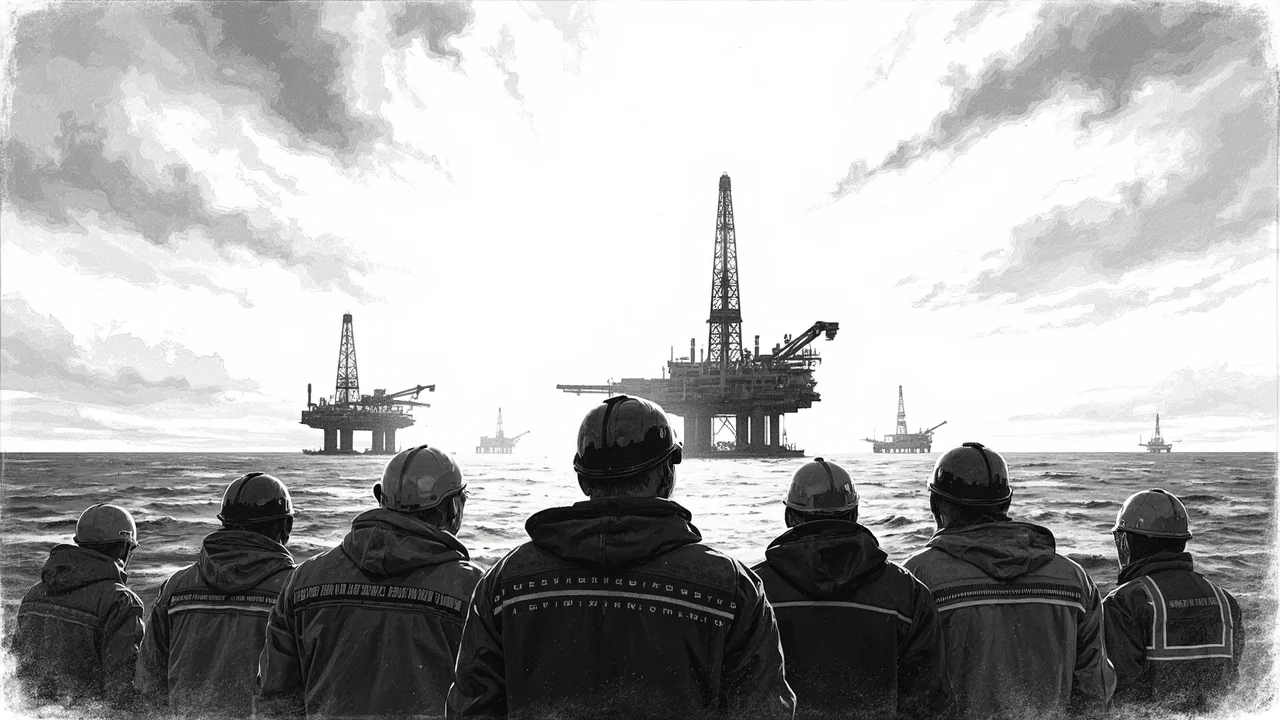
Norway’s offshore supply industry just secured contracts worth over 100 billion kroner, yet simultaneously announced plans to cut 500 jobs. This stark contrast signals a definitive end to an extreme boom period and the start of a challenging new phase on the Norwegian continental shelf. "We have to adjust to the activity level. It's tough when you have to scale down, but it has to happen," said Kjetel Digre, CEO of Aker Solutions.
On Thursday, energy giant Equinor distributed a massive suite of framework agreements to key Norwegian suppliers including Aker Solutions, Aibel, Apply, and Wood Group. The total value is estimated at 100 billion Norwegian kroner, with Aker Solutions’ share alone valued between 8 and 12 billion. For an industry that has ridden a wave of unprecedented investment, the deals represent a strong core of future work. Yet the celebration is muted. The very same day, Aker Solutions confirmed it would reduce its workforce by 500 employees, a direct consequence of the changing market.
The End of an Extreme High
The past few years have been exceptionally busy for Norway's offshore suppliers. A crisis package from Norway's parliament in 2020 unleashed a flood of new projects, driving investment to record levels. Suppliers have been heavily involved in major developments like the Equinor-operated Irpa field, OMV's Berling, and Aker BP's sprawling Yggdrasil project. The industry has been operating at full throttle, with shipyards and engineering firms stretched to capacity. "It's been an extremely high period," Digre acknowledged, referencing the powerful upswing now clearly receding.
This cyclical nature is hardwired into the oil and gas sector. Following the oil price crash of 2015-2016, approximately 50,000 jobs disappeared from the Norwegian industry. The current transition, while less dramatic, follows a familiar pattern of boom and correction. From this year onward, overall investments on the shelf are expected to decline. The recent contract awards, while substantial, are part of a managed slowdown rather than a new acceleration.
A New Type of Work Ahead
The future will not just involve less work, but different work. Industry leaders point to a fundamental shift in the skills and projects that will define the next decade. "It's one thing to design and build the Johan Castberg vessel for the Barents Sea, and another to build a carbon capture plant on the south coast," Digre explained. This highlights the dual transition underway: maintaining existing oil and gas infrastructure while pivoting expertise towards the energy solutions of tomorrow, such as carbon capture and storage (CCS) and offshore wind.
Equinor has promised to maintain its annual investments on the Norwegian shelf at 60-70 billion kroner for the next decade. However, the composition of that spending is evolving. "I believe some suppliers will have to look at the consequence that a different type of work will be done going forward," said Kjetil Hove, head of Equinor's operations in Norway. The frantic pace at the shipyards for large newbuilds is set to ease. Instead, demand will focus on maintenance, modifications, and upgrades to existing installations, alongside new energy projects.
Balancing Contraction and Core Competence
The announced layoffs, while painful, are described by company leadership as necessary operational adjustments. "Overall, the activity will dictate how many we need to be. We have to activity-adjust. It's sound operations," Digre stated. He emphasized that the newly secured Equinor contracts provide a vital foundation. "It is a proper, strong core and pillar for the rest of our company." This core will allow companies to retain critical expertise through the downturn, ensuring they have the talent needed for future projects when the cycle turns again.
Other major suppliers are likely facing similar pressures to right-size their organizations after years of expansion. The framework agreements provide long-term visibility and revenue certainty, but they often cover a wider scope of smaller, ongoing tasks rather than a few mega-projects. This requires a more flexible and potentially leaner operational model. The challenge for management is to cut costs and capacity without eroding the specialized engineering and technical capabilities that are the industry's lifeblood.
Navigating the Transition
For Norway, this industrial transition carries significant economic weight. The offshore supplier network is a major employer and a hub of advanced engineering. Its ability to adapt will impact regional economies, particularly along the western and southern coasts. The shift also tests Norway's broader energy policy, which seeks to prolong profitable hydrocarbon production while aggressively developing carbon management and renewable technology.
The companies that succeed will be those that can bridge both worlds. They must execute traditional oil and gas work efficiently to generate cash, while investing in and mastering new green technologies. The supply chain's future health depends on this dual capability. Equinor's Hove noted that while shipyard activity may slow, the need for competence out on the platforms remains strong and long-term.
Digre sees opportunities amid the consolidation. The market contraction will separate resilient, adaptable firms from the rest. For Aker Solutions and its peers, the strategy is clear: protect the core business that funds the transition, and actively compete for a role in Norway's emerging energy landscape. The 100-billion-kroner contract infusion provides the stability to navigate this change, but the path forward requires difficult choices and strategic discipline. The extreme high is over. The new normal on the Norwegian shelf demands a different kind of strength.