
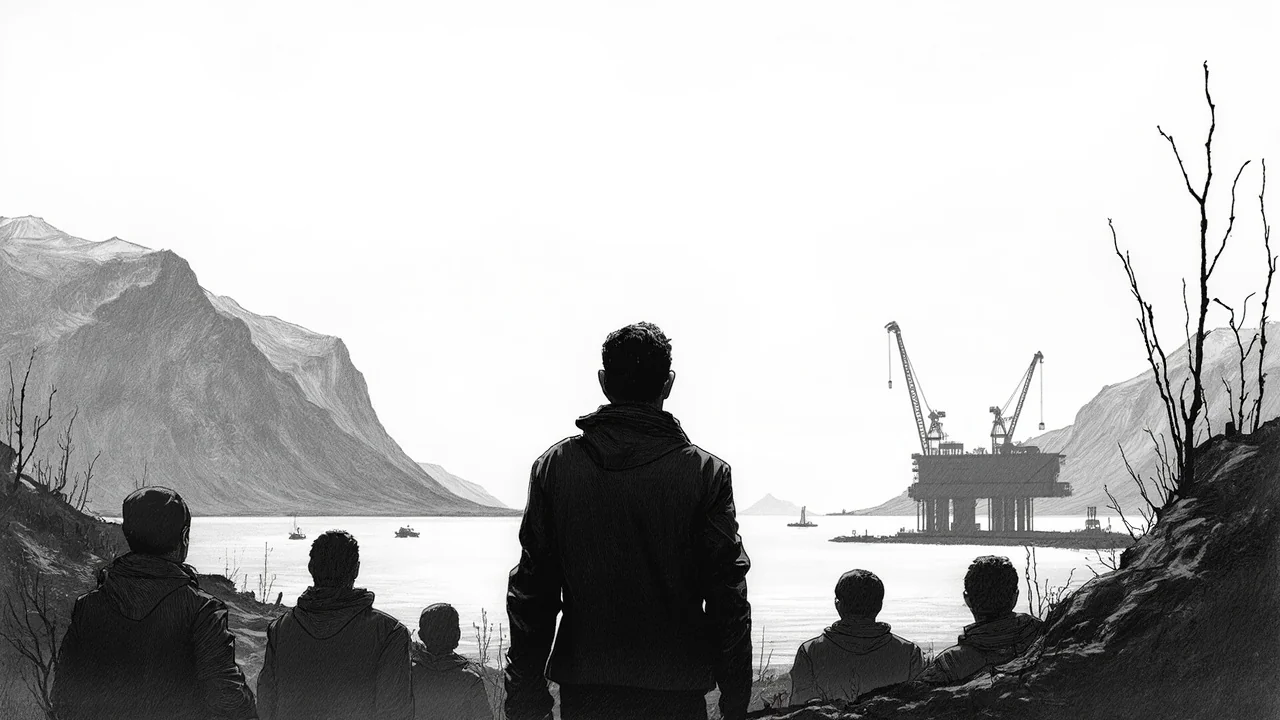
Norway's continental shelf hosted just 24 active oil and gas companies last year. This figure marks the lowest number since the industry began its operations over five decades ago. The stark drop signals a profound shift in the Nordic nation's most vital economic sector. The Norwegian Offshore Directorate confirmed the historic low in a recent year-end report. The agency noted the current landscape is dominated by fewer firms, with Norwegian companies taking a clear lead. This consolidation trend raises urgent questions about the future of exploration, state revenues, and the nation's energy identity.
International players have steadily sold their assets and departed. This exodus shrinks the pool of diverse expertise and investment once considered crucial for new discoveries. The number of companies peaked at 57 in 2013, during a period of high oil prices and aggressive expansion. The current count of 24 represents a dramatic contraction. Industry advocates warn it threatens Norway's long-term production prospects and its role as a stable European energy supplier.
A Political Divide Over Direction
The declining number of companies has ignited a fierce political debate. Lawmakers are split between those wanting to revive exploration and those advocating for a managed decline. Kristoffer Sivertsen of the conservative Progress Party (Frp) expressed deep concern. He said a diversity of companies with different approaches is essential for making new discoveries. Sivertsen called for immediate government action to make the shelf more attractive to international investment.
He specifically argued for opening new areas for exploration. These include the controversial and environmentally sensitive zones near Lofoten, Vesterålen, and Senja (LoVeSe). He also mentioned areas in the northern Barents Sea. "We need to sound the alarm when there are so few companies on the shelf," Sivertsen stated. He fears Norway could be left with only domestic operators, reducing competitive pressure and technological innovation.
Opposition parties on the left view the data differently. Frøya Skjold Sjursæther from the Green Party (MDG) sees the exodus as an inevitable market signal. "The Offshore Directorate's report confirms what MDG has said forever. The oil age is heading towards its end," she said. Sjursæther emphasizes that both Norway and Europe have committed to net-zero emissions by 2050. She is demanding a comprehensive government plan for the shelf's final phase. This plan would focus on decommissioning infrastructure and transitioning the workforce and supply chain.
From Boom to Consolidation
The history of Norway's oil sector is a story of boom, bust, and consolidation. Activity began in earnest in the late 1960s. The number of active companies first peaked at 44 in the early 1980s. Another investment wave followed, leading to the record high of 57 companies a decade ago. That period was fueled by high prices and technological advances enabling access to more complex fields.
The subsequent downturn, driven by the 2014 price crash and growing climate pressures, started a shakeout. Major international energy firms began streamlining their global portfolios. Many chose to exit the Norwegian shelf, selling assets to larger Norwegian players or specialized private equity firms. The remaining 24 companies now represent a specific mix.
The group includes fully integrated global majors like Equinor, Shell, and TotalEnergies. It also features independent Norwegian exploration and production companies such as Aker BP and Vår Energi. The third category consists of smaller, niche players focused on developing smaller discoveries or extending the life of mature fields. This new structure is more streamlined but potentially less dynamic.
The Economic and Climate Crossroads
Norway faces a complex dilemma. The oil and gas sector finances its massive sovereign wealth fund, the world's largest. It directly employs tens of thousands and supports a vast national supply industry. A rapid decline in activity poses significant fiscal and social risks. The state's projected revenues from the sector are already forecast to decline from their mid-2020s peak.
Simultaneously, international climate commitments and the global energy transition are accelerating. Investors are increasingly wary of long-term fossil fuel projects. Norway's own domestic electricity supply is almost entirely renewable, powered by hydro, creating a stark contrast between its green domestic grid and its export-driven fossil fuel economy. The country is aggressively pursuing offshore wind and green hydrogen projects, but these industries are in their infancy.
Parliament's current majority still supports further exploration. Last year, lawmakers approved the launch of a new licensing round for exploration blocks. This move aims to stimulate activity and attract fresh interest. Critics argue this is a paradoxical strategy that ignores both market signals and climate goals. They say it risks creating stranded assets and locks resources into a declining industry.
The Path Forward for a Petro-State
The debate is no longer about if the oil age will end, but how and when. The central question is whether Norway should focus on maximizing extraction while demand remains, or proactively manage its decline. The low number of companies is a key metric in this calculation. A less crowded field could mean less competition for licenses and potentially slower technological development. It could also lead to a more coordinated, state-guided approach to the sector's final chapters.
Industry analysts point to several factors that could influence future trends. A prolonged period of high energy prices could lure some international players back. Breakthroughs in carbon capture and storage technology could extend the social license for gas production. Conversely, a faster-than-expected global shift to renewables could accelerate the withdrawal of remaining majors.
The Norwegian government is attempting a balancing act. It continues to offer new exploration acreage to maintain activity. At the same time, it is directing billions from its oil revenues into green technology funds and renewable energy projects abroad. This dual strategy aims to protect current wealth while seeding a future economic engine. The success of this approach is uncertain.
The consolidation of the Norwegian shelf into fewer, mostly domestic hands presents a new reality. It offers the state greater direct influence over the pace and nature of the industry's evolution. Whether this leads to a last-dash scramble for resources or a dignified, planned transition will define Norway's next fifty years. The exodus of companies is not just a business story. It is the first clear sign of a national reckoning. Can the architect of the Nordic welfare state engineer an equally successful exit from the very industry that built it? The count of companies on the shelf will be one of the clearest indicators of the answer.