
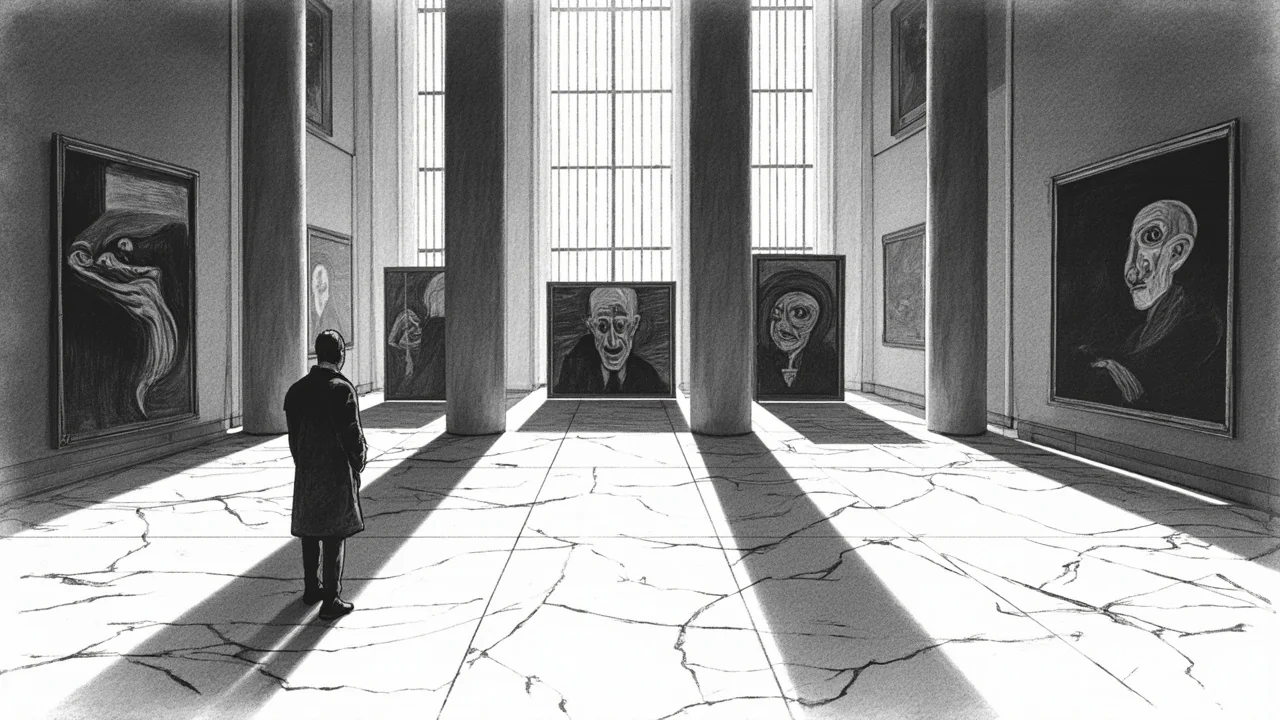
Norway's Oslo city government leader, Eirik Lae Solberg, has secured the transfer of seven Edvard Munch graphic works to his and the mayor's offices against the advice of the Munch Museum. The move, which the museum warns risks damaging the fragile paper artworks, was justified by Solberg as necessary to "convey Munch's art" to official visitors. This decision highlights a recurring tension between political desires for cultural display and professional curatorial concerns for preservation, set against the backdrop of Oslo's unique ownership of one of the world's most valuable art collections.
A Clash Between Politics and Preservation
The conflict centers on seven graphic works by Edvard Munch, Norway's most famous painter. Munch Museum professionals have formally advised against placing the original works in Oslo's City Hall, citing significant environmental risks. The museum director specifically warned that the paper could buckle, become deformed, and that the colors could change due to unsuitable conditions. This is not a theoretical concern. Previous instances of damage to original artworks placed in the City Hall have been documented, creating a clear precedent that experts are now pointing to. Despite these warnings, the political authority of the city council leader and mayor, who represent the Conservative Party (Høyre), has overruled the museum's judgment.
Eirik Lae Solberg's rationale focuses on cultural dissemination. He argues that placing the Munch originals in the rooms where official city meetings are held is important for sharing Munch's art with visitors. This perspective frames the artworks as public relations and cultural diplomacy tools for the city's leadership. However, it directly challenges the core museum principle of preservation-first, where the long-term safety of irreplaceable cultural heritage dictates display conditions. The situation is uniquely Norwegian because the owner of the collection is not a distant ministry but Oslo municipality itself, making the politicians both the custodians and the clients.
The Unique Burden of Oslo's Munch Collection
Oslo's ownership of the vast Munch bequest is both a tremendous cultural asset and an ongoing administrative challenge. When Edvard Munch died in 1944, he left his enormous collection of paintings, drawings, prints, and plates to the city. This bequest forms the core of the Munch Museum's collection, one of the single most important artist-specific collections globally. Unlike national museums that answer to a ministry, the Munch Museum is a municipal institution. Its ultimate boss is the very city government now requesting the artworks for decorative purposes. This creates an inherent conflict of interest where professional recommendations can be overridden by the political authority that also signs the budget.
The new Munch Museum in Bjørvika, a monumental building on Oslo's waterfront, was designed specifically to provide optimal, stable conditions for these fragile works. Its climate-controlled galleries and storage facilities represent a multi-billion kroner investment in preservation. Moving works from this environment to the older City Hall, a building not designed as a high-grade art gallery, introduces variables of light exposure, humidity, and temperature fluctuation. For works on paper, which are exceptionally vulnerable, these changes can cause irreversible damage. The museum's concern is not about access but about context; they facilitate public viewing in a controlled setting, while the City Hall prioritizes a different kind of access in a non-specialized space.
Political Prestige Versus Curatorial Duty
This incident is not isolated. It fits a pattern where political offices seek to use nationally significant art as a backdrop for power, associating their work with cultural prestige. The request targets the offices of the two most powerful political figures in Oslo: the Byrådsleder (City Council Leader) and the Ordfører (Mayor). Hanging a Munch original in these rooms sends a message of authority, taste, and control over the city's treasures. It transforms the artwork from a subject of study and public enjoyment into an accoutrement of political office. Analysts see this as part of a broader trend where cultural institutions face pressure to serve immediate political or economic goals, sometimes at the expense of their long-term missions.
Art historians and museum professionals express deep unease. "When clear conservation advice is set aside for political convenience, it sets a dangerous precedent," says a senior Norwegian curator who wished to remain anonymous due to working with municipal authorities. "It undermines the expertise of the institution tasked with protecting this heritage for future generations. The argument about 'conveying art' is undercut by the fact that the museum exists to do exactly that, but safely." The concern is that this decision lowers the threshold for similar requests, potentially putting more of the collection at risk for short-term symbolic gains.
The Legal and Ethical Gray Zone
Legally, the city government has the formal right to make this decision. As owner, Oslo municipality can technically dictate where its assets are placed. Ethically, however, the situation is murkier. Museum ethics, as outlined by the International Council of Museums (ICOM), stress that the primary duty of a museum is to acquire, preserve, and promote heritage for society. Politicians are temporary stewards, while the museum's duty is perpetual. By overriding the museum's preservation-based advice, the political leadership is prioritizing its temporary use of the artworks over their permanent safety. This creates a tension between legal ownership rights and ethical stewardship responsibilities that is rarely so starkly visible.
Furthermore, the decision could have insurance and liability implications. Insuring world-class art requires strict adherence to conservation standards. If the City Hall environment does not meet the standards typically required by insurers, the city could face higher premiums or reduced coverage. Any damage incurred while the works are outside the museum's controlled environment could also lead to complex questions of responsibility and costly restoration efforts, ultimately paid for by Oslo's taxpayers. The financial risk, though unquantified in the current reporting, adds another layer of irresponsibility to the political maneuver.
A Look Ahead: Implications for Norwegian Cultural Policy
The outcome of this specific dispute is clear: the seven Munch works will be moved. The longer-term implications for cultural management in Norway are less certain. Does this establish a precedent where other municipalities feel empowered to decorate official spaces with fragile works from their collections, against expert advice? Could it influence the relationship between the national government and institutions like the National Museum, which holds other priceless Norwegian art? The incident tests the strength of professional curatorial authority in the face of political will.
It also raises a fundamental question for the public: who are the true guardians of national treasures? Is it the elected officials who serve for a term, or the professional institutions built over decades? The Munch Museum's new building was intended to be the final, perfect home for this collection, ending a long history of inadequate storage. This move, however small, represents a symbolic step back toward treating these works as movable political assets rather than fixed cultural heritage. As the works are hung in the City Hall, the shadow of potential damage will hang with them, a quiet testament to the enduring conflict between political desire and preservation duty. The true cost of this decision may only become clear to a future generation of Oslo's citizens.