
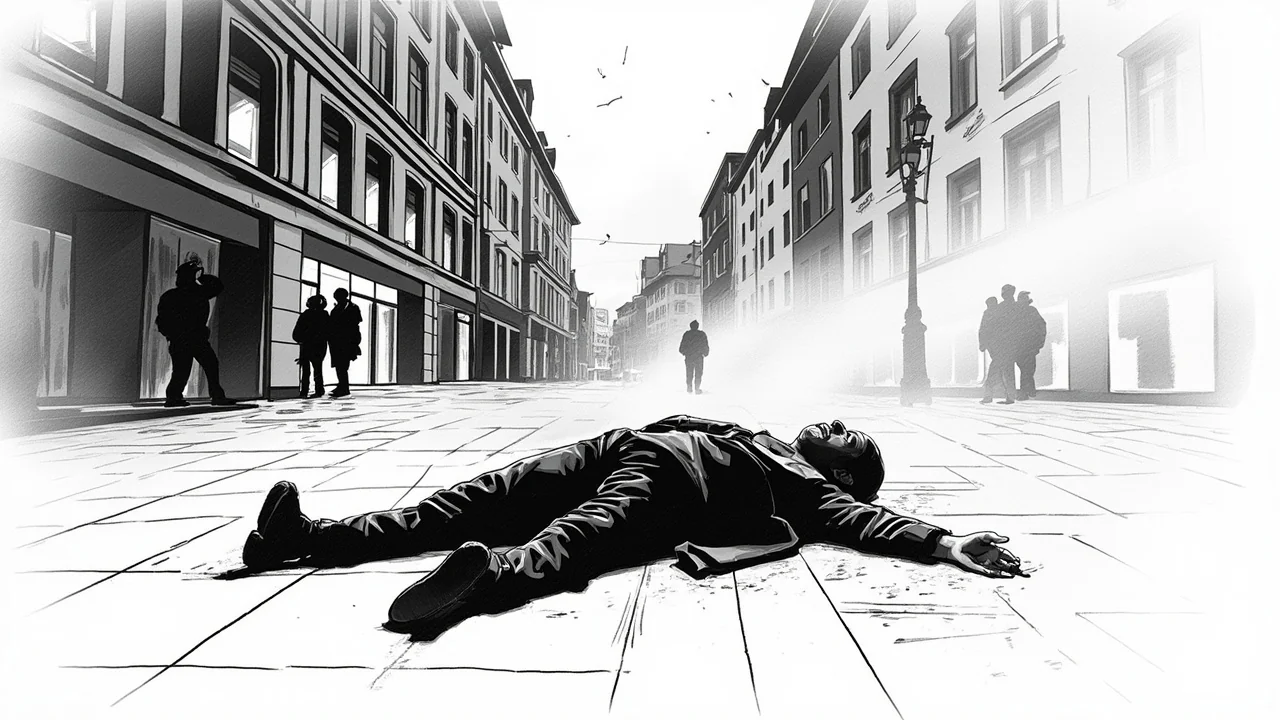
Norway's capital Oslo saw a man knocked unconscious in a violent assault at Solli Plass early Sunday morning. The incident occurred near the roundabout at approximately 1:40 AM, according to police reports. The victim, a man in his twenties, regained consciousness and was speaking with officers before an ambulance arrived to transport him to an emergency clinic for follow-up care. Police have no suspects in custody and are appealing for witnesses to come forward.
Operations Manager Alexander Østerhaug from the Oslo Police District confirmed the sequence of events. "A person is reported to have been subjected to violence at Solli Plass," Østerhaug said in a statement issued at 1:49 AM. "The individual is reported to have been unconscious, but we are in dialogue with him now. An ambulance is on the way." This initial report highlights the immediate concern for the victim's welfare. By 2:15 AM, Østerhaug provided an update, emphasizing the need for public assistance. "If there are witnesses who have seen parts of or the entire course of the incident, then we want them to contact the police," he stated.
The location, Lapsetorvet near Solli Plass in the Frogner district, sits in a central area of Oslo's west side. It is a zone known for its mix of residential buildings, embassies, and nightlife, raising questions about safety in what is typically considered a peaceful neighborhood. The police have not released any description of a perpetrator, indicating they lack basic suspect information. This absence of leads so soon after the event suggests the attack may have occurred quickly or without obvious bystanders.
A Pattern in the Peaceful Capital?
While violent crime rates in Norway remain low by international standards, incidents like this one in a prominent area capture public attention. They prompt discussions about urban safety and police visibility. The Frogner district, encompassing Solli Plass, is not typically associated with high levels of street violence. Its streets are lined with historic apartments and diplomatic missions, making a serious assault there particularly jarring for residents. The immediate police response and subsequent call for witnesses reflect standard procedure, but the lack of an immediate suspect points to the challenges of investigating street crimes with limited evidence.
Experts on urban security in the Nordic region often note that Norway's capital enjoys a strong reputation for safety. However, isolated violent acts can significantly impact the community's sense of security. "Every serious assault is one too many, and it shakes the local perception of safety, even in areas with historically low crime," says a researcher familiar with Nordic crime statistics, who asked not to be named while an investigation is active. "The key indicators to watch are not necessarily the single event, but the police's clearance rate for such crimes and whether there are emerging patterns in timing or location."
The Investigation's Early Hours
The police investigation is in its preliminary stages. The primary evidence appears to be the victim's own account, once he was medically cleared to provide a coherent statement. Officers will likely canvass the area for any private security or traffic camera footage that might have captured the incident or individuals fleeing the scene. The timing, just before 1:40 AM on a weekend, suggests the victim or the assailant may have been in the area related to nightlife activities. This is a line of inquiry police will explore.
Without a weapon description or motive disclosed, the nature of the violence remains unclear. Was it a targeted attack, a conflict that escalated, or an apparently random act? The police have not suggested any gang-related element, which tends to be rare in this specific part of Oslo. The fact the victim was rendered unconscious indicates a significant degree of force was used. His transport to a legevakt (emergency clinic) rather than a direct hospital admission suggests his injuries, while serious enough to cause loss of consciousness, were not immediately life-threatening after stabilization.
Community and Police Response
The Oslo Police District's public appeal for witnesses is a critical component of their strategy. It acknowledges that someone in the vicinity of Solli Plass or Lapsetorvet around 1:40 AM might have crucial information. This could include people leaving bars or restaurants, residents looking out windows, or drivers passing through the roundabout. The effectiveness of such appeals often depends on the community's engagement and trust in law enforcement. In Norway, public cooperation with police is generally high, but the late hour may limit the pool of potential witnesses.
Local politicians and community board representatives in Frogner often emphasize neighborhood safety as a top priority. Incidents like this typically lead to inquiries from local representatives to the police district, seeking reassurance about patrol frequencies and preventive measures. While Oslo has seen broader debates about resource allocation for police work, the response to this specific incident appears to have been swift, with operational leaders providing public updates within minutes.
The Broader Context of Urban Safety
This assault occurs within the ongoing national conversation about resources for the Politiet. Police unions have periodically highlighted workload pressures and the need for sufficient officers on patrol, especially during night hours and weekends in city centers. While major violent crime is uncommon, ensuring a visible police presence is a stated goal for maintaining public confidence. The incident at Solli Plass will likely be cited in these wider discussions about practical policing in urban areas, even if it proves to be an isolated case.
Comparatively, statistics still show Oslo to be one of the safest major cities in Europe. The shock generated by this event stems partly from that prevailing reality. The violation of the norm is what makes it newsworthy and concerning for citizens. The true test for authorities is not just solving this single case, but communicating effectively with the public about risk and prevention without causing undue alarm.
What Comes Next for the Victim and the Case
The young man at the center of this case faces a recovery period, both physical and potentially psychological. Victims of violent assaults in Norway have access to a support system through organizations like Ofre, which provides legal and emotional assistance. The police investigation will now work to piece together his movements prior to the attack and establish a motive. Detectives will look into his background and contacts as a routine part of the process, aiming to determine if he was specifically targeted or caught in a wrong-place, wrong-time scenario.
For the public, the case is a reminder of unpredictable violence. It underscores the importance of situational awareness, even in neighborhoods perceived as completely safe. For the police, it is another entry in the log of incidents that require resolution to maintain their clear-up rate and public trust. The coming days will be telling. Will a witness step forward with a decisive piece of information? Will camera footage provide a breakthrough? Or will the case grow cold, reliant on a future clue or confession?
The streets around Solli Plass will be quiet tonight, but the questions raised by a single violent act in the early hours of a Sunday morning linger. They linger for the victim, for the investigators, and for a city that prides itself on order and safety. The Oslo Police District's plea for help stands: anyone with information must make contact. The solution to what happened near the roundabout at 1:40 AM may depend on it.