
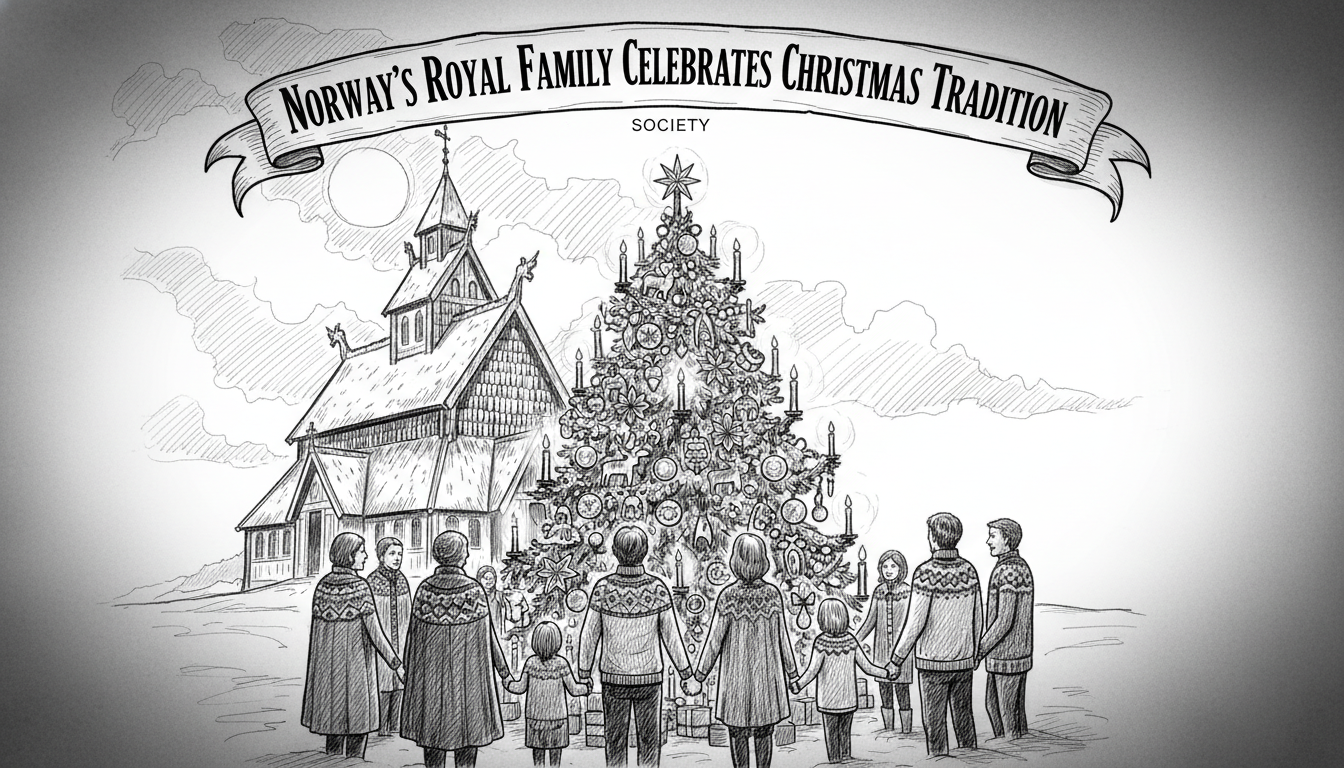
Norway's King Harald V and Queen Sonja attended their traditional Christmas Day service at Holmenkollen Chapel in Oslo, continuing a decades-old custom that draws significant public attention. Their daughter, Princess Märtha Louise, and her fiancé, Durek Verrett, also joined the gathering, highlighting both family unity and the evolving nature of the modern monarchy.
A Frosty Morning at Holmenkollen
The chapel service at Holmenkollen is an annual fixture in the royal calendar. Located in the famous Oslo hills that host the legendary ski jump, the wooden chapel provides a picturesque and quintessentially Norwegian backdrop. For many citizens, seeing the royal family participate in this public religious observance is a central part of the holiday season. It reinforces their visibility and connection to national traditions. The event is typically low-key and reflective, focusing on family and faith.
Prost Paul Erik Wirgenes, who led the service, acknowledged its importance. "It was a fine church service. We know that it is important for the King and Queen," he said following the event. This simple statement underscores how the monarchy's routines are woven into the fabric of local institutions. The royal couple's consistent participation, regardless of weather or other circumstances, is seen as a mark of their dedication.
The Monarchy's Role in National Life
King Harald, who ascended the throne in 1991, and Queen Sonja are often described as symbols of stability. Their public appearances, particularly during holidays, are not merely ceremonial. Experts on the Norwegian monarchy note that these events serve a deeper purpose. They offer a sense of continuity and national unity in a country that has undergone rapid social and economic change. The royal family's adherence to tradition provides a comforting constant.
Unlike more formal European monarchies, Norway's royal family maintains a carefully balanced image of approachability and dignity. Christmas services like the one at Holmenkollen are a key component of this. They are public enough to be observed and shared, yet personal enough to feel genuine. This balance has helped sustain high public support for the monarchy through shifting political landscapes. The family's presence at such events is a quiet but powerful reminder of the state's historical and cultural lineage.
Family Dynamics in the Public Eye
The presence of Princess Märtha Louise and Durek Verrett adds a contemporary layer to this traditional scene. The Princess has often been a figure of public discussion due to her career outside strict royal duties and her relationship with Verrett, an American spiritual advisor and author. Their attendance at family-centric events is closely watched. It signals family cohesion despite the scrutiny their relationship has sometimes attracted in Norwegian media.
Including Verrett in such a prominent family tradition is significant. It represents the royal family's gradual, though measured, modernization and acceptance of personal choices. Observers note that the couple's visible participation helps normalize his place within the wider royal sphere. This careful integration of new members while maintaining core traditions is a challenge for any longstanding institution. The Norwegian royal family appears to be navigating it by emphasizing inclusive family gatherings.
Tradition as a Pillar of Stability
The Holmenkollen service is one of several annual traditions the Norwegian royals observe. From National Day celebrations on May 17th to Christmas Eve broadcasts, these rituals create a predictable and engaging rhythm for public interaction. They are non-political events that transcend government changes and economic cycles. In this sense, the monarchy provides a form of social cohesion that is separate from the partisan fray of the Storting, Norway's parliament.
This tradition-based stability is highly valued. In a nation whose wealth is built on the volatile oil and gas industry, and whose politics are pragmatic and often coalition-based, the monarchy offers a different kind of foundation. It is rooted in history and collective identity rather than resources or political platforms. The Christmas service, therefore, is more than a religious observance. It is a performance of continuity, a brief pause where the nation's focus shifts from debate to shared heritage.
Looking to the Future
As King Harald, now 87, continues his reign, questions about the future shape of the monarchy inevitably arise. Crown Prince Haakon and Crown Princess Mette-Marit are increasingly central to official functions. Yet, traditions like the Holmenkollen Christmas service provide a thread linking past, present, and future. They are practices the next generation is expected to uphold, adapting them respectfully to their own time.
The enduring popularity of these events suggests Norwegians still find value in this symbolic center of national life. The challenge for the royal house will be maintaining the warmth and authenticity of these traditions as societal attitudes continue to evolve. Can the quiet dignity of a Christmas morning in a wooden chapel remain a relevant national touchstone? For now, the peaceful scene at Holmenkollen suggests the answer, at least for the foreseeable future, is yes.
The royal family's departure from the chapel after the service marks the end of a public moment, but the continuation of a private family holiday. This blend of public duty and private life, tradition and personal choice, is the delicate equilibrium modern royalty must sustain. As Norway moves forward, its ancient monarchy seems to be finding its path by honoring simple, consistent rituals that remind people of their shared home.