
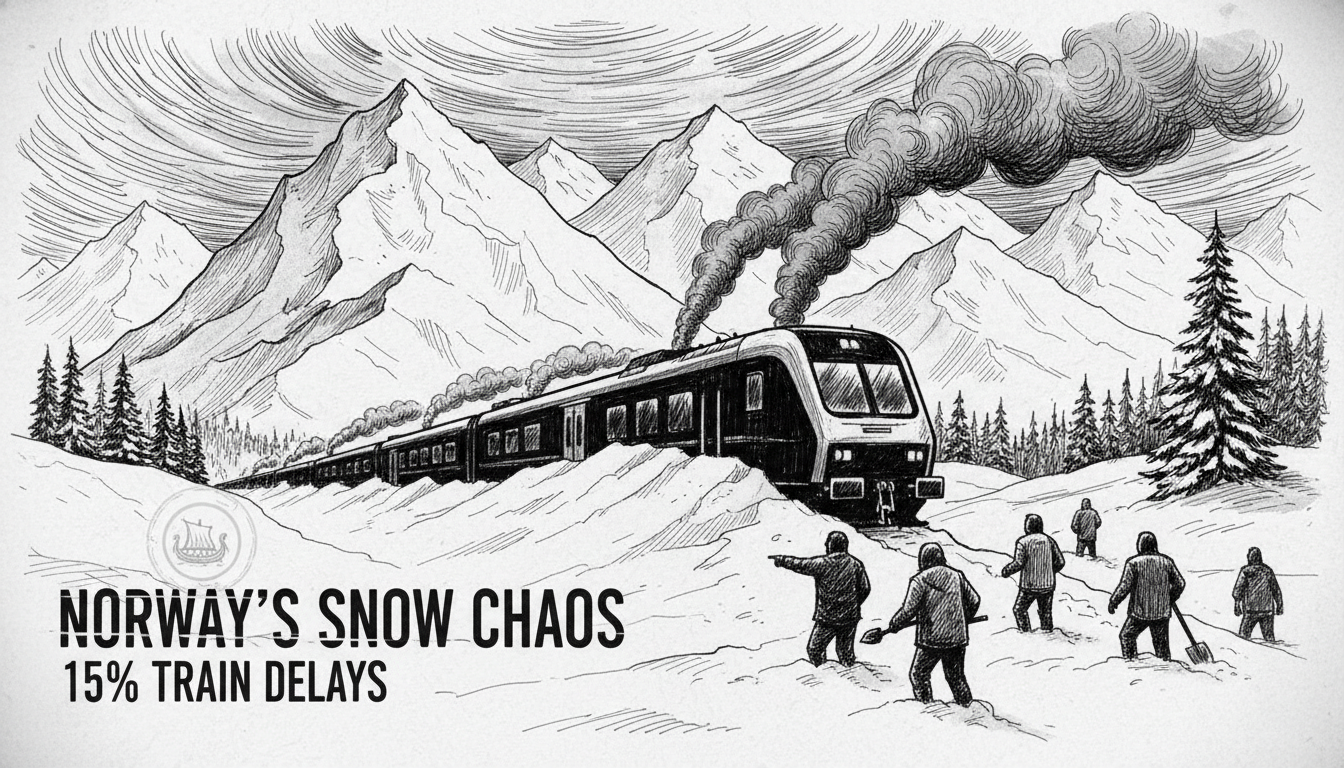
Norway train delays due to heavy snow are expected to affect thousands of commuters across the Østlandet region this week. Operator Vy has issued warnings for Thursday morning, urging passengers to check its app for real-time updates and plan for significant extra travel time. This recurring winter disruption highlights a persistent challenge for Scandinavia's transportation networks and sparks innovation in weather-resilient tech.
The Immediate Impact on Oslo Commuters
Vy's warning targets the intense snowfall forecast for Eastern Norway. The company advises all travelers to consult the Vy app or Vy.no website before departing. This is standard procedure for winter weather events, yet it consistently leads to crowded platforms and frustrated passengers. In 2022, weather-related issues caused roughly 15% of all train delays in Norway. The Oslo region, which handles over 40% of the nation's train passengers, feels this impact most acutely.
Daily commuters face extended journey times and uncertain schedules. "When the snow comes, the whole system gets fragile," said Lars Bekken, a transport analyst based in Oslo. "A delay on one line creates a cascade effect, especially during the morning rush hour." The economic cost is substantial. Lost productivity and logistical complications run into the millions of kroner for each major disruption.
Technology at the Frontline of Communication
In response, Vy and other transport agencies have turned to digital tools. The Vy app is now the primary channel for service updates. It provides personalized alerts based on a user's regular routes. Download numbers for the app have surged during winter months, reflecting passenger reliance on real-time data. This digital-first communication strategy is a key part of Norway's winter preparedness plan.
Norwegian tech startups are watching this space closely. Several Oslo-based companies are developing predictive analytics platforms. These systems use weather data, historical delay patterns, and real-time train telemetry to forecast disruptions before they escalate. "We see a clear market for technology that doesn't just report problems, but anticipates them," said Anya Petrova, CTO of an Oslo mobility startup. Her firm is testing a model in collaboration with transport authorities.
Infrastructure Challenges in a Nordic Climate
Expert analysis points to deeper infrastructure issues. Norway's railway, while modern, battles extreme weather conditions that are intensifying. Heavy, wet snow can clog points and overhead wires. Ice formation on rails reduces braking efficiency. The solution requires constant physical maintenance and long-term investment. Snow removal teams and de-icing trains are deployed, but they cannot be everywhere at once.
Investment in resilient infrastructure is a ongoing discussion. Some experts advocate for more covered tracks in critical zones. Others push for faster adoption of heating systems for rails and points. These are costly solutions for a network that spans challenging geography. The debate centers on balancing cost with reliability for millions of passengers. It's a classic Nordic problem: building a society that functions seamlessly in a demanding environment.
A Recurring Story with Economic Costs
This week's snow warning is not an isolated event. It is part of a yearly cycle that tests the system's limits. Each winter, similar scenes play out across Norway and its Nordic neighbors. The region's high digital connectivity helps manage the fallout, but the core challenge remains physical. Passengers have grown accustomed to checking apps, but they still desire the basic assurance of an on-time departure.
The financial implications extend beyond the railways. Local businesses feel the effect when fewer people reach city centers. Logistics and supply chains experience knock-on delays. A senior manager at a major Oslo logistics firm, who asked not to be named, explained the ripple effect. "A four-hour train delay isn't just a passenger issue. It means shift workers don't arrive, goods aren't unloaded, and our entire daily schedule is thrown off. The economic footprint is wide."
Looking Ahead: Innovation in Mobility
The persistent problem of winter transport is fueling innovation in the Norwegian tech hub. From apps that integrate all mobility options to startups working on autonomous snow-clearing robots, the challenge is driving progress. Innovation labs in Oslo's Grünerløkka and Vulkan districts are focusing on smart city solutions that include weather-adaptive transport.
The goal is a system that adapts dynamically. Imagine an app that, upon detecting a major train delay, immediately suggests and books an available bus, tram, or even a shared taxi. It would seamlessly reroute hundreds of passengers before they even reach the station. Several Norwegian companies are building pieces of this puzzle, supported by government grants for sustainable mobility solutions.
For now, the advice remains simple: check the app, pack patience, and plan for extra time. The conflict between Norway's advanced digital society and its powerful natural environment is starkly visible on snowy railway platforms. As one regular commuter put it while waiting at Oslo Central Station, "We have some of the best tech in the world in our pockets. But we still can't stop the snow from falling on the tracks." The question for Norway's transport future is not if the snow will come, but how smartly the system can respond when it does.