
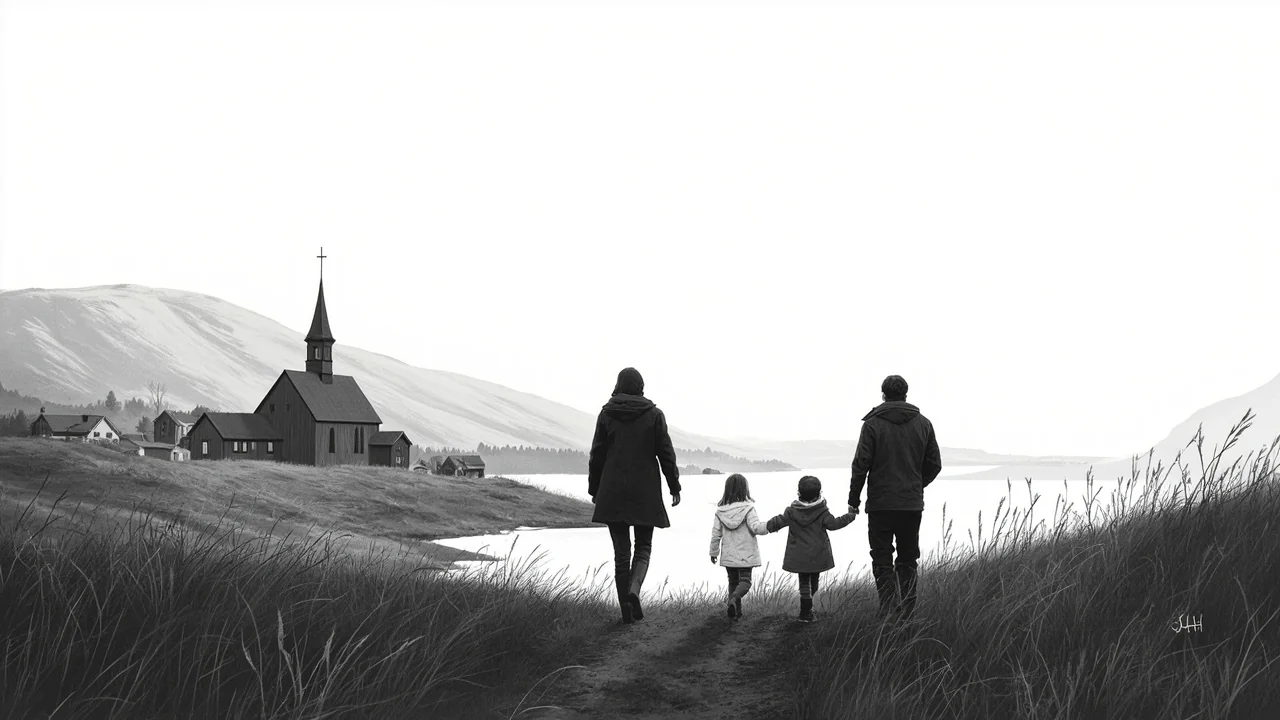
Norway's strict Sunday quiet laws face their annual winter test as heavy snow blankets the country. The legal question of whether to run a snowblower on a Sunday morning pits the right to clear one's driveway against the legally mandated 'helligdagsfred' – holiday peace. According to the law, from 00:00 to 24:00 on Sundays and holidays, no one may disturb this peace with 'improper noise.' For homeowners across Norwegian suburbs, this creates a seasonal dilemma: risk being snowed in or risk a neighborly feud.
The Legal Tightrope of 'Improper Noise'
The core of the issue lies in the interpretation of 'utilbørlig larm' – improper or unacceptable noise. Lawyer Anders Leisner, who advises the homeowners' association Huseierne, clarifies the legal stance. "It can be [forbidden], but one must take into account that if a lot of snow falls, you have a need to get rid of that snow," Leisner states. He emphasizes there is no obligation to let yourself be snowed in, even on a Sunday. The definition hinges on what is considered unnecessary or contrary to common norms. This means a full-scale driveway clearing operation at 7 AM is viewed differently from clearing a necessary path for a vehicle later in the day.
Leisner offers practical guidance for navigating this legal and social gray area. Homeowners should keep noise to a minimum and only perform necessary clearing. "Perhaps don't do the big clean-up of the courtyard that day, but only do what is necessary," he advises. Timing is also critical. Using a shovel instead of a blower in the early hours is a recommended compromise to maintain both access and neighborly relations. The law's intent is to protect the collective peace, not to create unreasonable obstacles for basic household management during Norway's harsh winters.
Neighborhood Tensions and Cultural Expectations
This legal framework collides with the reality of winter living, often sparking tension in residential areas. The sound of a two-stroke engine on a quiet Sunday morning is a frequent source of discord. The cultural expectation of Sunday tranquility runs deep, rooted in Norway's history and social norms. For many, this peace is a cherished part of the week, legally protected and culturally valued. Disturbing it with what is perceived as non-essential noise is a serious breach of unwritten community rules.
Public opinion on the ground reflects this conflict. Residents in Oslo neighborhoods like Grefsen express nuanced views. Most agree that very early morning operation is unacceptable, but tolerance increases as the day progresses. "If you wait until late morning, eleven or twelve, then I think it must be perfectly acceptable to clear snow even on a Sunday, even with a snowblower," one resident noted, acknowledging practical realities. Another resident highlighted the cultural importance: "We have to relate to the country we live in and the weather conditions at any given time." This sentiment captures the Norwegian pragmatism towards nature, yet another countered, stating that early snowblowing "disturbs the holiday peace that is part of our culture and which is actually required by law."
Practical Solutions and Legal Pitfalls
Beyond the timing and scale of the work, a major legal pitfall exists: where the snow ends up. Lawyer Anders Leisner issues a clear warning on this point. "What you must never do is blow the snow over onto the neighbor's property," he stresses. This action moves the dispute from a noise complaint to a potential issue of property encroachment or damage, complicating any conflict. The advice is to manage your own snow on your own property, regardless of the day.
For those living in housing cooperatives (borettslag), the dynamic changes slightly. The sound of a caretaker clearing common areas can be a welcome relief. One resident remarked that hearing the superintendent at work makes her "happy to know we can get out with the car." This highlights how context matters. Noise from a necessary service ensuring collective safety and access is often viewed more favorably than noise from an individual's discretionary project.
The Broader Context of Norway's Holiday Peace
The Sunday snowblower debate is a specific example of Norway's broader 'helligdagsfred' regulations. These rules also extend to areas near churches or places of worship, where disturbing services with unnecessary noise or work is explicitly forbidden. The law aims to carve out a shared space of tranquility in an increasingly busy world. However, it is not an absolute prohibition on all activity. The concept of necessity provides a crucial escape clause, acknowledging that life and weather do not stop for a calendar date.
This creates a system reliant on social discretion and neighborly consideration. The law sets a boundary, but within that boundary, citizens are expected to exercise judgment. It is a typically Nordic approach to regulation: establish a clear principle, then trust in individuals' common sense and community spirit to apply it reasonably. The system works best when everyone agrees on what constitutes a 'necessity.' In a winter nation, clearing snow to maintain basic mobility and safety generally qualifies, but the method and manner remain subject to scrutiny.
Finding the Balance in a Winter Nation
Ultimately, Norway's Sunday snow-clearing dilemma is a negotiation between individual need and collective peace. The law provides the framework, but the solution is found in practical compromise. Waiting until a reasonable hour, using a quieter tool if possible, limiting the scope of work to essential paths, and absolutely keeping the snow on one's own property are the keys to coexistence. It is a seasonal ritual that tests the social contract in suburban Norway.
The debate reflects deeper Norwegian values: a deep respect for legal frameworks, a high value placed on peaceful leisure time, and a pragmatic approach to overcoming natural challenges. As climate patterns shift and winter weather becomes potentially more unpredictable, these discussions may become more frequent. The principle, however, will likely remain. The snow can wait until Monday, but sometimes it simply cannot. The challenge for every Norwegian with a driveway is knowing the difference and acting with the consideration their neighbors and their culture expect. Will the tradition of Sunday peace withstand the next major snowstorm, or will the roar of engines become an accepted part of the winter Sabbath?