
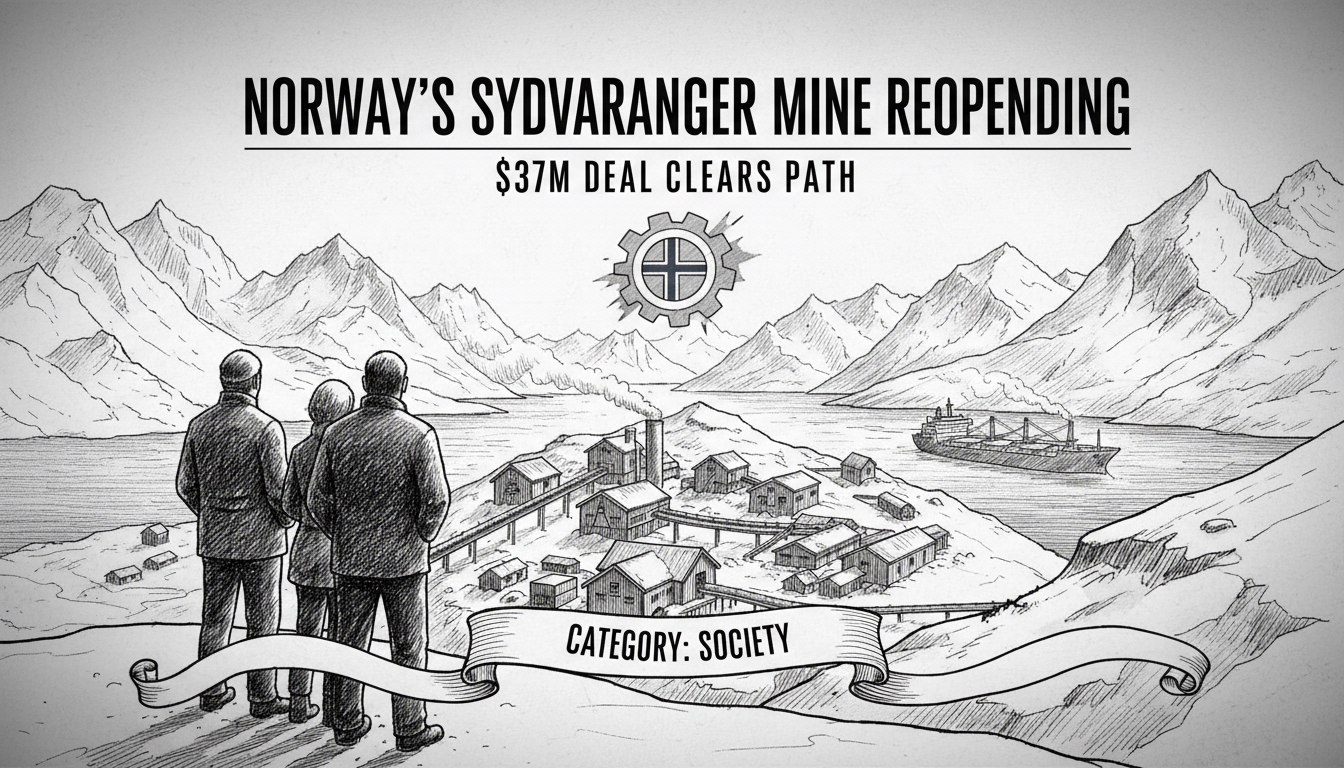
Norway's historic Sydvaranger iron ore mine in Kirkenes has cleared a major financial hurdle, paving the way for a potential reopening that could reshape the region's economy and supply Europe's green steel transition. Multinational mining giant Anglo American has agreed to eliminate a $37 million royalty burden and purchase 100% of the mine's future production. This landmark deal with current owner Grangex removes a critical barrier to restarting operations at the Arctic site, which last operated in 2015.
A Strategic Lifeline for Kirkenes
The agreement represents more than a simple financial transaction. For the community of Kirkenes, located in Norway's northeastern Finnmark county, it signals the possible return of a primary employer and economic engine. The Sydvaranger mine's history stretches back to 1906, with its operations intrinsically linked to the town's fortunes. Periods of closure, most recently in 2015 due to low iron ore prices, have delivered significant economic blows to the region. A restart would directly create hundreds of jobs and stimulate the local maritime and service sectors. "We have maintained strong belief that Sydvaranger has the potential to become a leading supplier of responsibly produced magnetite concentrate," said Timo Smit, Anglo American's director of iron ore marketing, in a statement on the deal.
Fueling the Green Steel Revolution
The timing of this move is not accidental. It aligns with a fundamental shift in the global steel industry, which is under intense pressure to reduce its substantial carbon footprint. Traditional blast furnace steelmaking relies on metallurgical coal and emits large volumes of CO2. The industry is increasingly turning to direct reduction (DR) processes, which can use hydrogen or natural gas and require high-grade iron ore pellets. Sydvaranger's output is magnetite concentrate, a premium feedstock ideal for producing the pellets used in these cleaner DR plants. "As the global steel industry shifts toward direct reduction to cut CO2 emissions, the reopening of Sydvaranger is perfectly timed to meet the growing demand," Smit's statement continued. This positions the mine not as a relic of the old industrial era, but as a potential enabler of Europe's green industrial future.
From Royalty Burden to Guaranteed Market
The core of the deal involves two decisive actions by Anglo American. First, the company will wipe out the existing $37 million royalty obligation. This royalty was a legacy financial liability that weighed heavily on the mine's balance sheet and complicated efforts to secure project financing. Its removal cleans up Grangex's financial structure. Second, and perhaps more crucially, Anglo American has committed to purchasing 100% of the mine's production for its entire operational life. This off-take agreement provides Grangex with a guaranteed buyer and predictable revenue stream, dramatically de-risking the project for banks and other investors needed to fund the capital-intensive restart. Grangex, a Swedish mining company, acquired Sydvaranger in 2022 with the explicit goal of reviving it, and this partnership with a industry titan validates that ambition.
Navigating the Arctic Logistics Challenge
Reopening a mine in the High Arctic presents unique challenges beyond financing. Sydkenes is ice-free year-round due to the Gulf Stream, which is vital for shipping, but infrastructure requires significant investment after years of care and maintenance. The mine's product would be shipped from the port of Kirkenes to European markets. Furthermore, all operations must meet Norway's stringent environmental and safety regulations, which are among the world's toughest. Proponents argue that producing high-grade magnetite for green steel in Europe is environmentally preferable to importing lower-grade ore from distant continents. The project's success will hinge on executing a restart plan that balances economic viability with these strict regulatory and environmental expectations.
Analysis: A Calculated Bet on Europe's Industrial Policy
Industry analysts view this agreement as a strategic masterstroke for Grangex. "Securing a partner like Anglo American does two things: it unlocks financing and it locks in a market," said Lars Erik Taraldsen, a senior analyst at Arctic Resource Advisory. "In today's market, banks want to see both before they commit hundreds of millions. Anglo's commitment essentially provides a floor under the project's economics." The deal also reflects broader geopolitical and industrial trends. The European Union's Carbon Border Adjustment Mechanism (CBAM) and push for strategic autonomy in raw materials are creating powerful incentives for local, low-carbon supply chains. A Norwegian source of premium iron ore concentrate fits squarely into this policy objective, potentially giving the project political support beyond its commercial merits.
The road to first production remains long. Detailed engineering studies, final investment decisions, and recruitment all lie ahead. However, the removal of the $37 million royalty and the seal of approval from a global miner have transformed the project's prospects. The eyes of Kirkenes, and of Europe's steel industry, will now be watching to see if this Arctic mine can rise from its cold dormancy to fuel a hotter, greener industrial revolution.