
Norway's planned rail upgrade between Oslo and Tønsberg faces a one-year delay, pushing the completion of a key commuter corridor to December 2027. The Norwegian Railway Directorate announced it will postpone the increase from one to four trains per hour, opting instead for a gradual introduction starting with three trains. The primary cause is a delayed delivery of new local trains from the manufacturer, creating a critical shortage of rolling stock.
“We would very much have liked to enter into an agreement with Vy to run four trains per hour on the Vestfold Line from December this year, as planned, but the risk that it will not happen is too high,” said acting railway director Marit Rønning. “An important prerequisite for running more trains between Tønsberg and Oslo is that we have sufficient trains.”
The setback impacts one of Eastern Norway's most vital transport arteries. The Vestfold Line serves a densely populated and economically significant region southwest of the capital. The delay means commuters and residents in cities like Tønsberg, Sandefjord, and Larvik must wait longer for the promised relief from congestion and improved connectivity to Oslo.
A Gradual Approach Replaces the Big Bang
Faced with the train shortage, authorities have shifted strategy. Instead of the full-scale leap to four trains hourly, the Directorate will implement a phased upgrade. The first step, now scheduled for December 2026, will increase frequency to three trains per hour. The final step to four trains is pushed to December 2027.
This staged approach is a pragmatic, if disappointing, response to supply chain failures. It aims to deliver some improvements sooner while managing public expectations. The decision reflects a broader challenge within Norway’s national transport planning: balancing ambitious infrastructure goals with the practical realities of procurement and manufacturing.
“The risk was too high,” Rønning reiterated, highlighting the caution now governing the project. A contract signed for a service that could not be delivered would have been a significant political and financial liability for the state-owned operator Vy and the Directorate itself.
The Ripple Effect on Regional Development
The Vestfold Line is not just a commuter route; it is a backbone for regional development. Improved frequency is directly tied to housing policy, business investment, and Norway’s national climate goals of shifting transport from road to rail. Each delay undermines these interconnected objectives.
Municipalities along the line have planned housing developments and commercial projects anticipating better rail links. A prolonged reliance on the E18 highway, Norway's notoriously congested main southbound road, means continued emissions and travel uncertainty. For the Norwegian government, which champions green mobility, such delays in key public transport projects are acutely embarrassing.
“This is a setback for the entire region,” said a local politician from the Conservative Party, who requested anonymity as they were not authorized to speak on the record. “We have sold future growth based on these promises from the state. Now people and businesses are left waiting.”
The delay also affects the perceived reliability of national infrastructure promises. If the state cannot deliver on a high-profile upgrade in the economically crucial Oslofjord region, it raises questions about its ability to execute more complex projects elsewhere, including in the Arctic.
A Systemic Problem with Train Procurement
The root cause—delayed new trains—points to a recurring issue in Norwegian and European rail. Procuring modern, customized rolling stock is a complex, multi-year process fraught with technical challenges and manufacturer bottlenecks. Norway’s new “Type 78” local trains, intended for services in the eastern region, have been plagued by development hurdles.
This is not an isolated incident. Similar delays have affected long-distance train deliveries and metro stock for Oslo. The situation exposes a vulnerability in the national transport strategy: ambitious service upgrades are entirely dependent on a fragile global supply chain for specialized equipment.
“We are at the mercy of the manufacturers,” a source within the Railway Directorate explained. “The contracts have penalties for delays, but that doesn’t put trains on the tracks any faster. Our entire planning ecosystem, from timetables to crew scheduling, is disrupted.”
The phased introduction is an attempt to build resilience into the plan. By decoupling the infrastructure readiness from the full train set delivery, the Directorate hopes to make some gains. However, it remains a sub-optimal solution for commuters who were promised a full doubling of peak service.
Political Pressure and the Road Ahead
The delay will inevitably draw scrutiny from the Storting. Members of Parliament from Vestfold county will demand answers from Transport Minister Jon-Ivar Nygård and his team. Opposition parties are likely to frame this as a failure of the government’s management and oversight.
Questions will focus on contingency planning and why alternative solutions, such as leasing trains or reallocating existing stock, were not viable. The government’s response will need to balance technical explanations with an acknowledgment of the real impact on voters.
For Vy, the state operator, the delay complicates service planning and marketing. They must now manage customer communications for a service that is improving, but not as quickly or as completely as advertised. Maintaining public trust during this extended transition period will be crucial.
Looking ahead, the key dates of December 2026 and December 2027 become new fixed points in the region’s transport calendar. All attention will now turn to the train manufacturer, Alstom, to deliver on its revised schedule. Any further slippage could trigger more severe contractual penalties and political fallout.
A Test Case for National Ambitions
The Vestfold Line delay serves as a critical test case. It measures the gap between Norway’s green transport ambitions and its execution capability. Successive governments have committed billions of kroner to rail, aiming to make it the preferred mode of travel for more Norwegians.
Yet, as this episode shows, hardware is a hard limit. The most elegant timetable and the most generous state subsidy are worthless without physical trains to run. The one-year postponement is a tangible manifestation of that limit.
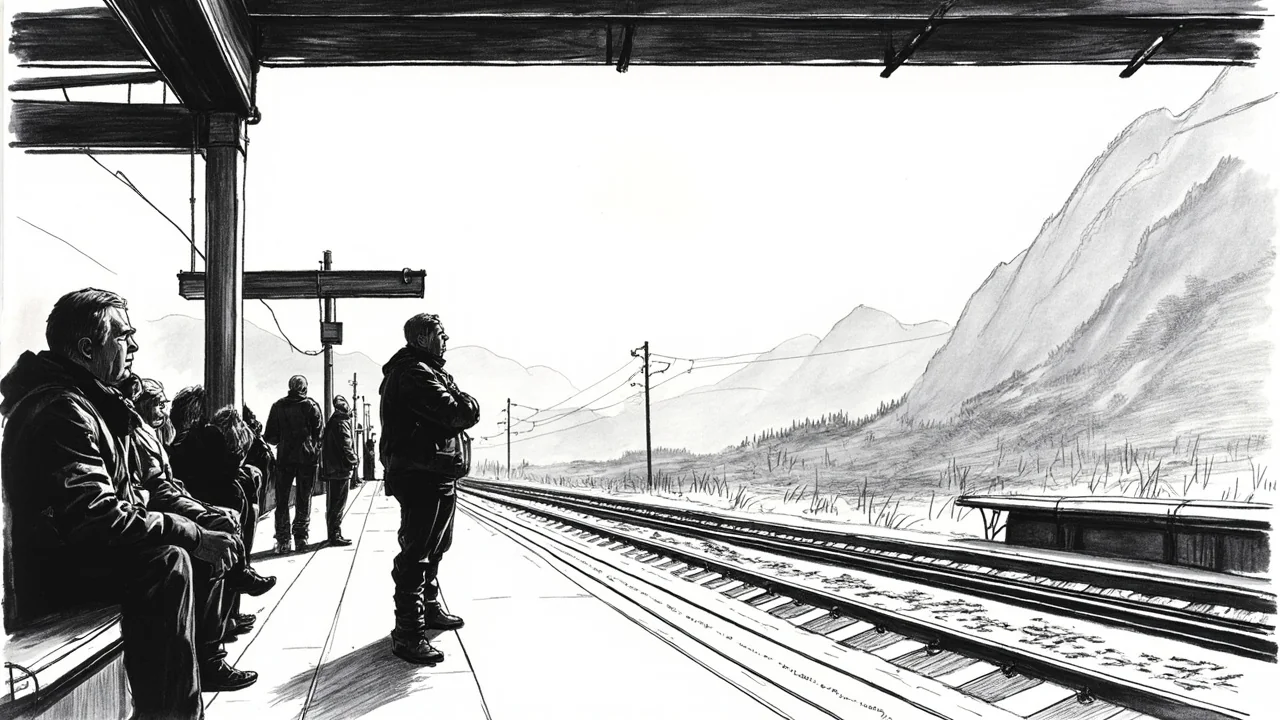
For the commuter standing on the platform at Tønsberg station, the analysis matters less than the result. They will have to wait another year for the more frequent, reliable service that would make leaving the car at home a easier choice. The delay is a reminder that Norway’s transition to a sustainable transport future is not just about political will or funding—it is also about the difficult, unglamorous work of industrial delivery. The credibility of the entire national rail strategy may well depend on getting those new trains on track, sooner rather than later.