
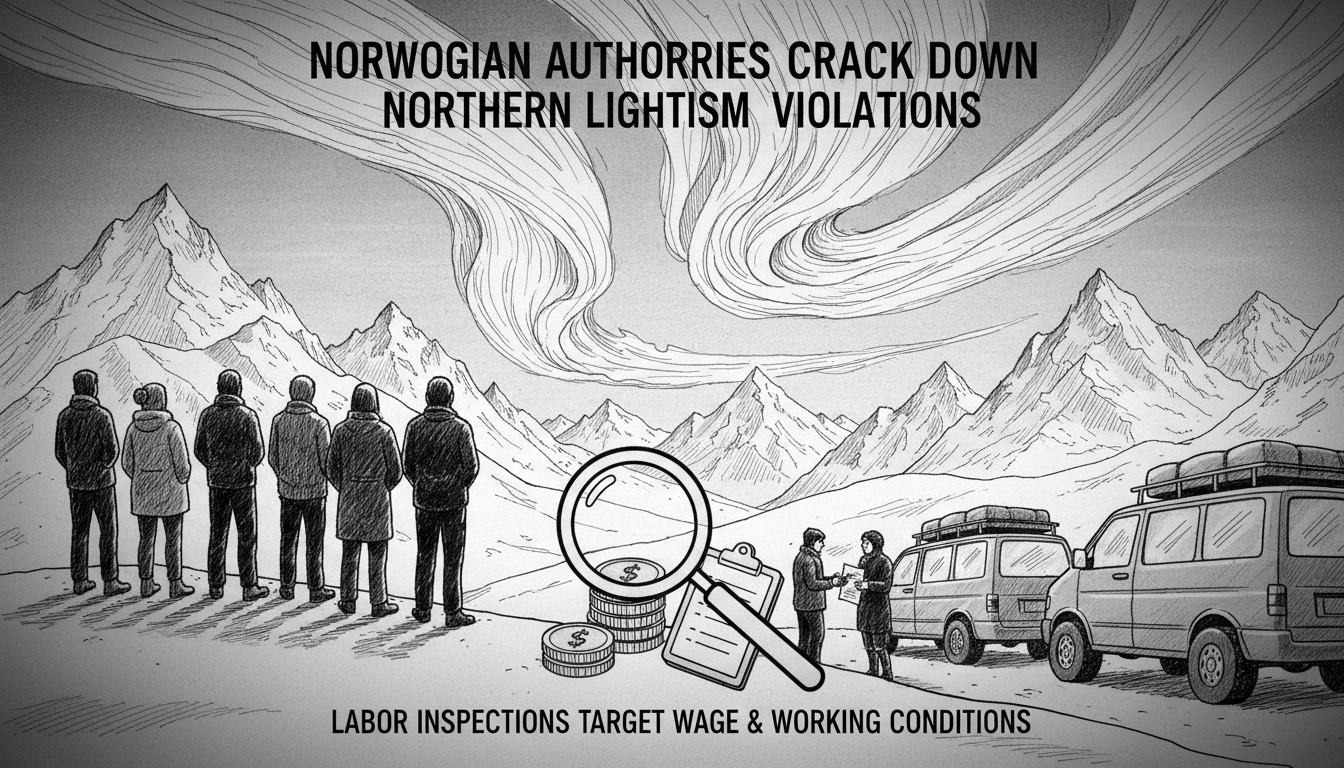
Norwegian labor authorities have launched 25 separate investigations into wage and working condition violations following a major inspection of northern lights tourism operations. The coordinated enforcement action targeted tourism providers in Skibotndalen, Troms, where officials examined 77 tour operators during the operation. Emergency police, customs officials, road authorities, and labor inspectors all participated in the comprehensive review of tourism businesses in the popular aurora viewing region.
This enforcement action represents part of a broader regulatory push to clean up Norway's rapidly expanding northern lights tourism sector. Earlier this month, similar inspections in Troms and Finnmark counties resulted in 20 individuals being charged with operating illegal tourism businesses. The crackdown highlights growing concerns about unregulated growth in Arctic tourism and its impact on both workers and the fragile northern environment.
Norway's northern lights tourism has exploded in recent years, creating both economic opportunities and regulatory challenges. The country's strict labor laws require proper wages, documented employment, and safe working conditions for all workers, including seasonal tourism staff. Many foreign tourists may not realize that their aurora viewing experience could involve businesses operating outside Norwegian regulatory frameworks.
Labor inspectors focused particularly on payment practices and accommodation standards for seasonal workers. The Arctic region faces unique challenges in providing adequate housing and transportation for tourism employees during the peak northern lights season from September through March. Proper documentation and tax compliance formed another key area of investigation during the coordinated operation.
The timing of these inspections coincides with peak tourist season in northern Norway, when thousands of international visitors flock to regions like Troms to witness the aurora borealis. Tourism represents a crucial economic driver for remote Arctic communities, but authorities appear determined to ensure growth occurs within established legal frameworks. Similar regulatory actions have occurred in other Nordic countries experiencing tourism booms in recent years.
Norwegian officials maintain that proper regulation protects both workers and the tourism industry's long-term reputation. Visitors paying premium prices for northern lights experiences expect professional operations that comply with national standards. The current enforcement actions suggest authorities will continue monitoring the sector closely as Arctic tourism continues expanding across Norway's northern territories.
What does this mean for travelers booking northern lights tours? Reputable operators typically display proper certifications and maintain transparent pricing. Visitors should verify that their chosen provider operates legally and employs staff under proper Norwegian working conditions. The crackdown ultimately benefits tourists by ensuring higher standards across the entire northern lights tourism industry.