
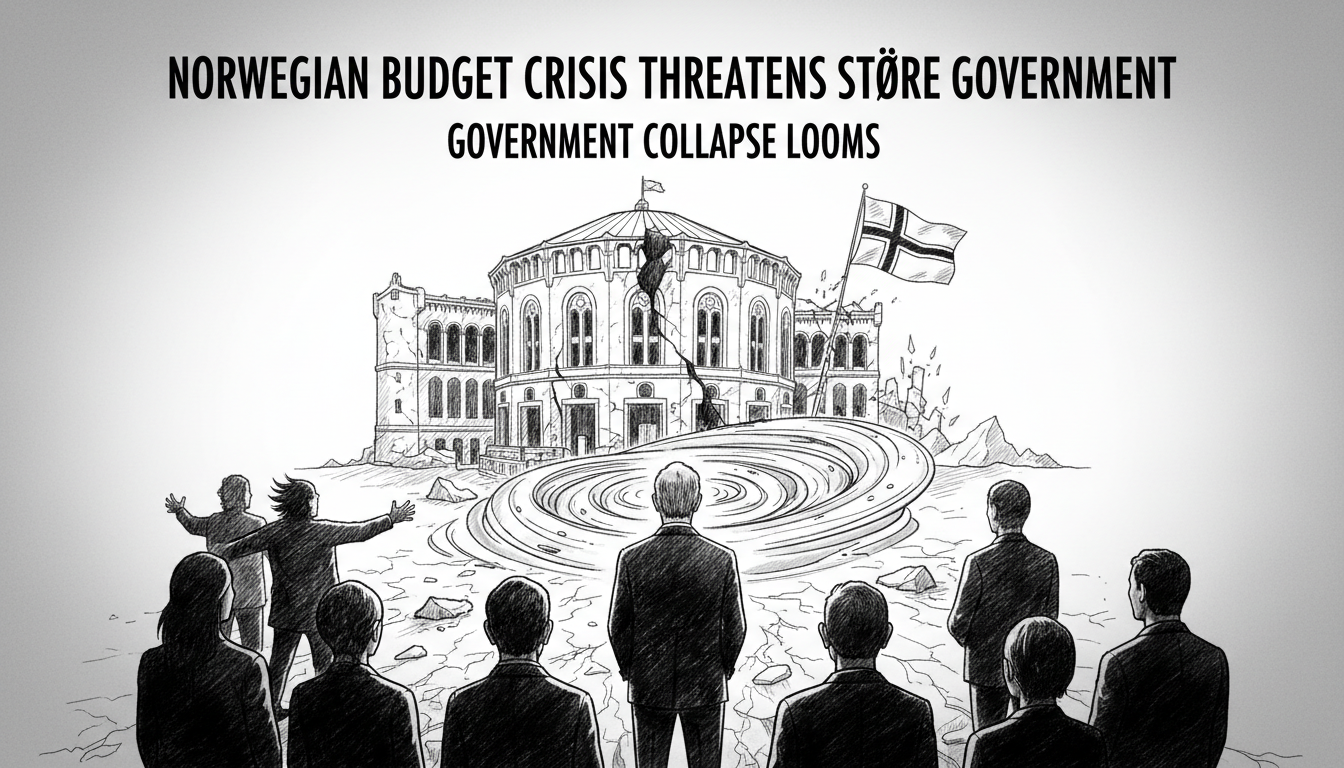
A political crisis over Norway's national budget is threatening the stability of Prime Minister Jonas Gahr Støre's government. The minority coalition faces a Friday deadline to secure a parliamentary majority for its spending plan after key supporting parties walked out of negotiations. The opposition is now watching closely, with the Progress Party leader stating her party is prepared to take responsibility if called upon.
Sylvi Listhaug, leader of the opposition Progress Party, addressed the situation directly. She said her party would of course take responsibility if needed. Listhaug noted that voters have chosen the left side to govern Norwegian politics for the coming years. She expects the governing side to clean up the chaos that has now arisen. Several days remain before the budget is processed in the Storting, Norway's parliament, she pointed out.
The crisis stems from the collapse of budget talks with the Socialist Left Party and the Green Party over the weekend. Both parties had backed Støre as Prime Minister after the autumn election. The Green Party leader, Arild Hermstad, called the current proposal a very poor climate budget. He guaranteed he would not vote for a project led by Listhaug if the government falls. Hermstad said he would vote for Støre if a so-called punishment round occurs in the Storting. He stated that if that is necessary for the country to have secure governance, even with a poor climate budget, then they must do it.
Without the support of these parties, the government's budget lacks a majority ahead of the crucial Friday vote. If the budget agreement fails to gain majority support, Prime Minister Støre could be forced to resign. This would trigger a complex constitutional process, potentially leading to a new government formation or a snap election.
The Conservative Party, the other major opposition force, is maintaining strategic ambiguity. The party's finance policy spokesperson, Nicolai Astrup, told media it is Støre's responsibility to get a budget in place with the majority he campaigned on. Voters gave him that responsibility, Astrup said, and they assume he will deliver on it. He declined to answer hypothetical questions about who the Conservatives would put forward as a prime ministerial candidate if asked by the King.
This political instability comes at a sensitive time for Norway. The nation is navigating a complex energy transition, managing its vast oil and gas wealth from fields like Johan Sverdrup in the North Sea, and formulating its strategic Arctic policy. Budget decisions directly impact investments in carbon capture and storage projects, subsidies for offshore wind development in areas like the Utsira High, and funding for the Norwegian Coastal Administration's work in the fjords. A prolonged government crisis could delay critical policy implementation.
The Conservative Party itself is in a leadership transition. Former Prime Minister Erna Solberg announced her resignation after the party's poor election result in September, ending a 22-year leadership. She will remain until the party's national meeting in February. Former Foreign Minister Ine Eriksen Søreide has emerged as the clear favorite to succeed her, though she emphasizes the party's electoral committee and national meeting will make the final choice.
The immediate focus, however, is on the Storting chamber in Oslo. All political factions are calculating their next moves. The government must find a way to bridge the gap with its former allies or convince other parties to support its budget. The opposition must decide whether to present an alternative budget or let the crisis play out. The coming days will test the resilience of Norway's consensus-oriented political model. The outcome will determine not just the budget, but who governs from the Prime Minister's office at Akershus Fortress.