
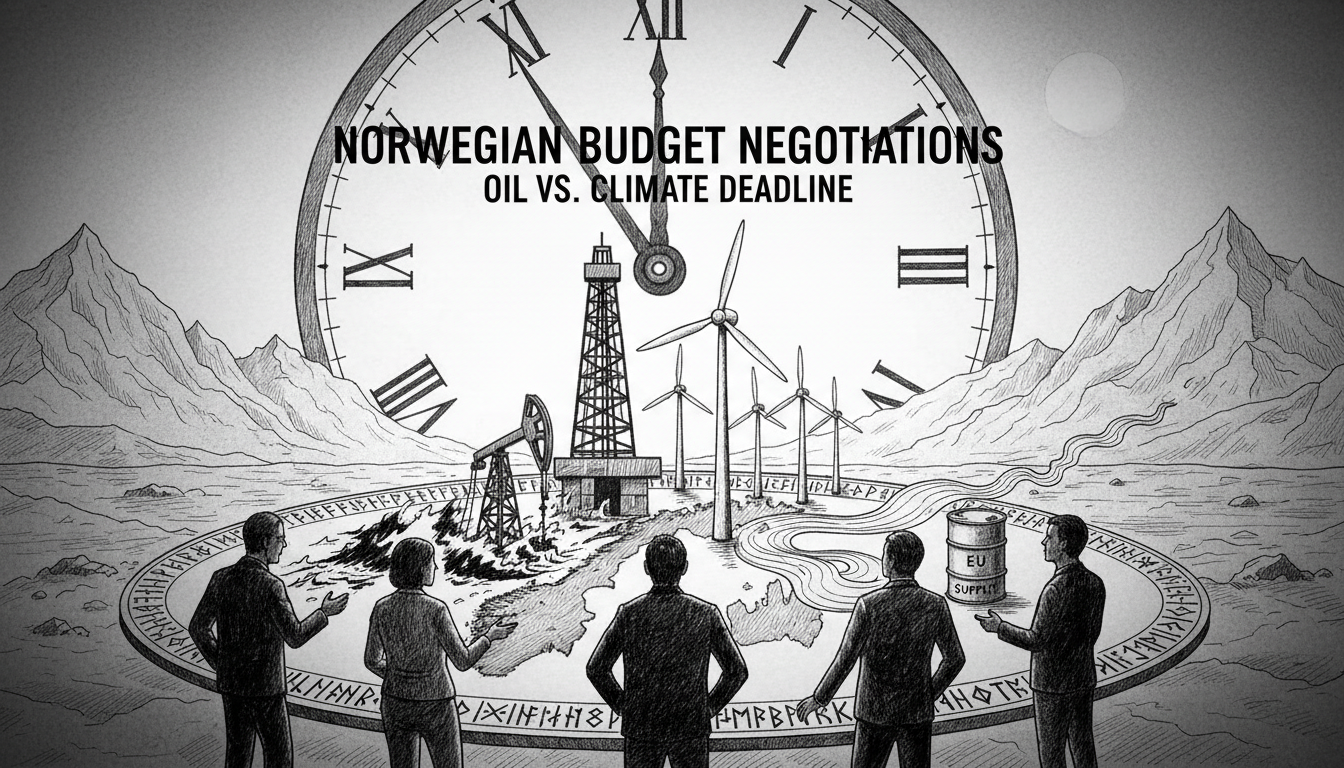
Norwegian budget negotiations enter their final phase this week as political tensions escalate over energy policy. The Green Party has summoned its central committee for an emergency meeting amid concerns about stalled progress on oil and gas discussions. Sources confirm the party leadership seeks to address what they perceive as insufficient movement in climate-related budget provisions.
The negotiations involve five parties from Norway's coalition government. These include the Labour Party, Centre Party, Red Party, Green Party, and Socialist Left Party. Their discussions began on November 14 with a November 30 deadline for reaching consensus. The current impasse centers on balancing Norway's economic dependence on petroleum revenues with climate commitments.
Norway faces a complex energy transition challenge as Europe's second-largest natural gas exporter. The country's sovereign wealth fund, valued at over $1.4 trillion, derives primarily from oil and gas revenues. Current production from major fields like Johan Sverdrup and Troll continues to generate substantial government income. This financial reality creates inherent tension with climate objectives.
The Storting building in Oslo serves as the backdrop for these critical discussions. Norway's unique political system requires multi-party cooperation for budget approval. The current government coalition holds a narrow majority, making each party's support crucial. Any single party could theoretically collapse the government by withdrawing from budget agreements.
Energy analysts note the particular significance of Arctic petroleum reserves in these negotiations. Fields in the Barents Sea represent both economic opportunity and environmental concern. The Green Party has consistently advocated for halting new Arctic oil exploration licenses. Their position contrasts with other coalition partners who emphasize energy security and economic stability.
Norwegian oil production currently averages approximately 1.9 million barrels per day. Gas exports to Europe have increased significantly following geopolitical shifts in energy markets. This context makes petroleum policy particularly sensitive in current budget discussions. The government must balance immediate economic needs against long-term climate commitments.
Political observers suggest the Green Party's emergency meeting reflects genuine concern about compromise possibilities. Similar tensions emerged during previous budget cycles but were resolved through last-minute negotiations. The current standoff appears more substantive given Europe's evolving energy landscape and Norway's climate legislation.
The budget's energy provisions will influence Norway's petroleum industry for years. Decisions about tax structures, exploration licenses, and climate investments all feature in the discussions. International observers closely watch these negotiations given Norway's role as a stable European energy supplier.
What happens next depends on whether parties can bridge their differences before Sunday's deadline. The alternative could trigger a government crisis or require temporary budget provisions. Either outcome would create uncertainty for Norway's energy sector and international partners.