
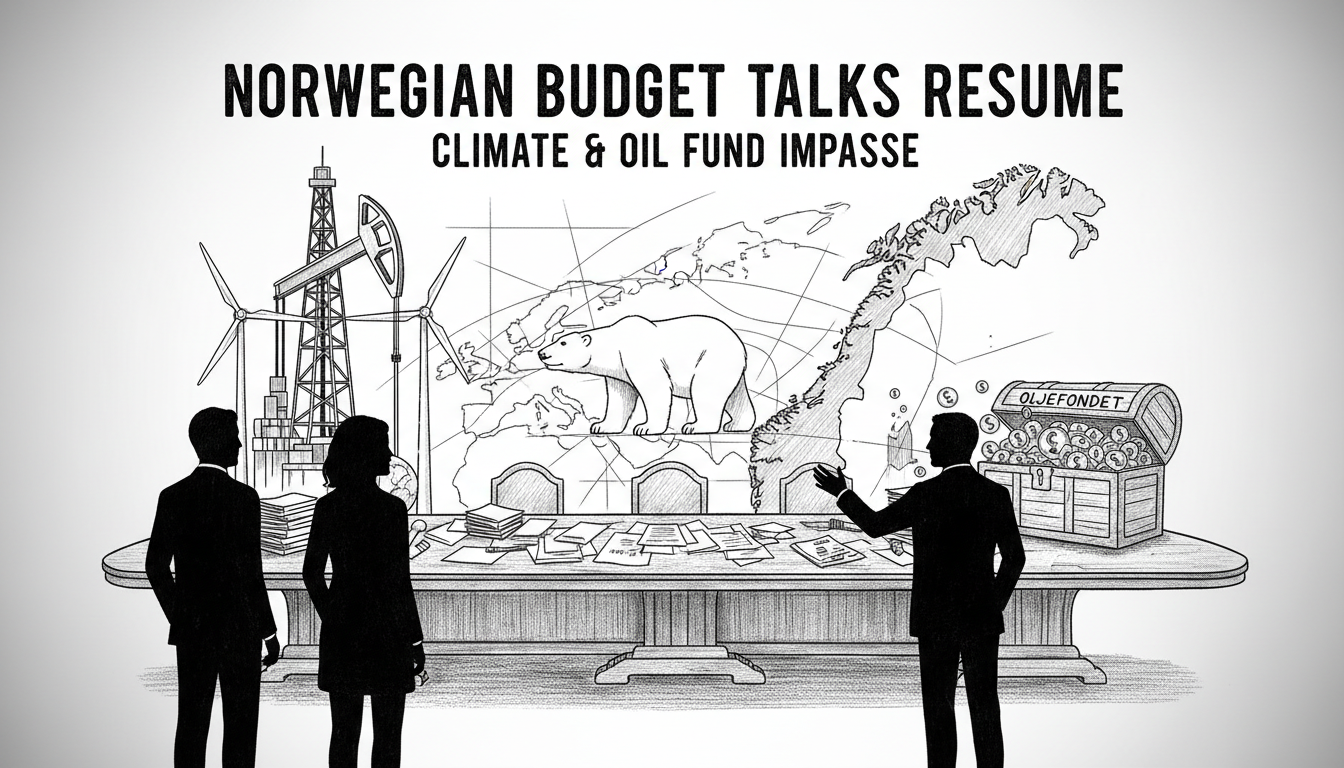
The Norwegian government faces a critical test of its parliamentary support as budget negotiations resume between the Labor Party and its former coalition partners. Talks broke down over the weekend, creating uncertainty for the national budget. The Socialist Left Party leader, Kirsti Bergstø, stated her party is working very hard and constructively to reach a majority agreement. She made these comments after a Monday morning meeting with the Labor Party's parliamentary leader, Tonje Brenna, at the Storting building in Oslo.
Bergstø declined to detail the specific content of their discussions. The core disagreements that led to the weekend breakdown reportedly center on climate policy and the management of Norway's massive sovereign wealth fund, the Government Pension Fund Global. This fund, valued at over 15 trillion kroner, is fueled by revenues from major offshore fields like Johan Sverdrup in the North Sea. Its investment strategy and role in funding the green transition are perennial points of political tension.
A spokesperson for the Labor Party confirmed that discussions with both the Socialist Left and the Green Party will continue in an effort to secure a parliamentary majority for the state budget. The Labor-led minority government requires support from at least one of these parties to pass its financial plan. Without it, the government risks a political crisis or being forced to seek support from opposition parties on the right, an unlikely scenario given the deep policy divides.
This political maneuvering has direct implications for Norway's energy sector and Arctic policy. Budget allocations influence exploration licenses in the Barents Sea, subsidies for offshore wind projects, and funding for carbon capture and storage initiatives at industrial sites along the Norwegian coast. The Socialist Left Party traditionally advocates for a stricter climate policy and a slower pace of oil and gas development than the Labor Party, which balances climate goals with the economic reality of the petroleum industry.
Bergstø emphasized the importance of left-wing parties finding common ground. She argued that a stable majority is essential for a budget that translates good intentions into practical policy. The parties had initially aimed to present a united front by Sunday. The failure to do so highlights the fragile nature of Norway's current political landscape, where the Labor Party governs without a formal coalition.
Political analysts note that such budget standoffs are not uncommon in Norwegian politics, where minority governments are the norm. The outcome will signal the government's ability to implement its agenda, particularly on energy and climate. A compromise will likely involve concessions on environmental spending or the framework governing the oil fund's investments. The next few days of talks will determine whether Oslo can present a cohesive fiscal plan or if the political deadlock deepens, potentially affecting investor confidence in Norway's stable regulatory environment for its crucial offshore industries.