
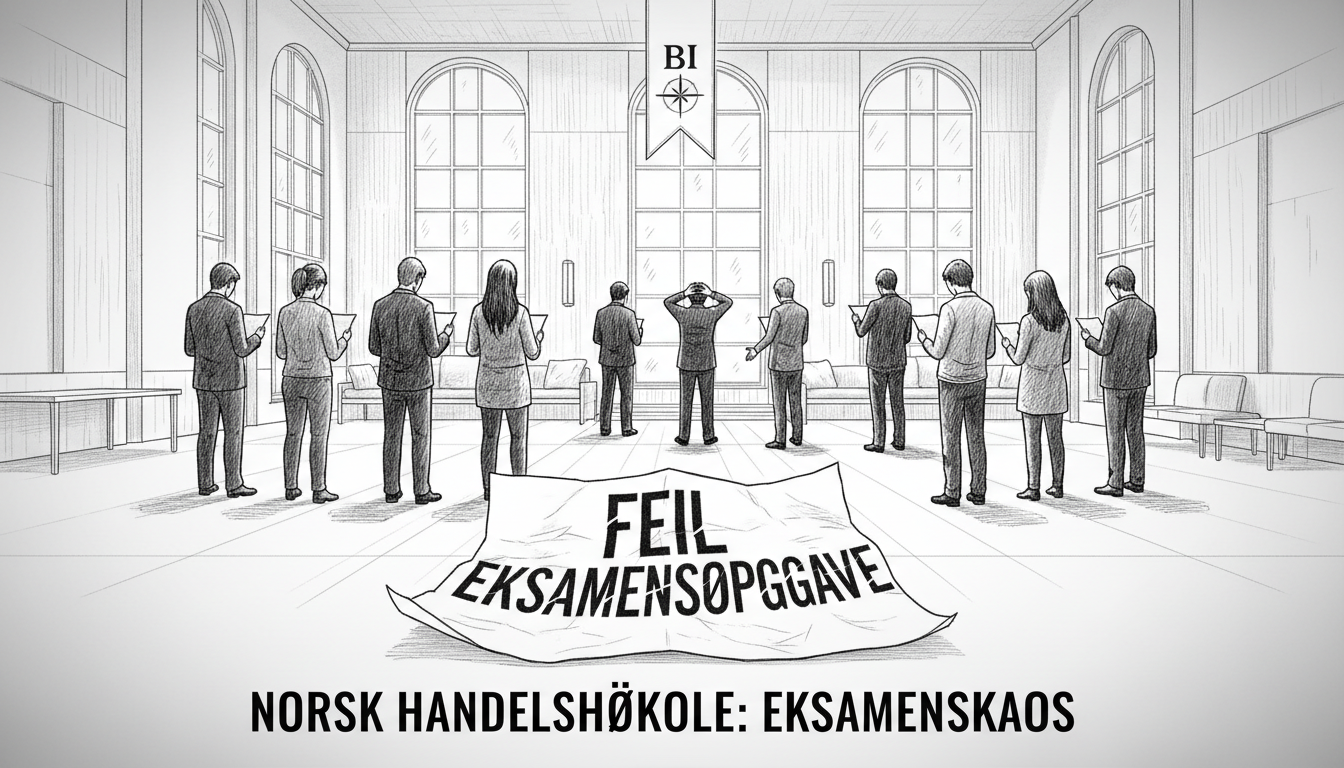
Thirteen students at Norway's prestigious business school faced an unexpected test of their adaptability this week. They received incorrect examination papers during a critical exam period. The students expected multiple-choice questions about economics. Instead they faced essay questions about ethics and sustainability.
Harald Hannevik, a 23-year-old economics student, described the moment of realization. He said students immediately understood something was wrong. They exchanged frustrated looks but felt powerless to change the situation. Some students left the examination room immediately. Most decided to attempt the unfamiliar exam anyway.
Hannevik explained his personal approach to the unexpected situation. He had taken similar courses previously so decided to push through. Other students did their best with unfamiliar material. The error was only announced after two hours of examination time had passed. School officials confirmed all affected students can retake their proper exam in January.
Steffen Juranek, the school's Vice Rector for Education, acknowledged the serious error. He expressed deep regret about the examination mix-up. Juranek noted the school is still investigating how the mistake occurred. He suggested the error likely happened during a curriculum transition period. Two courses with similar codes are being phased in and out simultaneously.
This incident highlights broader challenges in Norway's highly regarded education system. Norwegian universities consistently rank among Europe's best institutions. They face increasing pressure to maintain quality during rapid digital transformation. The country invests heavily in education technology infrastructure. Still, basic administrative errors can undermine student confidence.
The business school incident represents more than just an administrative error. It tests Norway's reputation for organizational efficiency and quality control. The country's education system is a key export product. International students pay substantial tuition fees expecting flawless execution. Such errors could impact Norway's standing in global education markets.
Student reactions revealed much about Norwegian educational culture. Most students attempted the incorrect exam rather than causing disruption. This reflects the Norwegian value of practical problem-solving. It also shows trust in institutional processes to eventually correct errors. The school's quick response and remediation offer demonstrates this system working as intended.
Norwegian education officials now face important questions. How can technology prevent similar errors during examination periods? What backup systems should exist for critical academic processes? The school's handling of this situation will be closely watched. Other institutions will learn from both the error and the response.
This case demonstrates that even the most respected institutions can make basic errors. The true test lies in how they respond and prevent recurrence. Norwegian education maintains strong international reputation despite occasional setbacks. The system's transparency about errors actually strengthens its credibility long-term.