
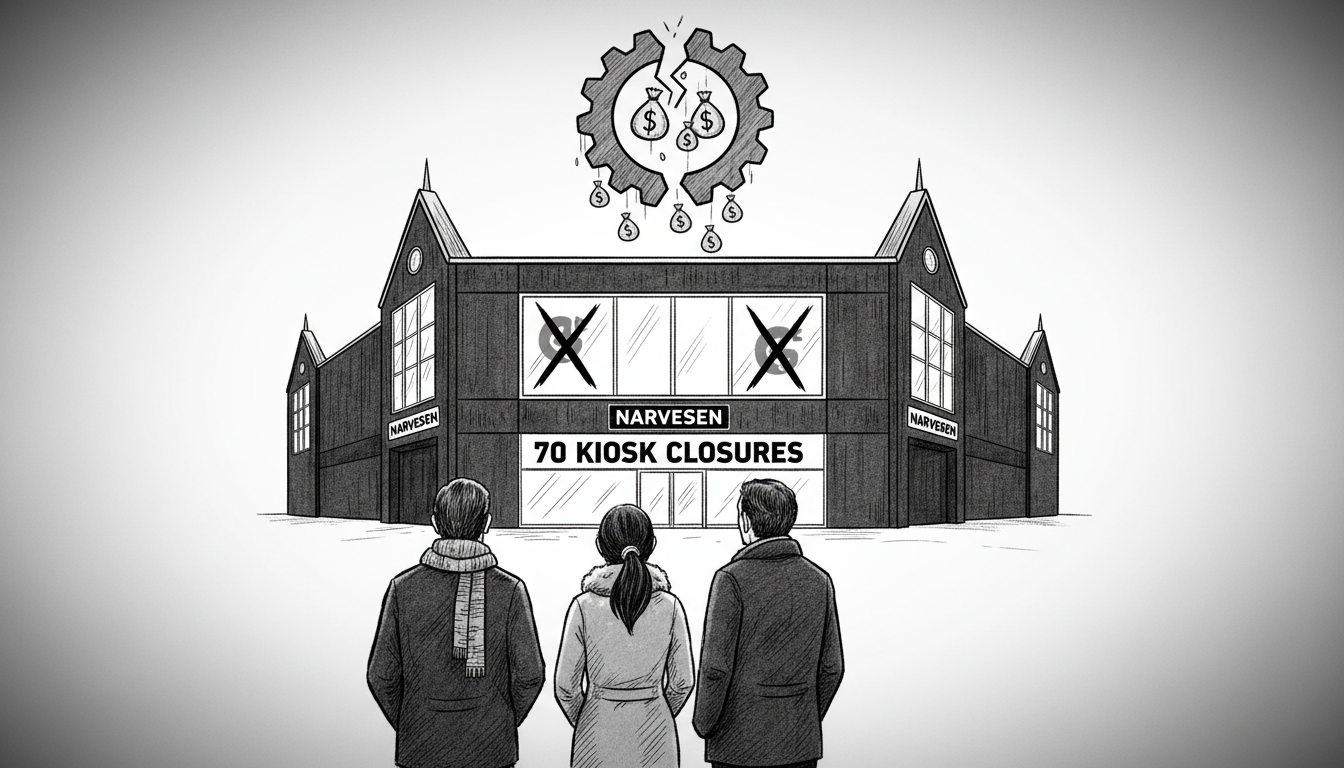
Reitan Convenience Norway will close approximately 70 kiosks across the country in a major restructuring. The closures primarily affect Narvesen locations in shopping centers and impact 70 franchise operators and 400 employees. The workforce reduction equals about 150 full-time equivalent positions.
Company CEO AnnaMaria Carnemark described the decision as demanding but necessary in an official statement. She emphasized the company's responsibility to ensure franchise operators have proper conditions for profitable operations. The restructuring aims to position locations that meet future consumer needs and market demands.
Reitan Convenience Norway operates three major retail chains including Narvesen, 7-Eleven, and Northland. The company maintains a substantial presence across Norwegian retail markets with hundreds of locations nationwide. This restructuring represents one of the largest retail adjustments in recent Norwegian business news.
Elisabeth Sundset, deputy leader of the Commerce and Office Workers Union, acknowledged the sudden nature of the announcement. Her union represents many kiosk workers affected by the closures. She confirmed the union hasn't yet determined how many members will be impacted but expects substantial consequences for affected workers.
The union now works to identify affected members and understand the rationale behind specific closure decisions. Sundset encourages workers facing job losses to contact their regional union offices for guidance and support. The union will provide assistance with employment transitions and rights protection during this period.
This restructuring reflects broader challenges in Norway's retail sector as consumer habits evolve. Traditional kiosk operations face increasing pressure from changing shopping patterns and digital competition. The convenience store sector must adapt to new market realities while maintaining service standards.
Norwegian labor regulations require proper consultation processes for large-scale workforce reductions. Companies must follow strict procedures when implementing significant organizational changes. The current situation demonstrates how even established retail chains must continuously adapt to remain competitive in changing markets.
The closures will affect shopping centers across major Norwegian cities and regional centers. Retail property owners may need to reconsider tenant mixes and space utilization strategies. This development could signal broader shifts in Norwegian retail property markets and consumer behavior patterns.
International readers should understand that Norway maintains strong worker protections and social safety nets. Employees affected by such restructuring typically receive support through unemployment benefits and retraining programs. The Norwegian model balances market flexibility with comprehensive social welfare systems.
This situation illustrates how even in prosperous economies like Norway's, traditional retail faces adaptation pressures. The convenience sector must continuously evolve to meet changing consumer expectations and competitive landscapes. These closures represent strategic repositioning rather than overall market decline.