
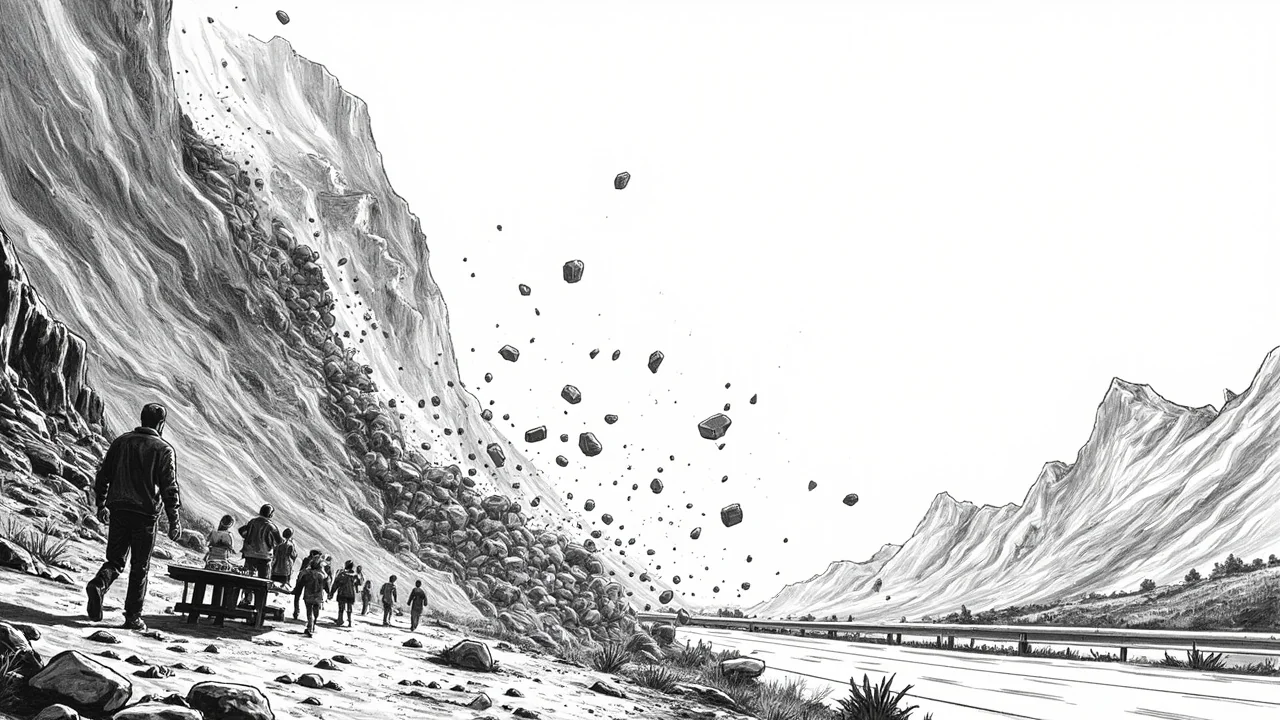
Nine family members sprinted from their breakfast table in bare socks as tons of rock crashed down the mountainside above Åkrafjorden, blocking a major highway and crushing vehicles in one of western Norway's most dramatic recent landslides.
Monica Fjæra and her extended family were enjoying a quiet Sunday morning at her husband's childhood home in Fjæra, Etne Municipality, when what started as familiar small rockfalls escalated into something far more dangerous. "The sound was loud and the whole house shook. We had never heard anything like this before," Fjæra told Norwegian media after the March 1 incident.
Climate change amplifies rockfall risk
The Åkrafjorden incident fits a troubling pattern across Norway society. Research indicates that increased precipitation may lead to more rockfalls and rockslides in Norway, suggesting climate change is driving more frequent geological events in Nordic regions.
Norway's steep fjord landscapes, carved by glaciers over millennia, create natural rockfall zones. But warmer temperatures and changing precipitation patterns are destabilizing rock faces that have remained stable for decades. The 32-kilometer Åkrafjorden, with its 650-meter maximum depth, represents the kind of dramatic topography that makes western Norway both spectacular and geologically volatile.
Fjæra's family initially dismissed the rumbling as routine. "It's normal for small rockfalls to happen in the area," she explained. Within seconds, they realized this was different. Massive boulders rolled past both sides of their house, missing the structure by pure chance. Their tenants' car was completely destroyed.
Infrastructure vulnerability exposed
The rockfall shut down E134 Haukelivegen indefinitely, according to NRK, stranding travelers and highlighting Norway's infrastructure vulnerability to geological events. People sought shelter in nearby tunnels as debris clouds filled the air.
Statens vegvesen, Norway's road authority, faces growing pressure to develop better early warning systems for rockfall-prone routes. The agency has invested heavily in avalanche protection but rockfall prediction remains more challenging. Unlike avalanches, which follow weather patterns, rockfalls can occur with little warning when geological stress reaches critical thresholds.
The psychological impact on Fjæra's children reveals another dimension of Norway's geological reality. "The adults were more in shock about what had actually happened and the forces at play, while the kids were more hysterical and scared," she said. Her children now refuse to return to the area until authorities declare it completely safe.
Norway's emergency response protocols worked well in this case. No deaths occurred, and evacuations proceeded smoothly. But the incident raises questions about long-term habitability in some fjord communities as climate change accelerates geological instability. Expect Statens vegvesen to announce expanded rockfall monitoring systems for western Norway's most vulnerable transport corridors by summer.
Read more: E134 Rockfall Cuts Norway's East-West Transport Lifeline.
Read more: Norwegian Aid Fraud Case Exposes Oversight Gaps.