
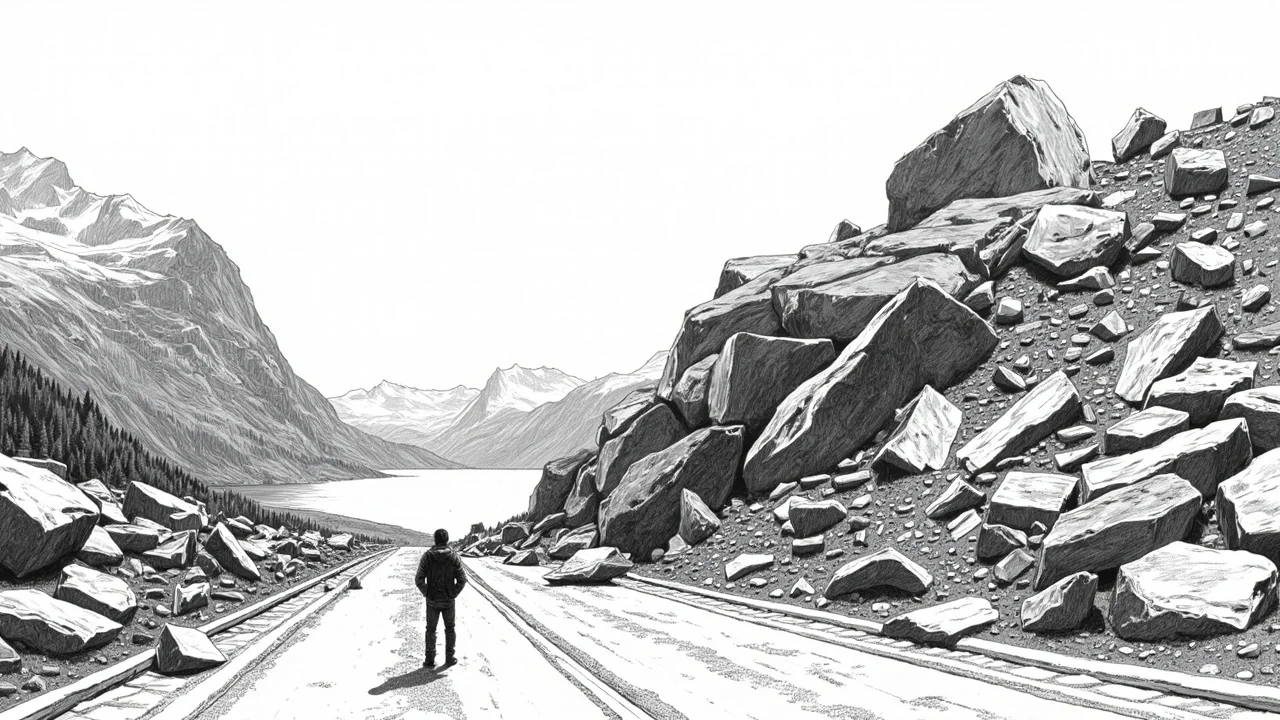
A massive rockfall crushed vehicles and buildings on E134 near Fjæra in Etne this morning, severing one of Norway's critical transport arteries between eastern and western regions. The incident highlights the vulnerability of Norwegian infrastructure to geological hazards in a country where mountain passes serve as economic lifelines.
Infrastructure chaos spreads across Vestlandet
The rockfall struck E134 Haukelivegen at 10:44 AM, according to Nettavisen, crushing a pickup truck and damaging nearby structures. Nine people evacuated safely from a cabin to a tunnel, with no fatalities reported.
Witness Robert Stråbø Melkeraaen, boating on Åkrafjorden when the slide occurred, described hearing small stones before "the entire slab broke loose" with enormous noise and dust clouds. The timing proved fortunate - this happened during formiddag hours before heavy traffic from winter holiday returners would clog the route.
Statens Vegvesen (Norwegian Public Roads Administration) faces an indefinite closure with no reopening expected the same day. Traffic operator Lise Kristoffersen told drivers to "smear themselves with patience" as alternative routes via RV13 create kilometer-long queues.
Geographic isolation exposes systemic vulnerability
This incident reveals how Norway's mountainous geography creates single points of failure for entire regions. E134 serves as a main east-west corridor, and its closure forces all traffic onto narrow secondary roads never designed for such volume.
Trafikant Signe Storesund, stuck in traffic along Røldalsvatnet, described the chaos: "It's a bit crazy. They should have sent the trailers other ways. The road is too narrow."
Mowi, the aquaculture company with a fish farming facility at Fjæra, evacuated along with local residents. The company's settefisk (juvenile fish) production represents the type of specialized industrial activity that depends on reliable transport links for feed delivery and fish transport.
Geologists conducted helicopter surveys Sunday afternoon, recommending continued evacuation while they assess rockfall risk. Vegvesenet believes the mountainside requires clearing of loose stones, with road debris needing explosive removal before clearance can begin.
The broader pattern is concerning. Norway's transport network relies heavily on mountain passes and coastal routes vulnerable to geological events, extreme weather, and climate change impacts. When these arteries close, entire regions face economic disruption.
E134 will likely remain closed through the week as Vegvesenet clears unstable rock faces - meaning Vestlandet's aquaculture and tourism operators face their first major transport crisis of 2024.
Read more: Norway Rockslide Exposes E134 Infrastructure Vulnerability.
Read more: Norway's Grid Crisis Blocks Submarine Base Power Supply.