
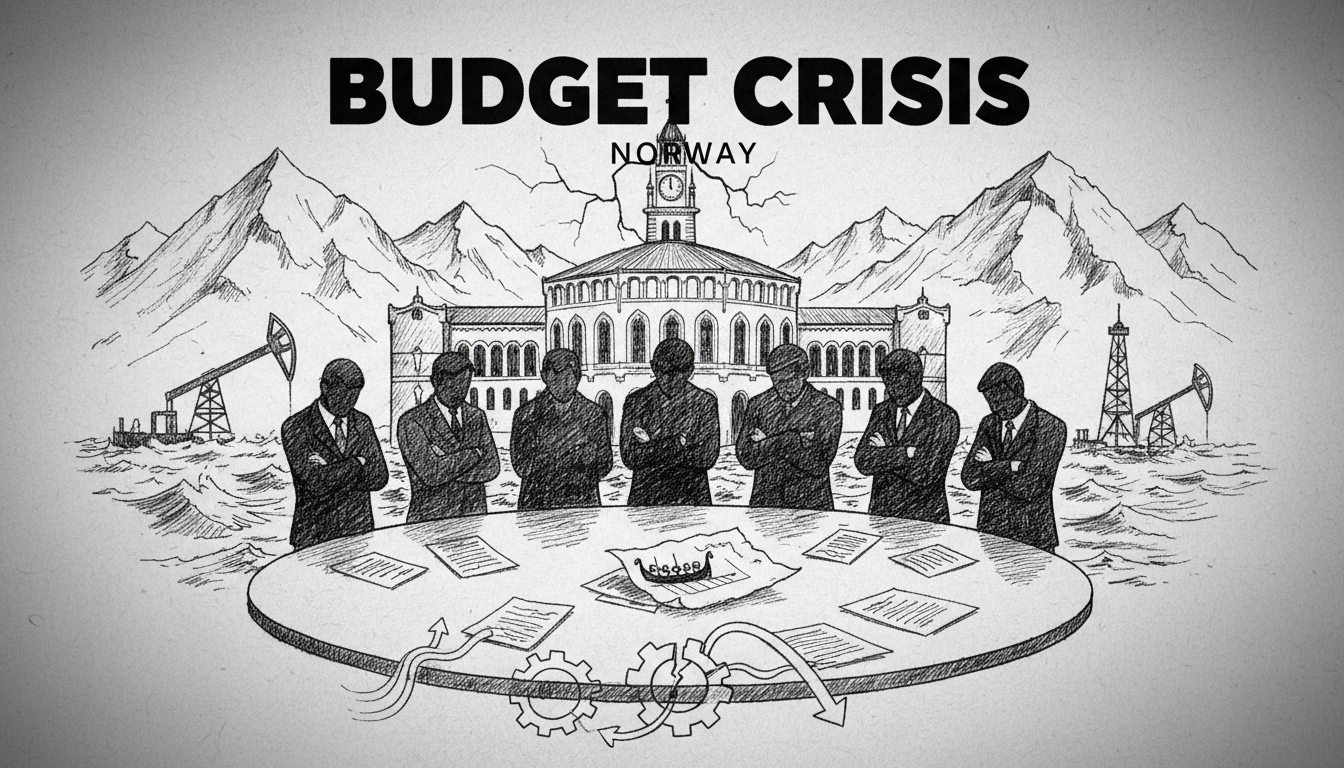
The Norwegian government is navigating a severe parliamentary crisis after failing to secure a majority for its proposed state budget. The minority coalition, led by Prime Minister Jonas Gahr Støre's Labour Party, saw its negotiations with the Socialist Left Party and the Green Party break down over the weekend. This leaves the government's financial plan for the coming period without the necessary backing in the Storting, Norway's parliament. Political scientist Svein Erik Tuastad warned the situation could lead to political chaos not seen in decades. The core issue is a fragmented parliament where five parties are needed to form a majority, creating a complex and demanding political landscape.
Tuva Moflag, the Labour Party's chief negotiator and head of the parliamentary finance committee, rejected the characterization of chaos. She stated negotiations had been productive over several weeks but acknowledged the lack of a final agreement. 'We have had good talks for several weeks. Unfortunately, we did not reach an agreement with all five parties,' Moflag said in a radio interview. She confirmed the government would immediately resume talks with the Socialist Left and the Greens to find a path forward. 'We are not done until then,' she added, emphasizing the goal remains to secure a parliamentary majority.
The immediate threat is a cabinet question, where the government could threaten to resign if it cannot pass its budget. This is a fundamental test of parliamentary confidence. Moflag downplayed this scenario, focusing instead on continued dialogue. She revealed the government had made major concessions to the holdout parties, including a pledge not to open for seabed mineral extraction during the entire parliamentary period. Other offered policies involved dental care reform and improved public transport with lower fares. These moves highlight the pressure on the Labour Party to accommodate left-wing environmental and social demands to stay in power.
The parties that did agree to the budget, the Centre Party and the Red Party, offered vague responses when asked if they were open to further changes to bring the Socialists and Greens on board. Centre Party representative Bjørn Arild Gram stated the current proposal already delivered substantial wins for all five potential partners. Red Party leader Marie Sneve Martinussen stressed the need for common ground, saying, 'We must gather around some common foundations for the next four years.' Their cautious statements indicate further negotiations will be delicate and could unravel the existing agreement.
This crisis has direct implications for Norway's economic and energy policy. A unstable government creates uncertainty for the vast oil and gas sector, which is centered on fields like Johan Sverdrup in the North Sea and faces ongoing debates about its future in the Arctic. Budget delays or contentious revisions can impact investment signals and long-term planning for the sovereign wealth fund. The stalemate also puts key infrastructure projects, from coastal highway plans along Norwegian fjords to green energy transitions, in a state of limbo. The situation underscores a broader trend in Nordic politics where traditional centrist majorities are fracturing, requiring complex multi-party agreements that are inherently fragile. The coming days of talks in the Storting building will determine not just the budget but the viability of the current government itself.