
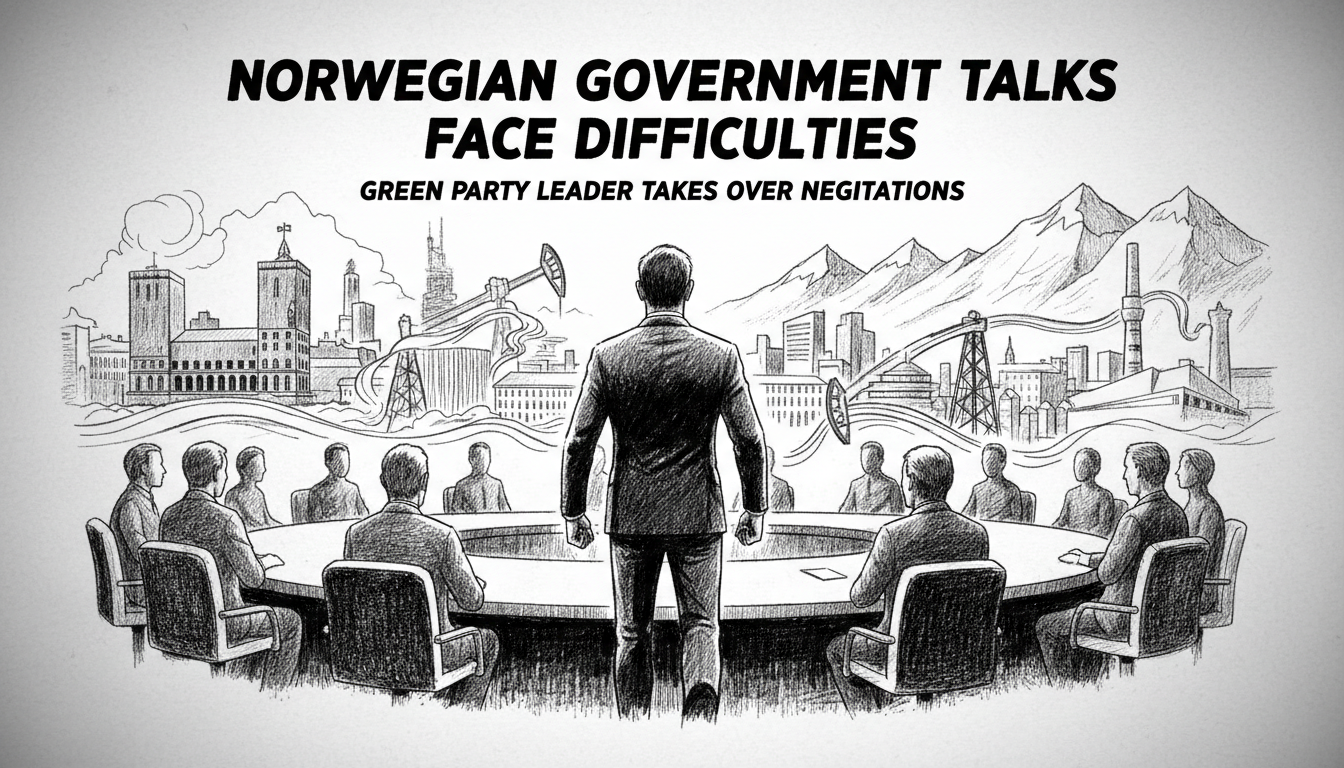
Arild Hermstad, leader of Norway's Green Party, has assumed responsibility for key government negotiations. He spent the day in talks with Tonje Brenna, a senior minister from the Labour Party. The discussions are part of ongoing efforts to secure parliamentary support for the minority coalition government. Hermstad emerged from the meeting in the early afternoon. He described the situation as challenging. 'This is a difficult situation. It still is,' Hermstad said in a statement to reporters outside the government quarter in Oslo.
The negotiations are critical for the stability of the government. They often involve complex trade-offs between environmental policy and economic interests. The Green Party holds a pivotal position in the Storting, Norway's parliament. Their support is frequently needed to pass legislation. This places Hermstad in a powerful but delicate bargaining position. The talks likely center on climate targets, energy policy, and the future of Norway's oil and gas sector.
Norway remains Europe's largest oil and gas producer. Major fields like Johan Sverdrup in the North Sea and Snøhvit in the Barents Sea are central to the economy. Any policy shift discussed in these negotiations could impact production licenses, carbon taxes, and investments in renewable energy. The government must balance its ambitious climate goals with the economic reality of an industry that funds the sovereign wealth fund. This fund is the largest in the world.
Political analysts note that such negotiations are a standard feature of Norwegian politics. The system relies on compromise and consensus-building. Past negotiations have led to agreements on everything from railway budgets to Arctic protection zones. The current talks are particularly sensitive. They come amid global energy market volatility and domestic pressure to accelerate the green transition. The outcome will signal the government's direction for the coming parliamentary session.
Hermstad's brief comment suggests significant hurdles remain. A failure to reach an agreement could weaken the government's legislative agenda. It might also trigger a broader political crisis. The next steps will involve further closed-door meetings. Key stakeholders from the oil industry, labor unions, and environmental groups will be watching closely. The resolution will have direct implications for Norway's energy policy and its role in the Arctic region.